Karnataka govt forms anti-narcotic task force to tackle drug menace in Bengaluru

Bengaluru: In a decisive move to curb the escalating drug crisis in the state capital, the Karnataka government has constituted a dedicated Anti-Narcotics Task Force (ANTF).
According to a government order, cited by Deccan Herald on Monday, the newly formed task force will be overseen by Director General and Inspector General of Police (DG&IGP) M.A. Saleem. The team will report to Pronab Mohanty, Director General of Police, Cyber Command.
The task force will comprise 10 newly designated positions, including four Additional Superintendents of Police and two Assistant Commissioners of Police. In total, the unit will be staffed by 56 police staff, including two police inspectors and four police sub-inspectors.
The 56 officers have been taken away from the Anti-Naxal Force and assigned to the narcotics task force, the order read.
In addition, the order mentioned a restructuring of police units handling technology-related offences. All 43 Cyber, Economic and Narcotics (CEN) crime police stations across Karnataka have now been renamed as cyber crime police stations. These stations have been instructed to focus on cases related to cybercrime and to register offences under the Information Technology (IT) Act and relevant sections of the Bharatiya Nyaya Sanhita (BNS) pertaining to computer-related crimes.
Let the Truth be known. If you read VB and like VB, please be a VB Supporter and Help us deliver the Truth to one and all.
Congress using hijab issue to pacify minority anger, alleges Karnataka LoP R Ashoka
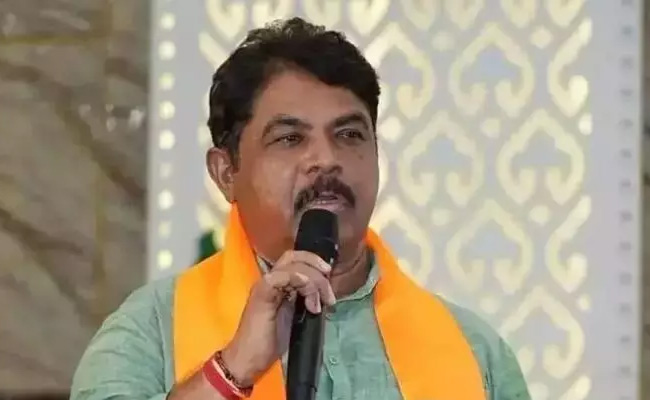
Bengaluru: Leader of Opposition in the Assembly R. Ashoka has accused the Congress government of using the hijab issue to placate what he described as discontent among minority voters after the Davanagere by-election.
In a post on X on Wednesday, Ashoka alleged that the state government, instead of addressing issues such as price rise, corruption, farmers’ distress and law and order, was attempting to retain its minority vote base by reviving the hijab issue.
Referring to the 2022 dress code introduced by the BJP government, which prohibited hijab in schools and colleges, Ashoka said the Karnataka High Court had upheld the policy and emphasised the importance of discipline in educational institutions.
He questioned the Congress government’s move to revisit the issue and asked whether setting aside the court-backed policy to benefit one community could be described as secularism.
Ashoka further alleged that while the government was willing to permit hijab, it continued to prohibit saffron shawls.
He accused the government of dividing students on religious lines rather than treating schools and colleges as spaces of equality.
Drawing a comparison with Mamata Banerjee’s government in West Bengal, Ashoka claimed that excessive appeasement politics had harmed the state and warned that the Congress in Karnataka could face a similar political response.
He said voters in Karnataka would teach the Congress a lesson for what he termed “vote-bank politics” and for compromising constitutional and judicial principles.