Karnataka govt hands over kumki elephants to Andhra Pradesh
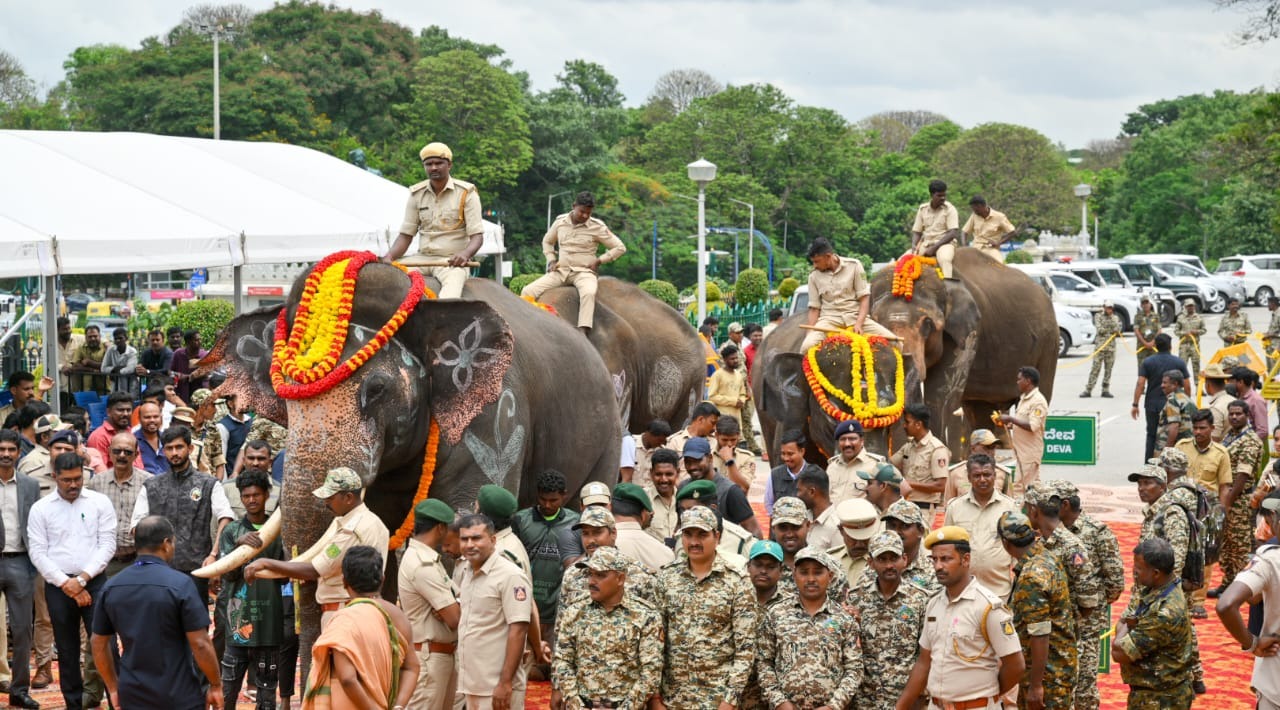
Bengaluru (PTI): Chief Minister Siddaramaiah on Wednesday stressed the need for cooperation and coordination between states in mitigating human-elephant conflicts that are increasing, as Karnataka handed over six Kumki (trained) elephants to neighbouring Andhra Pradesh.
Four elephants were handed over by the Karnataka government to Andhra Pradesh at an event here that was attended by that state's Deputy Chief Minister Pawan Kalyan.
According to officials, the Kumki elephants will be used to control herds of rogue elephants in Andhra Pradesh, entering farmlands, ransacking fields and attacking people.
Elephants given to Andhra Pradesh are: Krishna (15) which was captured in Chikkamagaluru in 2022; Shivamogga Abhimanyu (14) captured in Honnali in 2023; Deva (39) captured in Kushalnagar in 2019; and Ranjan (26), an elephant born in the Dubare camp.
"We are handing over elephants to Andhra Pradesh from Karnataka. We have agreed on handing over six kumki elephants, but today we are handing over four and the remaining two will be handed over later. All these elephants are trained. For about one month, the mahouts who take care of elephants from Andhra were trained," Siddaramaiah said.
Addressing the handing over event, he said there are 3,695 elephants in the state, which is probably the highest in the country.
"In recent times, the human-elephant conflicts are increasing and cooperation of all states is important to prevent it. Only when there is coordination with other states, the conflicts can be brought down. If it can be prevented, it is even good. It has been increasing and should be brought down, as it is leading to loss of crops and lives. Stopping it is the responsibility of all states, including Karnataka," he added.
Stating that Karnataka has more elephants and has the potential to give them to other states, the CM said there is no need for anyone to worry.
"Increasing forest cover and protecting the forest is a responsible job. Human-elephant conflicts should be prevented. Let's all strive for it by joining hands with other states," he added.
Kumki elephants will help tackle the menace of wild elephants, destroying crops and occasionally attacking people in Andhra Pradesh, by driving wild herds back into forest limits.
Pawan Kalyan, later speaking to reporters, thanked Karnataka government for its help in mitigating human-elephant conflict in his state by providing Kumki elephants.
"Andhra Pradesh, for the last 20 years, has felt the need to mitigate elephant and human conflict and has thought about how to go about it. The Karnataka government has done an excellent job. Their mitigation measures are excellent and we are learning from the Karnataka government," he said.
Stating that the moment he approached Karnataka Forest Minister Eshwar Khandre without any hesitation, he agreed to help us, which is a great gesture. Apart from Kumki elephants, we have also had deeper knowledge sharing, Kalyan said.
"We did not request elephants. It is their (Karnataka's) large heartedness. Even if they had given two elephants it was more. The Karnataka CM and the minister have blessed us with six elephants," he said, as he assured that the elephants will be taken care of well, and he would personally monitor them from time to time.
The elephants will be partly in Chittoor and north coastal Andhra. Kumki elephants will be used to guide the wild elephants and make sure that they don't come over to human habitation, which leads to human-elephant conflicts, he said.
Asked whether this is a new beginning in the relationship between two states, Kalyan said, "Exactly, this is what Karnataka Deputy CM D K Shivakumar also said. He spoke about speaking to Andhra Pradesh CM Chandrababu Naidu regarding Tungabhadra water sharing. I will take the request that has been put across. I will take it forward and meditate on whatever is needed between both states."
ದೇಶದಲ್ಲೇ ಆನೆ ಸಂಪತ್ತು ಹೆಚ್ಚಾಗಿರುವ ರಾಜ್ಯ ನಮ್ಮದು. 3,695 ಆನೆಗಳು ನಮ್ಮಲ್ಲಿವೆ. ಮಾನವ - ಆನೆ ಸಂಘರ್ಷ ತಡೆಗಟ್ಟಲು ಅಕ್ಕಪಕ್ಕದ ರಾಜ್ಯಗಳ ಸಹಕಾರವೂ ಅಗತ್ಯ.
— CM of Karnataka (@CMofKarnataka) May 21, 2025
ಮಾನವ, ಆನೆ ಸಂಘರ್ಷ ತಡೆಯುವುದರಿಂದ ಜೀವ ಹಾನಿ, ಬೆಳೆ ಹಾನಿ ತಪ್ಪುತ್ತದೆ. ಈ ಮಹತ್ವದ ಉದ್ದೇಶದಿಂದಲೇ ರಾಜ್ಯದಿಂದ ಆರು ಕುಮ್ಕಿ ಆನೆಗಳನ್ನು ಆಂಧ್ರಕ್ಕೆ… pic.twitter.com/g8lAPC4NAB
Let the Truth be known. If you read VB and like VB, please be a VB Supporter and Help us deliver the Truth to one and all.
Ordinance issued to increase number of Supreme Court judges from 34 to 38
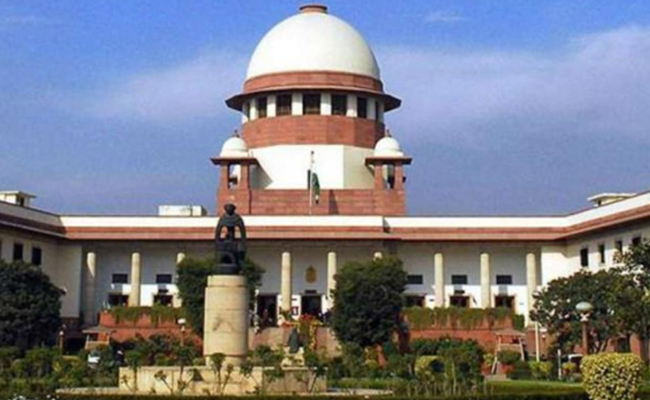
New Delhi (PTI): The government has promulgated an ordinance to increase the strength of the Supreme Court from the present 34 judges to 38, including the Chief Justice of India.
The law ministry notified the ordinance on Saturday, which amended the Supreme Court (Number of Judges) Act, 1956, to increase the sanctioned strength of the top court.
So far, the sanctioned strength of the top court was 34, including the Chief Justice of India (CJI). Now, the number of judges has been increased by four, taking the sanctioned strength to 38.
The top court will now have 37 judges, other than the CJI.
With the apex court having two vacancies at present, and the ordinance coming into force immediately, the Supreme Court Collegium will now have to recommend six names for appointment as judges in the top court.
A bill will be brought in the Monsoon Session of Parliament to convert the ordinance – an executive order – into a law passed by Parliament.
The Union Cabinet had cleared a draft bill on May 5 to increase the number of apex court judges.
The strength of the Supreme Court was last increased from 30 to 33 (excluding the CJI) in 2019.
The Supreme Court (Number of Judges) Act, as originally enacted in 1956, put the maximum number of judges (excluding the CJI) at 10.
This number was increased to 13 by the Supreme Court (Number of Judges), Amendment Act, 1960, and to 17 by another amendment to the law.
The Supreme Court (Number of Judges) Amendment Act, 1986, augmented the strength of judges from 17 to 25, excluding the CJI.
A fresh amendment in 2009 further increased the strength from 25 to 30.
Article 124(3) of the Constitution lists the qualifications required to become a Supreme Court judge.
An Indian citizen who has either served as a high court judge for at least five years, or as an advocate for 10 years, or is a distinguished jurist, can be appointed to the top court.
The strength of the Supreme Court is increased based on the recommendations of the CJI, who writes to the Union law minister. After consulting the finance ministry, the Department of Justice under the law ministry moves the Cabinet with a draft bill.