Karnataka govt issues guidelines following Nipah outbreak in neighbouring Kerala
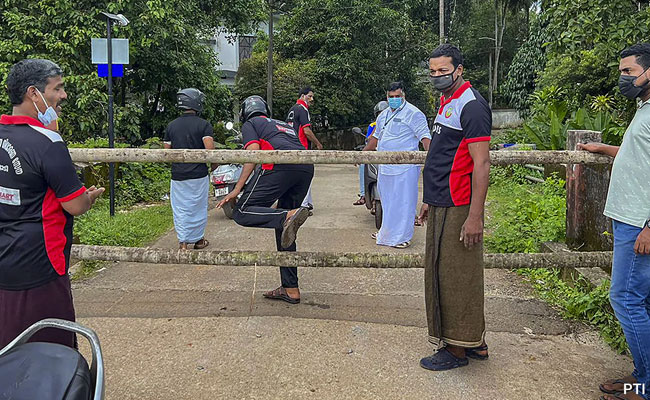
Bengaluru: Avoiding unnecessary travel to the affected area in Kerala and intensifying fever surveillance in the bordering districts are among the guidelines issued by Karnataka government following the Nipah outbreak in the neighbouring state.
Training of health staff and keeping beds ready at district hospitals for quarantining the suspected cases are among the measures suggested.
"In view of reporting of 4 confirmed Nipah cases with 2 deaths in Kozhikode district of Kerala state, the surveillance activities in the districts bordering Kerala need to be intensified to prevent the transmission of the infection," the Commissionerate of Health and Family Welfare and Ayush services said in a circular dated on September 14.
Issuing the guidelines for undertaking surveillance activities for immediate compliance, it said initiation of immediate actions by all the districts in the state to prevent the Nipah virus disease transmission at all levels is expected.
Immediate actions suggested to prevent transmission include- avoiding unnecessary travel of the general public from Karnataka to the affected area in Kerala, setting up of check posts for fever surveillance at the point of entries at the border, and to intensify the fever surveillance in the bordering districts to Kerala (Chamarajanagara, Mysuru, Kodagu, Dakshina Kannada) and at the points of entries to Karnataka.
It calls for ensuring widespread dissemination of IEC (Information Education and Communication) materials to educate the general public regarding the Nipah virus disease, and avoid unnecessary panic. Also, training to health staff right upto PHC level, and having a District Rapid Response Team (RRT) inclusive of veterinary officers.
The guidelines further include, identifying and keeping reserved, at least two beds in the district hospitals for quarantining the suspected cases reported if any. Negative pressure ICU to be identified and also to ensure adequate stock of all essential drugs and oxygen in the hospitals, along with adequate stock of PPE, VTM (viral transfer medium) and other accessories for sample collection and transportation from a suspected case.
All private hospitals, nursing homes and clinics have been asked to report the suspected case to the District Health and Family Welfare Officer of the concerned district immediately.
Collecting of clinical sample from suspected case if any and arrange for the immediate shipment to NIV (National Institute of Virology), Pune through NIV, Bengaluru as per the guidelines, monitoring the suspected cases if any and their contacts till the end of incubation period, and strictly following of the Government of India guidelines to detect the cases, have been stressed upon.
The circular asks the districts bordering Kerala (Chamarajanagara, Mysuru, Kodagu, and Dakshina Kannada) to submit compliance reports on the preventive steps taken.
Let the Truth be known. If you read VB and like VB, please be a VB Supporter and Help us deliver the Truth to one and all.
AIITA welcomes Karnataka’s ban on obscene songs in school events
Bhatkal: The Karnataka unit of the All India Ideal Teachers Association (AIITA) has welcomed the Karnataka government’s decision to strictly ban school children from dancing to obscene songs during educational and cultural programmes in government, aided, and private schools across the state.
AIITA Karnataka State President M. R. Manvi congratulated the government for taking what he termed an important step to preserve the sanctity of education.
“Such decisions to safeguard the dignity of school children and uphold the values of education are the need of the hour. This rule should not be limited to government schools alone but must be strictly implemented in all private educational institutions as well,” he said.
He further urged the government to address other concerns within school programmes.
“The government should not only prohibit obscene dances in the name of school anniversaries, but also ensure that plays and dialogues that incite religious hatred are avoided. Schools should be centres of harmony, not platforms for spreading hatred,” he added.
According to a recent circular issued by the Department of School Education and Literacy, obscene dances are adversely affecting the mental health and moral values of students.
In this regard, schools have been advised to use songs that promote nationalism, positive thinking, the greatness of Kannada culture, and value-based traditions instead of inappropriate content during programmes.
The circular also emphasises that students should be dressed in decent attire.
AIITA also backed the department’s warning that disciplinary action would be taken against head teachers if such guidelines are violated. The association has further demanded that district Deputy Directors of Public Instruction strictly monitor the implementation of these rules.