Karnataka govt seeks agency to manage rural drinking water units: Minister
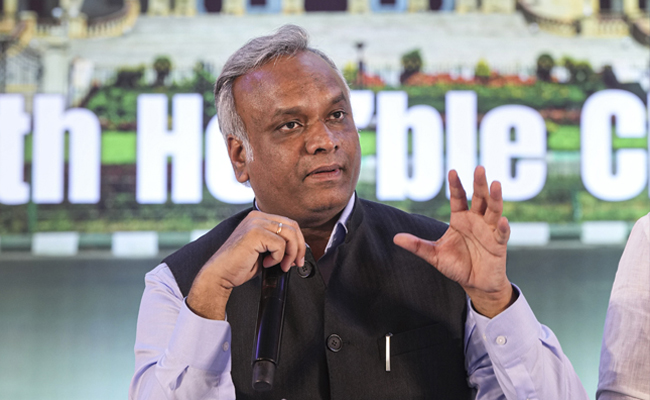
Belagavi (Karnataka) (PTI): Karnataka Minister Priyank Kharge on Wednesday said the state government is working to appoint an agency to manage clean drinking water units in rural areas.
The state Rural Development and Panchayat Raj minister was responding to a question by Hirekerur MLA U B Banakar in the legislative assembly.
"In the rural areas of the state, many clean drinking water units have been set up under corporate social responsibility (CSR) grants, including contributions by MLAs and MPs, and handed over to gram panchayats. After the maintenance period, problems have arisen in keeping these units operational," Priyank said.
He added that a proposal has been made to award a maintenance contract to one of the country’s reputed drinking water unit manufacturing companies, but so far, no companies have come forward to take up the work.
ALSO READ: Woman threatens to end life as police official refuses to accept love proposal, FIR registered
"The government is continuing its efforts and will resolve this problem soon," he said.
On a query regarding fluoride content in water, the minister said water quality testing is being conducted monthly in all zilla panchayats.
"Laboratories have been opened for this purpose. Around 6.5 lakh water samples have been tested across the state, and water testing kits have been provided to villages," he added.
Let the Truth be known. If you read VB and like VB, please be a VB Supporter and Help us deliver the Truth to one and all.
Man booked for duping 7 persons of Rs 91 lakh on promise of awarding govt works
Mumbai (PTI): The Mumbai police have registered a case against a man for allegedly duping seven persons of Rs 91 lakhs on the promise of awarding them works of different government departments, an official said on Tuesday.
The accused was identified as Satish Kadam, a resident of Nanded in Marathwada region, an official said.
A complaint was filed by Hanumant Vadje, who alleged that the accused cheated him and six others of around Rs 91 lakh by promising to give them various works of Urban Development and Social Justice Department, he said.
The fraud occurred between 2024 and 2026, with Kadam collecting money in cash and into his accounts, police said, adding he had returned some amount to them partially.
Multiple cheques issued by the accused bounced, prompting the victim to lodge a complaint at the Marine Drive police station. Based on the complaint, a case of cheating and criminal breach of trust was registered against him.
The case is under further investigation, the official said.