Karnataka govt seriously considering law against religious conversion: CM Bommai
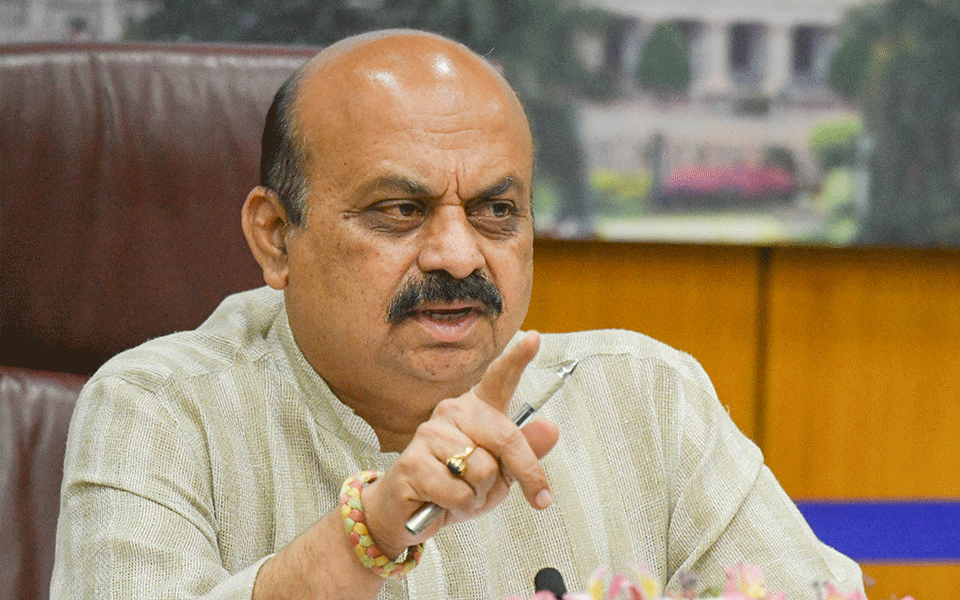
Bengaluru (PTI): The Karnataka government is seriously considering bringing in a law against religious conversion either by force or through inducement in the state, Chief Minister Basavaraj Bommai said on Tuesday.
"Such things (conversions) are happening here and there. Couple of days ago I gave appropriate directions to district administrations not to allow any religious conversion through inducement or by force, as it is illegal," Bommai said in response to a question on alleged incidents of religious conversions in Kalaburagi and Byadarahalli here.
Speaking to reporters here, he said, "as several such incidents are happening, we are seriously considering a law against religious conversion through inducement or by force." State Home Minister Araga Jnanendra had last week told the legislative assembly that the government was mulling enacting a law to regulate religious conversion, as a ruling BJP MLA from Hosadurga Goolihatti Shekhar said his own mother has converted to Christianity falling prey to inducement.
BJP-ruled states like Uttar Pradesh, Himachal Pradesh and Madhya Pradesh already have laws to prevent forcible religious conversion.
Let the Truth be known. If you read VB and like VB, please be a VB Supporter and Help us deliver the Truth to one and all.
Power struggle in ruling Cong has 'created massive confusion' in Karnataka: BJP leader Ashoka
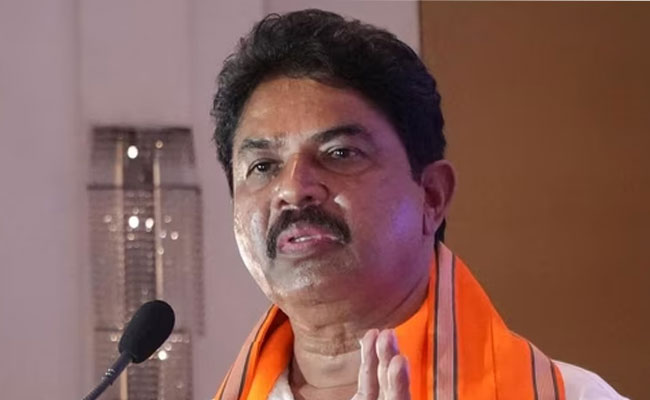
Bengaluru (PTI): BJP leader R Ashoka on Friday claimed that the ongoing power struggle between Chief Minister Siddaramaiah and his deputy D K Shivakumar has created massive confusion in Karnataka.
He remarked that the proverb “when two people fight, the third one benefits” has come true, as AICC President Mallikarjun Kharge is also now making efforts to become Chief Minister.
Speaking to reporters here, Ashoka said the entire government has turned into a house of confusion due to the alleged power tussle.
Kharge’s new statement has only added to the chaos, he said.
Congress chief Mallikarjun Kharge had on Friday said that no date has been fixed yet to discuss possible leadership change in Karnataka.
This came a day after Kharge said there was no change of CM in Karnataka "for now" and that the leadership issue in the state would be resolved soon.
The BJP leader said that Kharge too has aspirations and that he was cheated earlier.
"Perhaps he has received a green signal from the Congress high command to become CM. Everyone is already saying Kharge should become CM. Kharge himself has declared, “I am ready to become CM.” Despite many attempts in the past, he never became CM. Now he is trying to seize the opportunity," the Leader of Opposition in the state assembly said.
According to him, the situation in Congress has perfectly become a case of “two people fighting, third one benefits.”