Karnataka govt simultaneously launches 114 'Namma Clinics' across State
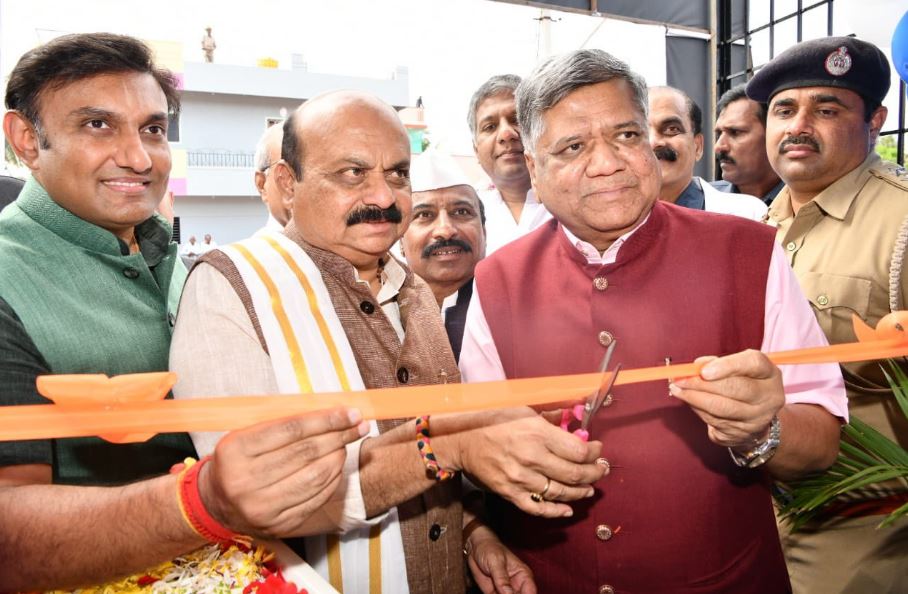
Bengaluru, Dec 14: The Karnataka government on Wednesday simultaneously launched 114 'Namma Clinics', which would provide primary healthcare services to vulnerable sections, especially the urban poor and daily wage workers, across the state.
The Chief Minister Basavaraj Bommai inaugurated a Namma Clinic at Bhairidevarakoppa in Hubballi of Dharwad district in the presence of Health Minister K Sudhakar, among others.
Twelve types of health services will be available at these centres free of cost, and each clinic will consist of a medical officer, a nurse, lab technician, and a Group D employee, an official statement had said earlier.
Health Minister K Sudhakar said the government is working to operationalise all 438 Namma Clinics across the State as announced earlier and all the remaining ones will be functional by January-end.
A total of 243 of Namma Clinics will be functioning under the Bruhat Bengaluru Mahanagara Palike (BBMP) area, and work is underway to make them operational for public service by January second week, a statement said.
Each Namma Clinic is expected to cater to a population of 10,000 to 20,000.
The 12 kinds of services include pregnancy, postnatal, neonatal care, childhood and adolescent care, universal immunisation services, family welfare, contraceptive, infectious disease management, common and minor ailment care and diabetes, it added.
A new era in Karnataka's Public Healthcare!
— Dr Sudhakar K (@mla_sudhakar) December 14, 2022
In line with Hon'ble PM Shri @narendramodi Ji's vision of making quality primary healthcare accessible to all, CM Shri @BSBommai dedicated 114 'Namma Clinics' across the state in the first phase in Hubballi today.
1/4 https://t.co/YpVmb982ZI
Let the Truth be known. If you read VB and like VB, please be a VB Supporter and Help us deliver the Truth to one and all.
NIA court to complete framing of charges against 2010 hand-chopping case accused on May 15
Kochi (PTI): A special court here will complete proceedings for framing charges against the prime accused in the 2010 hand-chopping case involving professor T J Joseph, in which PFI activists were accused of attacking him at Muvattupuzha.
Ernakulam Special Court for NIA cases judge P K Mohandas, on April 30, heard the arguments of counsel for accused Savad and Shafeer C and decided to proceed with framing charges against the duo.
A group chopped off Thodupuzha Newman College professor Joseph's right hand in July 2010, accusing him of religious blasphemy in a question paper he had prepared.
The case, later taken over by the National Investigation Agency (NIA), resulted in the conviction of 19 accused.
The first accused, Savad, who allegedly chopped off Joseph’s palm, was arrested in Berram in Mattannur, Kannur, in January 2024, where he had allegedly been hiding under the pseudonym Shajahan.
The NIA also arrested Shafeer, who allegedly arranged shelter and provided logistical support to Savad at Chakkad and Mattannur in Kannur since 2020.
On April 30, the court heard the counsel for the accused and the NIA prosecutor on framing charges against the duo.
"On going through the documents and evidence in the case and on hearing the counsel for the accused and the prosecutor, I am of the opinion that there are grounds for presuming that the first accused has committed offences punishable under provisions of the IPC, the Explosive Substances Act and the Unlawful Activities (Prevention) Act, and that the second accused has committed offences punishable under the IPC and the UAPA, and there are materials for framing charges under these provisions against the accused," the court said.
The court directed that Savad be produced and Shafeer, who is on bail, appear before it on May 15 for recording their pleas as part of the charge-framing process.
After framing the charges, the court will schedule the trial in the case.