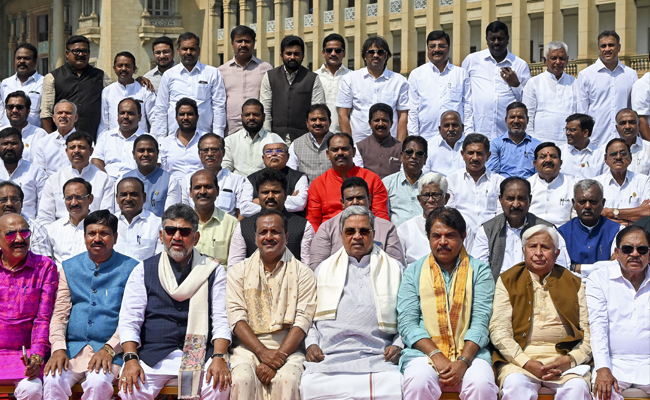
Karnataka govt to conduct random tests on categorized people to cap COVID-19 spike
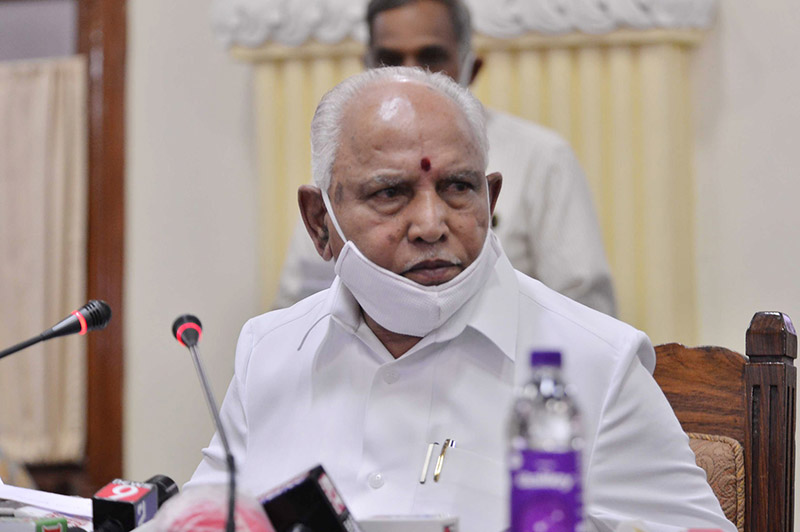
Bengaluru: The Karnataka government on Wednesday decided to conduct random testing on slum dwellers, vendors, and bill collectors at markets, delivery and courier boys among others, aimed at effective surveillance following the recent spike in COVID-19 cases in the state.
"In view of the recent increase of COVID 19 cases and to ensure effective surveillance, it is hereby directed that random testing using RT-PCR pooled sample technique be done for a certain category of persons," the circular issued by the Additional Chief Secretary, (Health and Family Welfare Department) Jawaid Akhtar said.
The category of people includes slum dwellers, vendors or bill collectors in malls, supermarkets, markets and footpaths, and delivery boys of food chains and couriers, it said, adding that preference should be given to including persons above 50 years of age and those with co-morbidities.
Those likely to come in contact with the maximum number of persons in markets and malls should be included in the sample as per the capacity of the districts, which should be inclusive of samples collected by routine testing as per protocols issued previously, the circular said.
The Commissioner, BBMP (Bengaluru civic body), and Deputy Commissioners of districts, in consultation with the local expert committee, will identify the persons and locations from which random samples are to be collected, it added.
On Wednesday, the COVID-19 death toll in Karnataka breached the 100-mark as the state reported eight new fatalities and 204 cases, taking the total number of infections to 7,734.
Let the Truth be known. If you read VB and like VB, please be a VB Supporter and Help us deliver the Truth to one and all.
Pakistan ‘relaying messages’ between Iran and US for peace in West Asia: official
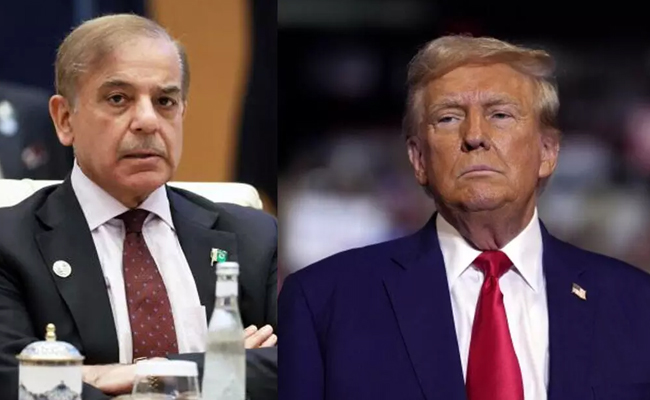
Lahore (PTI): Pakistan is relaying messages between Iran and the US with the aim to help de-escalate the West Asia conflict, a top government official said on Wednesday.
"We are trying to broker US-Iran peace talks and have also offered Islamabad as a venue for the purpose. But it will be possible if Iran agrees to sit at the table with America," a top official in the Shehbaz Sharif administration said on the condition of anonymity.
"At the moment, Pakistan is relaying messages between the US and Iran. Islamabad not only handed over the 15-point proposal of the US to Iran but also Tehran's demands to the Trump administration to ink a peace deal," he said.
The 15-point proposal outlines strict conditions targeting Iran’s nuclear and regional policies in exchange for major sanctions relief, he added.
Under the proposal, Iran would be required to fully dismantle its nuclear programme and commit never to pursuing nuclear weapons. All enriched nuclear material would be transferred to the International Atomic Energy Agency (IAEA) within an agreed timeframe.
Key nuclear facilities, including the Natanz Nuclear Facility, Isfahan Nuclear Technology Centre and Fordow Fuel Enrichment Plant, would be decommissioned and destroyed under the plan. The IAEA would also be granted full access to all aspects of Iran’s nuclear programme, he said, speaking about the proposal.
The proposal further calls on Iran to cease funding, directing and arming allied groups across the region, a longstanding point of contention with both Washington and Israel, he added.
In a move aimed at safeguarding global energy supplies, the plan ensures that the Strait of Hormuz will remain open as a free maritime route, preventing any disruption to international shipping.
As a final decision on Iran’s missile programme has been deferred, the proposal says any future arrangement would impose limits on the range and number of missiles, restricting their use to defensive purposes only.
In return, the United States is prepared to lift all sanctions on Iran and support the development of a civilian nuclear programme, including assistance at the Bushehr facility, the official informed.
The proposal also includes removing the so-called “snapback” mechanism, which allows for the automatic reimposition of United Nations sanctions.
The Iranian regime has hardened its stance and is seeking significant concessions from the United States if mediation efforts lead to serious negotiations, he said.
"In any talks with the US, Iran would not only demand an end to the war but concessions that are likely red lines for President Trump —guarantees against future military action, compensation for wartime losses and formal control of the Strait of Hormuz," the official said and added Iran would also refuse to negotiate any limitations to its ballistic missile programme.
Iran’s president earlier warned that stability in the region is possible only through cooperation and respect for the will of the nations.
“Today we are witnessing the awakening of the people in many countries around the world,” Masoud Pezeshkian wrote on X, claiming that people of Pakistan, Turkiye, Iraq, Lebanon, Egypt, and Arab countries are loudly expressing their rejection of the US, Israel and their crimes.
He said that Iran has also outlined a set of key counter-conditions in response to the 15-point proposal.
Iran has demanded the lifting of US-imposed economic sanctions. It rejected calls for a total halt to uranium enrichment, insisting that its nuclear programme is for peaceful purposes and falls within its sovereign rights, he added.
Another major sticking point is Iran’s defence and missile programme, which Iranian officials describe as essential for national security.
Tehran has refused to accept any proposal that would limit its missile capabilities or weaken its regional deterrence posture.
Iran is also seeking binding guarantees from Washington to ensure that any future agreement will not be abandoned unilaterally, as happened in the past, he added.
Iranian leaders have stressed the need for assurances against military escalation or regime-change efforts.
Iran also wants no presence of US forces in the Gulf and control over strategic waterways, the official added.