Karnataka govt to discuss Bill on levying cess to gig workers during winter session
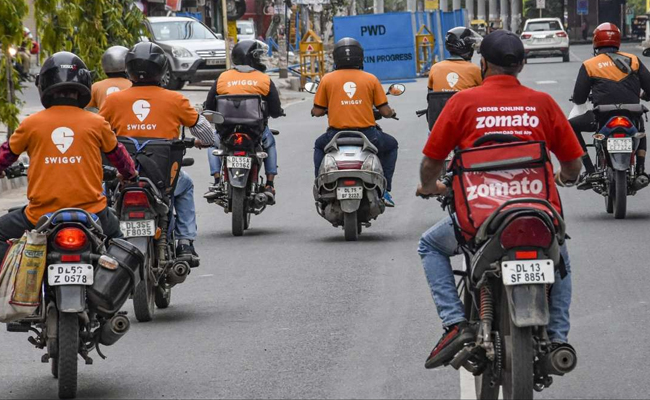
Bengaluru: The state government is likely to introduce in the winter session of the Karnataka Assembly this year a Bill to levy a cess that will fund the welfare of gig workers, an issue that is being discussed for several months.
The quantum to be levied as cess for the welfare of the workers is yet to be confirmed and there is also ambiguity in the draft Karnataka Platform-based Gig Workers (Social Security and Welfare) Bill regarding the calculation of the cess to be levied. The authorities concerned are yet to decide if the cess should be levied as per transaction or based on the state-specific turnover of an aggregator, Deccan Herald reports.
Mohammed Mohsin, Principal Secretary of the Labour Department has said that the Department had already held 20 to 25 rounds of discussions on the matters with the stakeholders. A levy of cess as per transaction was preferred by both parties since the aggregators do not usually disclose their total turnover.
ALSO READ: Tumakuru: Senior BJP leader Sogadu Shivanna assaulted by party activist
The Bill drafted proposes to set up a Karnataka Gig Worker’s Social Security and Welfare Fund, inclusive of money from the cess, government grant as well as contributions by individual platform-based gig workers.
During the Karnataka Assembly elections of 2023 too, the Congress had promised in its manifesto efforts for the welfare of gig workers. The party had also assured the workers that a Karnataka Platform-based Gig Workers’ Welfare Board would be set up with Rs 3,000-crore seed money as a revolving fund.
The Niti Aayog report of 2022 has stated that the gig workforce is expected to expand to 2.35 crore by 2029-30, which makes the Bill crucial.
Citing the provisions of the Centre’s Social Security Code, 2020, Babu Mathew from the Centre for Labour Studies at the National Law School of India University (NLSIU) also opined that contribution by an aggregator shall not cross 5 per cent of the amount that is paid or payable to either gig or platform workers.
Let the Truth be known. If you read VB and like VB, please be a VB Supporter and Help us deliver the Truth to one and all.
Second PUC results: Life convict clears exam with distinction, DGP lauds effort
_vb_63.jpeg)
Bengaluru: A life convict lodged in Ballari Central Prison has successfully cleared the second PUC examination.
Ashok Kumar S, who appeared for the examination under prison escort, secured 481 marks out of 600, registering 80.1 percent.
Director General of Police (Prisons and Correctional Services), Alok Kumar (IPS), shared the development on his official ‘X’ handle, commending the inmate’s achievement.
In his post, he stated that it was heartening to see a life convict score over 80 percent in the examination, adding that the inmate had appeared from Ballari Central Prison under escort.
It’s heartening to see that one of our life convict prisoners Ashok has obtained 80.1% marks in PUC exam. He appeared under Prison escort from Ballari Central Prison for his exams.
— alok kumar (@alokkumar6994) April 9, 2026
Glad to see that Walls of the prison has not subdued his hopes for a better future. pic.twitter.com/Nzlcy076SR
He further noted that the achievement reflected that the “walls of the prison have not subdued his hopes for a better future.”
Alok Kumar in his post also shared the result sheet of Ashok.
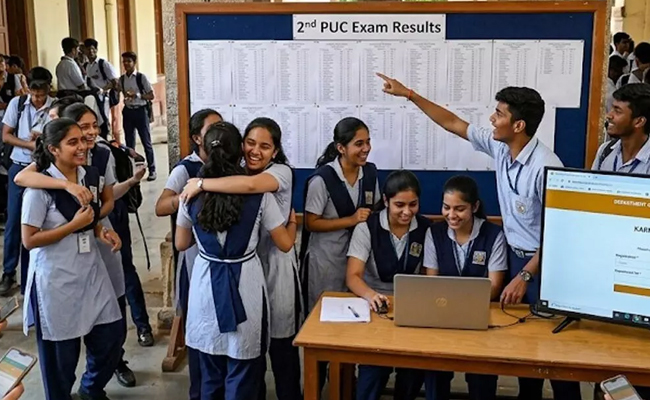
The Karnataka School Examination and Assessment Board (KSEAB) declared the second PUC results for 2026 on April 9.
A total of 6,32,200 students appeared for the examination across all streams, of whom 5,46,698 passed, recording an overall pass percentage of 86.48 per cent.