Karnataka govt yet to decide on holding winter session of Assembly at Belagavi
Bengaluru, Sep 14: The Karnataka government appears to be in a quandary on holding the winter session of the Assembly in Belagavi as is the norm since the district has been ravaged by floods this year.
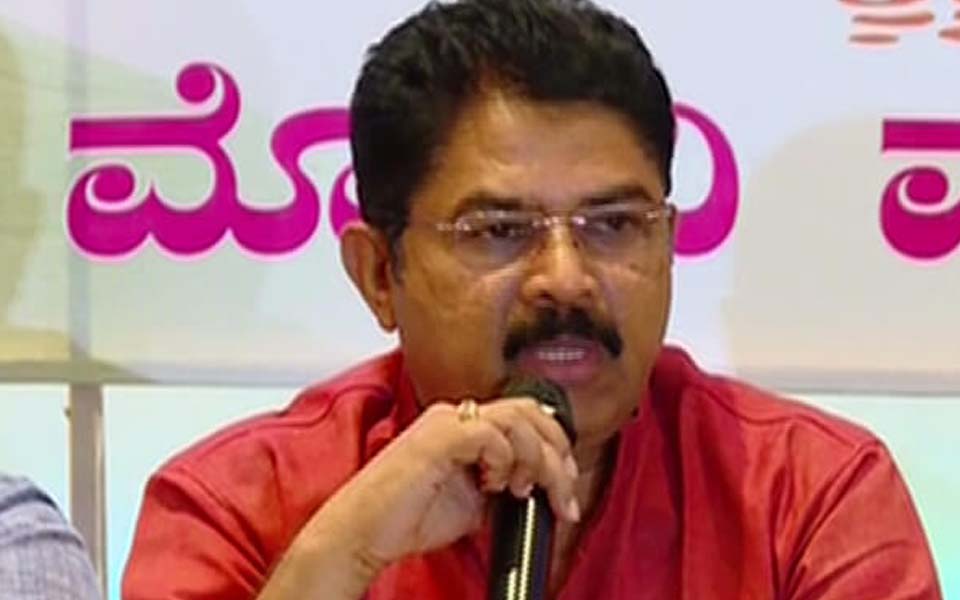
"The government has not decided yet. I will discuss with the Chief Minister whether to conduct the Assembly session in Belagavi. We will discuss the challenges of holding the session there," Revenue Minister R Ashoka told reporters on Saturday outside the residence of Chief Minister B S Yediyurappa.
Belagavi is considered to be the second capital city as it houses the Suvarna Soudha.
The Law and Parliamentary Affairs Minister J C Madhu Swamy told PTI, no decision has been taken yet on where to hold the session.
"The decision has to be taken by the cabinet on the next Assembly session. Maybe in the next cabinet meeting the discussions will take place," he said.
According to BJP sources, the government is not keen on holding the session in Belagavi, as it was ravaged by floods recently.
The state has not yet received the funds it had anticipated from the Centre.
Belagavi bore the brunt of the severe floods as the swollen Krishna river and the tributaries wrecked havoc there submerging most parts of the north Karnataka district.
Other districts of North Karnataka such as Bagalkote, Bidar, Bijapur, Yadgir, Gadag, Koppal, Hubballi-Dharwad, Uttara Kannada and Davangere also suffered due to floods.
As many as 103 taluks of 22 districts were affected in the floods last month.
Approximately 7.5 lakh hectares of land was submerged in water and 82 people lost their lives.
The floods in August compelled the government to open 493 relief camps where about 2.10 lakh people were accommodated till the waters receded.
Let the Truth be known. If you read VB and like VB, please be a VB Supporter and Help us deliver the Truth to one and all.
AIITA welcomes Karnataka’s ban on obscene songs in school events
Bhatkal: The Karnataka unit of the All India Ideal Teachers Association (AIITA) has welcomed the Karnataka government’s decision to strictly ban school children from dancing to obscene songs during educational and cultural programmes in government, aided, and private schools across the state.
AIITA Karnataka State President M. R. Manvi congratulated the government for taking what he termed an important step to preserve the sanctity of education.
“Such decisions to safeguard the dignity of school children and uphold the values of education are the need of the hour. This rule should not be limited to government schools alone but must be strictly implemented in all private educational institutions as well,” he said.
He further urged the government to address other concerns within school programmes.
“The government should not only prohibit obscene dances in the name of school anniversaries, but also ensure that plays and dialogues that incite religious hatred are avoided. Schools should be centres of harmony, not platforms for spreading hatred,” he added.
According to a recent circular issued by the Department of School Education and Literacy, obscene dances are adversely affecting the mental health and moral values of students.
In this regard, schools have been advised to use songs that promote nationalism, positive thinking, the greatness of Kannada culture, and value-based traditions instead of inappropriate content during programmes.
The circular also emphasises that students should be dressed in decent attire.
AIITA also backed the department’s warning that disciplinary action would be taken against head teachers if such guidelines are violated. The association has further demanded that district Deputy Directors of Public Instruction strictly monitor the implementation of these rules.