Karnataka govt's guarantee schemes ease financial burden, empower women: Study
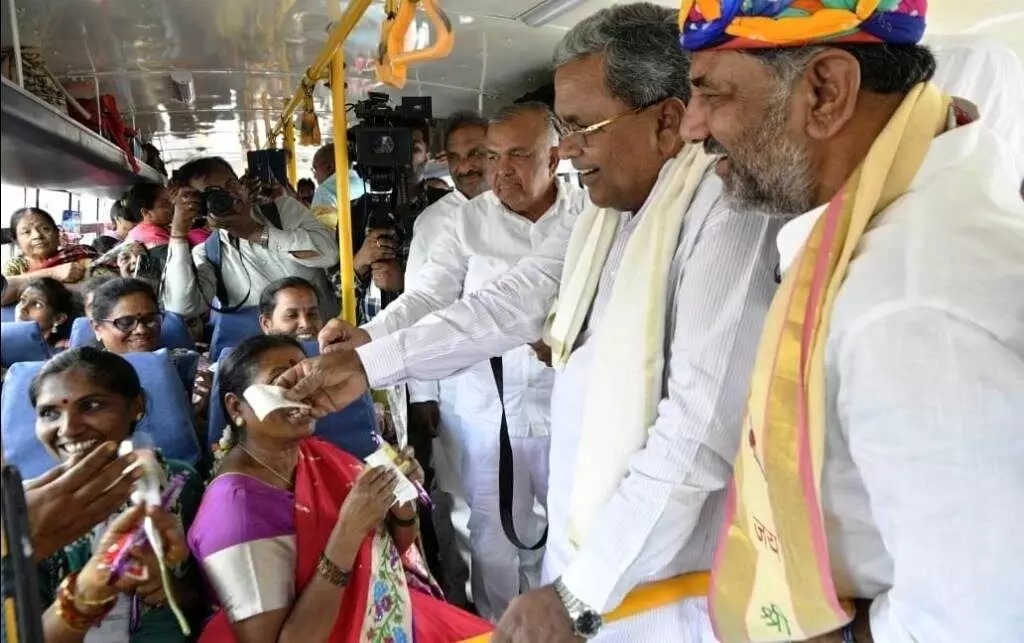
Bengaluru: A year-long independent study has found that the Karnataka government’s five guarantee schemes have significantly empowered women, particularly from low-income households, by easing financial stress and improving household well-being.
The survey, led by independent policy consultant Tara Krishnaswamy in collaboration with Lokniti-CSDS, Bangalore University, Tumkur University, and Indus Action, covered approximately 6,300 women across 15 districts in Karnataka. According to the study, as cited by The Hindu, 84% of respondents reported that the schemes reduced their families’ financial burden, while 89% felt that the guarantees contributed to their financial upliftment.
Improved nutrition, health, and independence
The study highlights how beneficiaries are utilising the monetary benefits and savings from the schemes. Around 91% of respondents said they used the funds to purchase food and dietary essentials such as grains, vegetables, fruits, pulses, eggs, and meat.
Nearly 95% of the women stated that their families ingested better nutrition and improved diets due to the benefits, while 90% reported increased access to healthcare.
Additionally, over 80% of women noted improvements in their personal health, nutrition, and financial security. More than 50% of respondents also indicated they had resumed or continued their education due to the support received.
Economic and social empowerment
According to the study, the direct benefit of Rs 2,000 per month through the Gruha Lakshmi scheme played a key role, while additional savings came from Gruha Jyoti, which helped over 90% of women save up to Rs 1,000 per month on electricity bills. The Shakti scheme enabled up to Rs 1,000 in weekly savings. Notably, 27% of respondents reported using savings from the five guarantees to repay loans.
The Shakti scheme also contributed to greater mobility and independence, with 67% of women travelling independently for work or leisure. About 19% were able to secure new or better-paying jobs due to free transportation.
Other guarantees also made an impact: Anna Bhagya improved household diets, Gruha Jyoti reduced electricity costs for 82% of families, and Yuva Nidhi supported skill development among unemployed youth, though the latter had a limited reach, benefiting just 7% of respondents.
“These schemes are a social safety net. The money is not sitting idle somewhere. Whether it is money received through Gruha Lakshmi or any savings that they have because of these schemes, it is all being spent mainly on food, nutrition and health,” The Hindu quoted Krishnaswamy as saying.
Challenges and recommendations
Despite the positive outcomes, the study also identified several challenges, including delays in benefit distribution, administrative hurdles, and technological barriers. It noted that many women beneficiaries have only basic education (up to the 10th standard or less) and often struggle with mobile apps, portals, ATMs, or even reading electricity bills.
The study recommends boosting financial and digital literacy through local panchayats to help bridge these gaps.
Let the Truth be known. If you read VB and like VB, please be a VB Supporter and Help us deliver the Truth to one and all.
Three private doctors arrested in illegal scanning case involving 31 minor pregnant girls in KR Pet
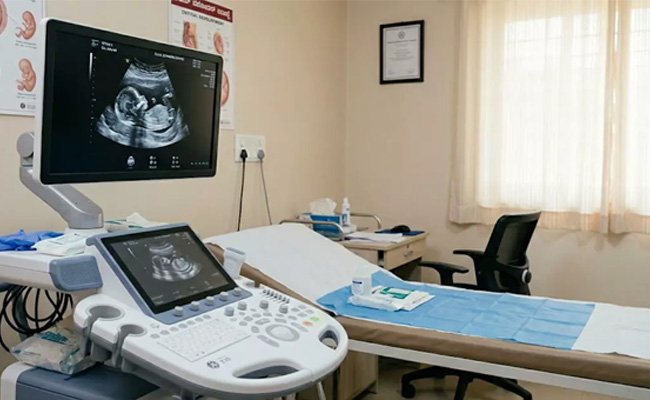
Mandya: Police on Tuesday arrested three private doctors in connection with a case involving alleged illegal scanning of 31 minor pregnant girls at a private diagnostic centre in KR Pet. The accused were later remanded to judicial custody.
The arrested doctors have been identified as Dr. Divyachetan of Chetana Maternity Centre, Dr. Harshit of Navi Diagnostic Centre, and Dr. Harish of Kushal Diagnostic Centre.
Police said Priyanka, a gynaecologist attached to a government hospital, is absconding and efforts are under way to trace her.
The case came to light after Karnataka Lokayukta Police recently conducted raids, during which illegal sex determination tests on minor pregnant girls were allegedly detected at two diagnostic centres in KR Pet town.
Following the raids, District Health and Family Welfare Officer Dr. Mohan, Deputy Director of the Women and Child Development Department P.S. Asha, and District Child Protection Officer Rashmi inspected several diagnostic centres and filed cases at KR Pet Town and Rural police stations.
According to the allegations, Navi Diagnostic Centre conducted scans on 24 minor pregnant girls, including 19 cases in 2024 and five in 2025. Kushal Diagnostic Centre is accused of conducting scans on seven minor pregnant girls.
Meanwhile, Deputy Commissioner Dr. Kumar has directed taluk vigilance committees to inspect all 63 ultrasound scanning centres in the district and submit reports within 10 days.
Officials said the Tahsildar of each taluk has been appointed chairperson of the respective committee.