Karnataka govt's plans to free Hindu temples from state control "a historical blunder": Congress
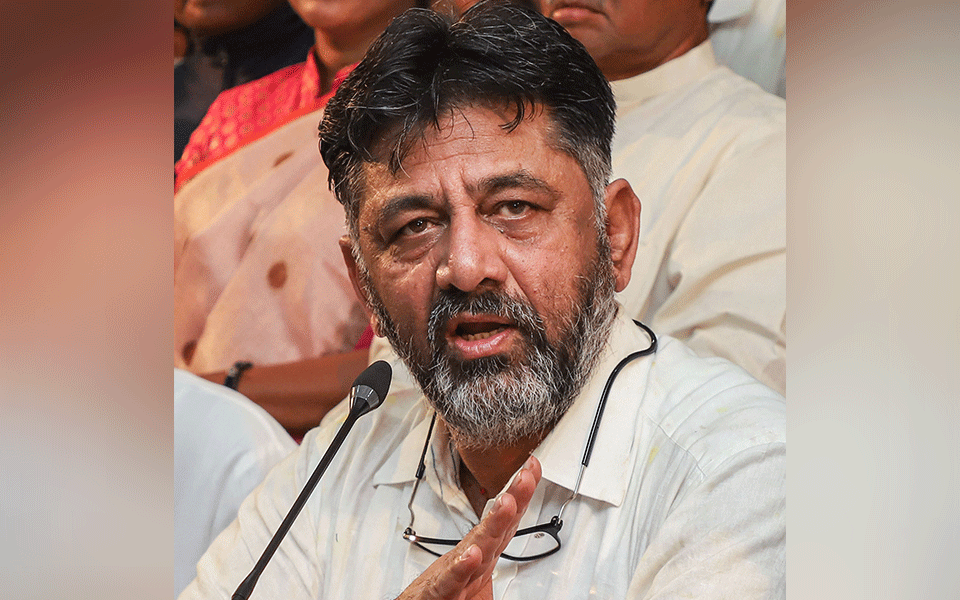
Bengaluru(PTI): The Congress Karnataka unit president D K Shivakumar on Thursday described the BJP government's plans to free Hindu temples from state control as a historic blunder and said that his party won't allow it.
He said the temples that are currently owned by the government were the state's wealth and its treasury.
"They are doing a historic blunder, how can Muzrai (department) or government temples be given to local people for administration? It is the wealth of the government, wealth of the treasury, crores of rupees are collected by these temples. What political stand are they (BJP govt) trying to take looking at some other states?" Shivakumar said.
Speaking to reporters here, he said it cannot be done in Karnataka and the Congress will not allow it.
"On January 4 we are having a meeting of all senior Congress leaders, during which we will discuss this and come out with our stand," he added.
The Karnataka government will bring in a law aimed at freeing Hindu temples from laws and rules that control them at present, Chief Minister Basavaraj Bommai had said while addressing the state BJP executive meeting at Hubballi on Wednesday.
"I want to tell this executive that our government will bring in a law to this effect before the budget session. We will free our temples from such laws and conditions. Other than regulation, there won't be anything else. We will ensure that they are managed independently," he had said.
This is seen as another major move by the Bommai government after it got the contentious "Karnataka Protection of Right to Freedom of Religion Bill, 2021", popularly known as the 'anti-conversion bill' passed in the legislative assembly, ahead of 2023 assembly elections.
The Bill, however, is yet to become a law as it is pending for tabling and passage in the Legislative Council.
A total of 34,563 temples in the state come under Muzrai (Hindu religious endowment) department that have been categorized as grade A, B and C, based on their revenue generation.
A total of 207 temples with annual revenue above Rs 25 lakh come under category A, 139 temples between Rs five lakh to Rs 25 lakh come under category B, and 34,217 temples with less than Rs 5 lakh annual revenue under category C.
It has been a long standing demand from several Hindu organisations including the Vishwa Hindu Parishad (VHP) that temples should be freed from government control and they be handed over to the Hindu society.
Let the Truth be known. If you read VB and like VB, please be a VB Supporter and Help us deliver the Truth to one and all.
Ordinance issued to increase number of Supreme Court judges from 34 to 38
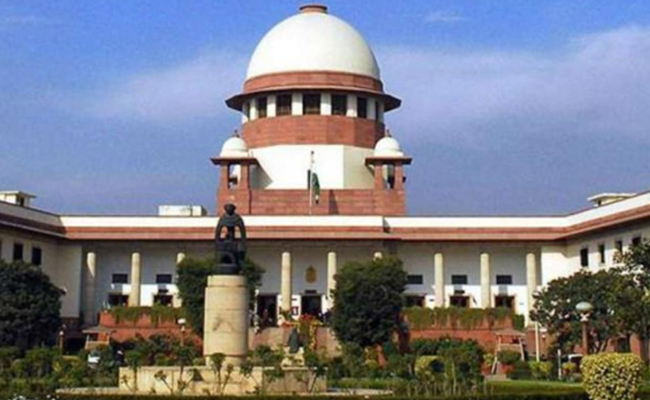
New Delhi (PTI): The government has promulgated an ordinance to increase the strength of the Supreme Court from the present 34 judges to 38, including the Chief Justice of India.
The law ministry notified the ordinance on Saturday, which amended the Supreme Court (Number of Judges) Act, 1956, to increase the sanctioned strength of the top court.
So far, the sanctioned strength of the top court was 34, including the Chief Justice of India (CJI). Now, the number of judges has been increased by four, taking the sanctioned strength to 38.
The top court will now have 37 judges, other than the CJI.
With the apex court having two vacancies at present, and the ordinance coming into force immediately, the Supreme Court Collegium will now have to recommend six names for appointment as judges in the top court.
A bill will be brought in the Monsoon Session of Parliament to convert the ordinance – an executive order – into a law passed by Parliament.
The Union Cabinet had cleared a draft bill on May 5 to increase the number of apex court judges.
The strength of the Supreme Court was last increased from 30 to 33 (excluding the CJI) in 2019.
The Supreme Court (Number of Judges) Act, as originally enacted in 1956, put the maximum number of judges (excluding the CJI) at 10.
This number was increased to 13 by the Supreme Court (Number of Judges), Amendment Act, 1960, and to 17 by another amendment to the law.
The Supreme Court (Number of Judges) Amendment Act, 1986, augmented the strength of judges from 17 to 25, excluding the CJI.
A fresh amendment in 2009 further increased the strength from 25 to 30.
Article 124(3) of the Constitution lists the qualifications required to become a Supreme Court judge.
An Indian citizen who has either served as a high court judge for at least five years, or as an advocate for 10 years, or is a distinguished jurist, can be appointed to the top court.
The strength of the Supreme Court is increased based on the recommendations of the CJI, who writes to the Union law minister. After consulting the finance ministry, the Department of Justice under the law ministry moves the Cabinet with a draft bill.