Karnataka HC allows Russian woman, daughters found in cave to return home

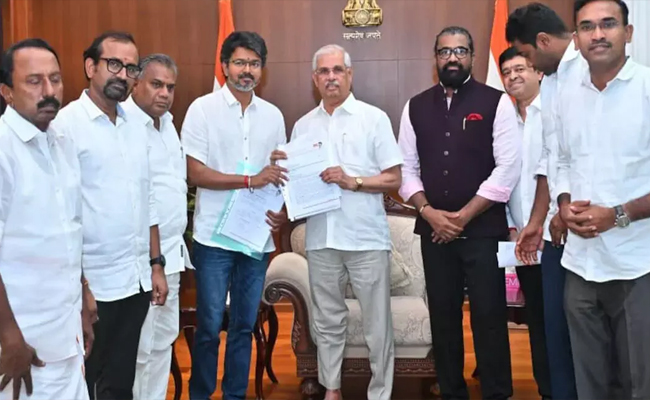
Bengaluru (PTI): The Karnataka High Court on Friday permitted the Union Government to issue travel documents to facilitate the return of a Russian woman and her two minor daughters who had been discovered living in a cave in coastal Karnataka.
Justice B M Shyam Prasad passed the order while hearing a petition filed by Israeli national Dror Shlomo Goldstein, who claims to be the father of the children. Goldstein had approached the court seeking a direction to the Centre not to immediately deport the minor children.
The woman, identified as Nina Kutina, was found on July 11 in a cave in the Ramatirtha Hills near Gokarna in Kumta taluk. Authorities reported that she and the children had been living there for nearly two months without valid travel or residence documents.
Goldstein had earlier lodged a complaint at the Panaji police station in Goa in December last year after being unable to trace his children in India.
During Friday's hearing, the court recorded that the Russian consulate had issued emergency travel papers for Kutina and her daughters, valid only until October 9. It also took note of Kutina's own communication to the consulate, in which she expressed her wish to return to Russia at the earliest.
Goldstein's counsel had opposed deportation, arguing that such a move would go against the best interests of the children while custody proceedings were still pending. The court, however, observed that Goldstein had not provided any satisfactory explanation for why the mother and children had been living in isolation in a cave before their rescue.
Emphasising the principle of children's welfare, the bench stated that the mother's request to travel back to Russia and the Russian government's readiness to facilitate their return outweighed other considerations.
At an earlier hearing on August 22, Goldstein's legal team had invoked the UN Convention on the Rights of the Child, while Additional Solicitor General (ASG) Arvind Kamath had assured the court that Kutina and her daughters were being taken care of at the Foreigners Restriction Centre for Women.
He had also clarified that deportation would not be carried out immediately, as DNA tests were pending to establish the parentage of the younger child, who had no official documents such as a passport or birth certificate.
During the hearing on Friday, the ASG informed the court that the DNA report of the second daughter was received and communicated to the Russian government, which, in turn, issued Russian citizenship and emergency travel documents (ETD) to enable them to travel to Russia.
Let the Truth be known. If you read VB and like VB, please be a VB Supporter and Help us deliver the Truth to one and all.
KKR hammer DC by eight wickets as Allen smashes unbeaten ton

New Delhi (PTI): Finn Allen smashed a 47-ball 100 not out as Kolkata Knight Riders thrashed Delhi Capitals by eight wickets to register their fourth win on the trot in the IPL, here on Friday.
Opting to bowl, KKR spinners led by Sunil Narine strangled Delhi Capitals in the middle overs on a tacky surface to restrict them to 142/8.
Pathum Nissanka struck a quick 50 (29 balls; 5x4, 3x6) but Delhi lost momentum after his dismissal, scoring just 11 runs between the 12th and 16th overs as Anukul Roy (2/31), Kartik Tyagi (2/25) and Sunil Narine (1/17) applied the brakes.
Ashutosh Sharma’s late 28-ball 39 (3x4, 3x6), gave Delhi some respite.
In reply, Allen, who came in as Impact Sub for Varun Chakravarthy, smashed 10 sixes and five fours to make it a lopsided chase as KKR sealed the win in just 14.2 overs.
Brief Scores:
Delhi Capitals 142/8 in 20 overs (Pathum Nissanka 50, Ashutosh Sharma 39; Anukul Roy 2/31, Kartik Tyagi 2/25). Kolkata Knight Riders 147/2 in 14.2 overs (Finn Allen 100 not out).