Karnataka HC asks BBMP to clear beggary cess dues in four months
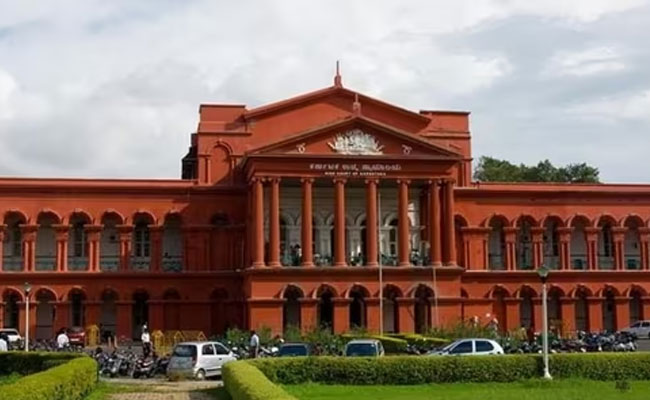
Bengaluru (PTI): The Karnataka High Court on Thursday asked the Bengaluru municipal corporation o transfer Rs 55.65 crore dues of beggary cess collected from tax payers to the Central Relief Committee within four months.
The civic body Bruhat Bengaluru Mahanagara Palike (BBMP) had sought six months to clear the dues collected as beggary cess and said the amount has been utilised by it for other purposes.
The BBMP had collected Rs 600 crore as beggary cess between 2008-09 and 2022. Under the directions of the HC which is hearing a public interest litigation on the issue of children being forced to sell trinkets at traffic signals, the civic body has transferred most of it to the Central Relief Committee (CRC), which works on rehabilitating beggars.
On Thursday, the BBMP filed an affidavit through its Chief Accountant Raju S K. It stated that as of now a sum of Rs 55.65 crore is to be paid to CRC and sought an outer limit of six months to clear the entire dues in three installments.
The BBMP claimed that, “Making payment at once will put strain on the finances of the Corporation and disrupt other priority projects where the BBMP is to release funds.” Rejecting this statement, the Division Bench of Chief Justice Prasanna B Varale and Justice Krishna S Dixit said: “This stand of BBMP cannot be accepted as wholesome for the reason that BBMP cannot utilise particular funds to make good of its financial constraints.” However, considering that BBMP had deposited some money, the HC said reasonable time could be granted.
“BBMP has shown some positive response by depositing Rs 20 crore. We deem it appropriate to grant some reasonable time to BBMP and accordingly though the respondent BBMP makes a request to grant time by putting it at an outer limit of six months, we direct respondent BBMP to clear the dues to the tune of Rs 55.65 crore within four months only,” the CJ said in his order.
The court specified that there won’t be an extension of time. “We further make it clear that no extension of time would be granted on any count. List after four months for compliance report,” the court ordered.
A report by the Police Department through Nagendra Kumar, Deputy Superintendent of Police, Office of IG&DG of Police, was also perused by the HC during the hearing of the PIL. The report shared details of children rescued from the streets.
“The information reveals that some children are infants/toddlers and they are ranging from the age group of 1 year 10 months to 4 years. The counsel for the petitioner states that there are no statements in the affidavit whether these rescued children are shifted to children’s homes or any arrangement is made for the infants/toddlers who may require feeding,” the HC noted.
The Additional Advocate General however clarified that the children are being taken care of.
“The Learned AAG submits that though it is not stated in the affidavit, but as per instructions these rescued children were immediately shifted to children’s homes and all the necessary steps are taken to provide care and protection to these rescued children,” the HC recorded.
Let the Truth be known. If you read VB and like VB, please be a VB Supporter and Help us deliver the Truth to one and all.
Nursing college student from Kerala dies by suicide at hostel, parents allege foul play
Bengaluru (PTI): A 19-year-old student from Kerala, who was studying at a private nursing college here, allegedly died by suicide in his hostel room, police said on Friday.
The deceased was identified as Adhityan P A, a second-year student at a nursing college in Bommasandra, they said.
On April 29, he was found hanging from a ceiling fan in his hostel room, police said, adding that he left behind a suicide note stating that no one was responsible for his death.
Preliminary investigation suggested that he may have been suffering from depression, and there may have been other issues which are being probed, a senior police officer said.
According to police, in his complaint, the deceased's father, Pradeep S, claimed that a college representative informed him upon his arrival in Bengaluru that his son had died under suspicious circumstances and that it was a case of suicide in the college hostel.
"However, I firmly believe that my son would not have taken such a step. He was of good character and mentally strong. Therefore, I strongly suspect foul play in his death," he claimed.
He also highlighted an incident that occurred approximately 20 days ago, when his son informed him that some of his hostel roommates were involved in drug use and were caught by hostel authorities.
"They were warned along with my son, although he was innocent and not involved in the incident. This situation may be relevant to the present case," he stated.
The complainant has urged the police to conduct a thorough and impartial investigation into the matter and take appropriate legal action.
A case of unnatural death has been registered at Hebbagudi Police Station here. Further investigation is underway, and all allegations are being examined, police said.