Karnataka HC directs NHAI to inspect quality of pothole filling work in Bengaluru roads
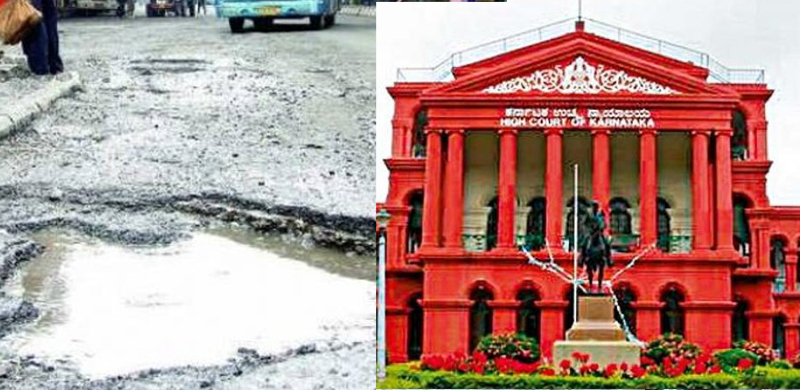
Bengaluru, Nov 2: The Karnataka High Court on Wednesday directed the National Highways Authority of India (NHAI) to conduct an inspection on the quality of the potholes filling or repair work undertaken by the Bruhat Bengaluru Mahanagara Palike (BBMP) and its contractors, and to submit a detailed report within four weeks.
The direction came from the bench comprising Chief Justice P B Varale and Justice Ashok S Kinagi, hearing a public interest litigation (PIL) regarding the bad condition of roads in Bengaluru.
BBMP, the city's civic body, submitted a report to the HC on Wednesday on the status of the pothole-filling work undertaken.
It was submitted that out of the 25,032 potholes identified, 13,843 were filled up. Many more were under various stages of being repaired and there were 6,689 potholes which will be filled up within four weeks.
The HC noted that even after six years of the PIL along with several orders of the HC over the years, and several reports and affidavits submitted by the BBMP, "the road conditions in Bengaluru city is not very positively changed and the unfortunate sufferers are the citizens of the city."
The court, which also pointed to deaths due to potholes, said, "This court has observed in various orders that the condition of roads and particularly potholes led to unfortunate loss of precious human lives."
It also noted during the hearing that BBMP seemed to be engaged in cosmetic surgery of roads in the city.
To a question about the quality of the repair work undertaken by the contractors to whom the BBMP has entrusted the task, the court was told that civic body officials themselves file a satisfaction certificate after the private contractors undertake the work.
The HC, however, not happy with this process, said: "There is no independent third party assessment of the work undertaken by private contractors assigned by BBMP."
It then directed the chief engineer of NHAI to personally inspect the work or assign a senior engineer to do the survey and submit a report.
The NHAI representative will survey whether the pothole repair work is as per the contract and also whether the work is satisfactory. It will then give an independent opinion of the pothole-filling work and make suggestions. The report will also indicate whether there is dereliction of duty by the BBMP and failure on part of the contractors.
The court said that NHAI's survey will not stop the work already in progress and BBMP can continue with it.
The HC on Monday had specifically directed BBMP to file a report on specific questions it has raised regarding the pothole filling work.
Among the questions raised by the court are: why did the BBMP not renew the contract of the agency which was filling potholes with advanced machinery and why it did not start the process of appointing a new agency even after the original contract ended in January 2022.
The BBMP in its report on Wednesday submitted on the various aspects of the pothole filling measures. Among these, the civic agency said it was introducing a mobile app for citizens through which potholes can be identified through GPS coordinates.
The app, developed by a private agency, was tested by BBMP and traffic police officers in May this year, the court was told.
Let the Truth be known. If you read VB and like VB, please be a VB Supporter and Help us deliver the Truth to one and all.
CM Siddaramaiah alleges ‘criminal conspiracy’ in Sringeri recount, vows legal action
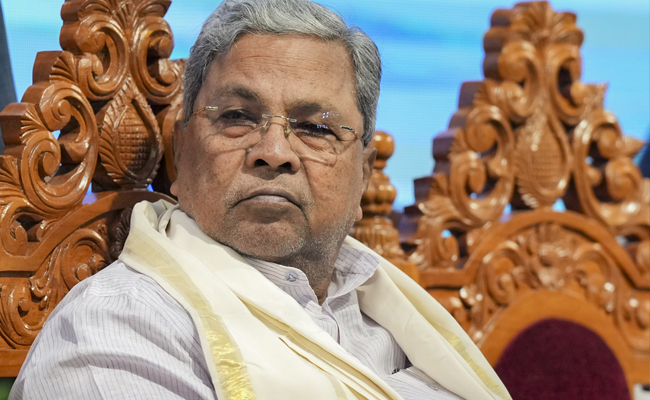
Bengaluru (PTI): Alleging a “criminal conspiracy” by BJP candidate D N Jeevaraj in the Sringeri Assembly poll recounting, Karnataka CM Siddaramaiah on Tuesday said the outcome was manipulated after valid postal ballot votes in favour of Congress leader T D Raje Gowda were tampered with during the recounting process.
Following a Karnataka High Court order on an election petition filed by Jeevaraj, challenging Raje Gowda’s election, the reverification and recounting were conducted on Saturday.
After the reverification and recount of postal ballots for the Sringeri Assembly constituency, votes polled in favour of Raje Gowda were reduced by 255, the returning officer said.
A report on the matter has been submitted to the Election Commission of India for further action, the officer added.
Congress leader Raje Gowda had won the 2023 Assembly polls from Sringeri by 201 votes, defeating his nearest rival Jeevaraj.
Addressing a press conference in Bengaluru, Siddaramaiah said the High Court had directed the recounting of postal ballots and that irregularities were noticed during the exercise conducted on May 2.
“This is a clear case of criminal conspiracy,” Siddaramaiah said, alleging that valid votes cast in favour of Raje Gowda were altered after being accepted by counting agents of all parties, including Congress, BJP, and JD(S).
He claimed that during the recounting of postal ballots, 255 votes were initially accepted as valid by all agents but were later tampered with by subordinate officials.
“There is a second mark on the votes polled in favour of Raje Gowda. They had accepted these as valid votes. Subsequently, another mark was made by officials. This is a clear case of criminal conspiracy,” he said.
When asked who was behind the alleged conspiracy, the CM replied, “It was hatched by Jeevaraj and others. It is planned.”
Siddaramaiah further alleged that the returning officer acted improperly by declaring the result despite the presence of an Election Commission observer during the recounting.
“Immediately after the counting, the returning officer announced the result. He should not have done so; this is against the law,” he said.
He pointed out that Raje Gowda had originally won by 201 votes, but after the recounting, the BJP candidate was declared the winner by 52 votes.
“The BJP has committed a criminal act of conspiracy. This is not vote chori but vote dacoity,” he alleged.
The CM said a police complaint had already been filed by Raje Gowda’s election agent, Sudhir Kumar, and emphasised the need for electoral integrity.
“We want transparency and free and fair elections. That is what our Constitution mandates,” he added.
Stating that the government would pursue legal remedies, Siddaramaiah said, “We are preparing an appeal challenging the returning officer’s announcement in a court of law.”
Responding to a separate query on elections in other states, the CM said there appeared to be an anti-incumbency factor in West Bengal, while results in Tamil Nadu were “surprising,” adding that Vijay’s party was emerging as the largest there.
Following the victory of party candidates in Bagalkote and Davanagere South, Siddaramaiah expressed confidence about future electoral prospects in Karnataka.
“Even in 2028, we will win the Assembly elections. We will come back,” the CM said.
Siddaramaiah added that he would order a forensic examination into the alleged tampering of postal ballots.