Karnataka HC directs Prajwal Revanna to seek bail from sessions court in rape case
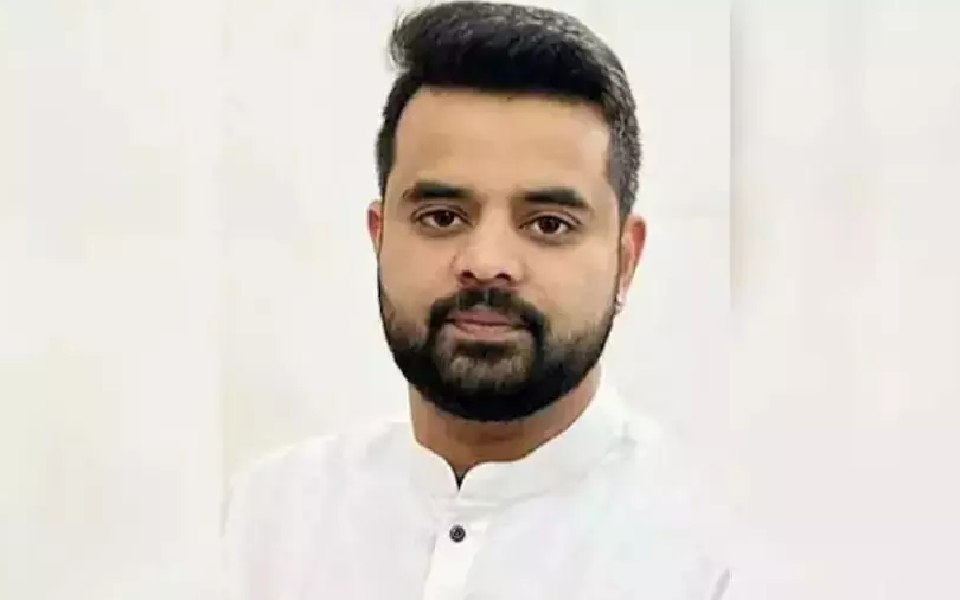
Bengaluru, Jul 9 (PTI): The Karnataka High Court (HC) on Wednesday directed suspended JD(S) leader Prajwal Revanna to approach the sessions court for bail in the high-profile rape case filed against him.
The court clarified that Revanna could return to the HC if necessary, after the lower court considers his plea.
Justice S R Krishna Kumar, who presided over the matter, observed that it would be more appropriate for Revanna to exhaust all remedies before the trial court before seeking intervention from the HC.
This marks the second attempt by Revanna to secure bail in the case.
Senior Advocate Prabhuling Navadgi, who appeared for Revanna, argued that the court was well within its powers to hear the bail application directly.
However, the bench maintained that the correct legal course would be to first move the sessions court.
Following Navadgi’s request, the HC directed the trial court to decide on the fresh bail application within 10 days from the date of its filing.
Revanna is the primary accused in four separate FIRs involving allegations of sexual assault, voyeurism, and circulation of obscene material. The cases emerged after over 2,900 video clips allegedly depicting sexual violence were widely shared online and via social media platforms.
The first FIR was filed in April 2023 by a domestic worker employed at Revanna’s family-owned farmhouse. She accused him of repeatedly raping her and threatening to leak footage of the abuse if she spoke out. According to her complaint, the assaults began in 2021.
The Bengaluru trial court has already framed several charges against Revanna, including rape, criminal intimidation, voyeurism, and distribution of private images without consent.
Revanna’s earlier plea for bail was dismissed by the HC in October 2023. Subsequently, the Supreme Court also declined to grant him relief. In March 2024, he filed a fresh bail application in the HC, citing a "change in circumstances”.
His legal team argued that the prolonged delay in commencing the trial had resulted in a violation of his fundamental rights under Article 21 of the Constitution, which guarantees the right to life and personal liberty.
Opposing the bail plea, the state -- represented by Special Public Prosecutors Senior Advocate Prof Ravi Varma Kumar and B N Jagadeesha -- argued that any delay in the trial was attributable to Revanna and his family, not the prosecution.
After hearing arguments from both sides, the HC declined to entertain the bail plea at this stage and directed Revanna to file it before the sessions court. The court further clarified that all legal contentions remain open and can be raised at the appropriate forum.
The matter will now be decided by the sessions court, which has been asked to take up the application promptly.
Let the Truth be known. If you read VB and like VB, please be a VB Supporter and Help us deliver the Truth to one and all.
HC says Bhojshala complex is Goddess Saraswati temple, scraps ASI order on namaz on premises
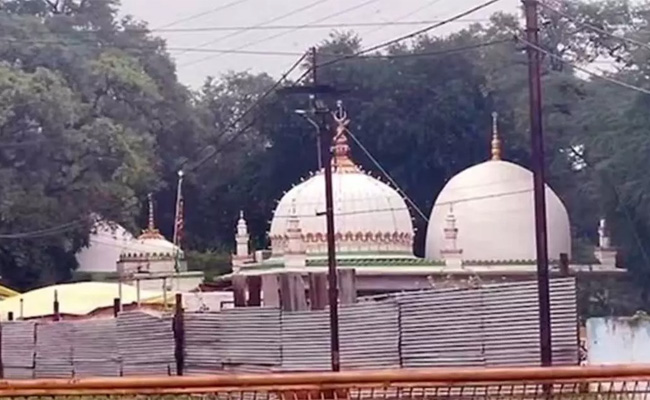
Indore (PTI): In a big win for the Hindu side, the Madhya Pradesh High Court on Friday declared that the disputed Bhojshala complex in Dhar district is a temple dedicated to Goddess Saraswati, and the Centre and ASI can decide on its administration and management.
The HC's Indore bench, which was hearing the case, also said the Muslim community, which called the 11th century monument Kamal Maula Mosque, may approach the state government for allotment of separate land in the district for construction of a mosque.
In its much-awaited verdict in the Bhojshala Temple-Kamal Maula Mosque complex dispute, the court observed that there were indications of a Sanskrit teaching centre and a temple of Goddess Saraswati existing in Bhojshala.
The religious character of the disputed complex of Bhojshala-Kamal Maula Mosque indicates it is a temple of Goddess Saraswati, noted the HC.
ALSO READ: Bihar CM walks to secretariat from official residence after PM's appeal to spend wisely
"If the Maulana Kamaluddin Welfare Society applies for land allotment for building a mosque in Dhar district, the state government can consider it," maintained the division bench.
The HC scrapped the 2003 Archaeological Survey of India (ASI) order which allowed Muslims to offer Friday prayers on Bhojshala premises.
Nearly 1,200 police personnel were deployed in and around the complex ahead of the HC ruling.
Dhar Collector Rajeev Ranjan Meena warned of strict action against anyone spreading objectionable content on social media, as the administration erected barricades at the site where Friday prayers coincided with the court verdict.
The long-running dispute pertains to the religious nature of the ASI-protected monument in Dhar district.
The Hindu community considers Bhojshala to be a temple dedicated to Vagdevi (Goddess Saraswati), while the Muslim side calls the monument Kamal Maula Mosque. A petitioner from the Jain community claims the disputed complex is a medieval Jain temple and gurukul.
After the controversy over the Bhojshala complex erupted, the ASI issued an order on April 7, 2003, permitting Hindus to worship at the complex every Tuesday and Muslims to offer namaz there every Friday. The Hindu side challenged the order in the HC, seeking exclusive rights to worship at the complex.
A division bench of Justices Vijay Kumar Shukla and Alok Awasthi of the HC's Indore bench began regular hearings on five petitions and one writ appeal related to the case on April 6 this year.
After hearing all the parties against the backdrop of differing religious beliefs, historical claims, complex legal provisions, and thousands of documents related to the disputed monument, the bench had reserved its decision on May 12.
During the hearing, petitioners from the Hindu, Muslim, and Jain communities presented detailed arguments and sought exclusive worship rights for their communities at the monument.
The ASI, after conducting a scientific survey of the monument, indicated in its over 2,000-page report that a massive structure dating back to the reign of the Parmar kings of Dhar predated the mosque, and that the current disputed structure was built using repurposed temple components.
The Hindu side claimed that coins, sculptures, and inscriptions found by the ASI during its scientific survey prove the complex was originally a temple.
However, the Muslim side argued in court that the ASI's survey report was "biased" and prepared to support the claims of the Hindu petitioners.
Refuting this, the ASI told the court the scientific survey process was carried out with the help of experts, including three from the Muslim community.
The HC had ordered the ASI to conduct a scientific survey of the Bhojshala Temple-Kamal Maula Mosque complex on March 11, 2024. The ASI began the survey on March 22 that year and, after a detailed 98-day survey, submitted its report to the High Court on July 15.