Karnataka HC emphasises need for swift conclusion of Wildlife Protection Act cases
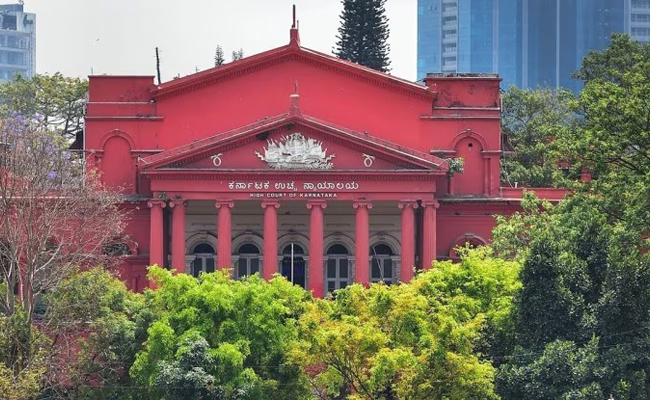
Bengaluru (PTI): The Karnataka High Court has emphasised the need for expeditious trials in cases under the Wildlife Protection Act, expressing concern over lengthy delays in bringing offenders to justice.
A single judge bench of Justice M Nagaprasanna made this observation while rejecting a petition by Abdul Rehman and others, who faced charges for killing a spotted deer in the Bandipur forest in 2008.
Despite 16 years having passed, the trial against the accused is still ongoing.
The court criticised the prolonged proceedings, stating: "Why such a long time? Why do you take 16 years to conclude a forest offence? This is not correct if you book under the Forest Act for killing a deer in 2008 and it is still being tried in 2024. What is this?"
The bench attributed the delay to the accused evading court appearances, leading to repeated adjournments.
Rehman and his co-accused had sought quashing of the proceedings, arguing that they faced "double jeopardy", as a separate case related to the illegal possession of meat and unlicensed arms was filed against them in Kerala.
The court dismissed this argument, noting that the deer was killed in Karnataka, where the Wildlife Protection Act applies. The case in Kerala, involving the seizure of 35 kg of deer meat and weapons, falls under the Arms Act.
The bench refused to grant any relief to the petitioners, citing their repeated attempts to evade trial, and ordered the lower court to conclude the case within 12 weeks.
Let the Truth be known. If you read VB and like VB, please be a VB Supporter and Help us deliver the Truth to one and all.
11k litres of milk poured into Narmada river after religious event; environmentalists see red
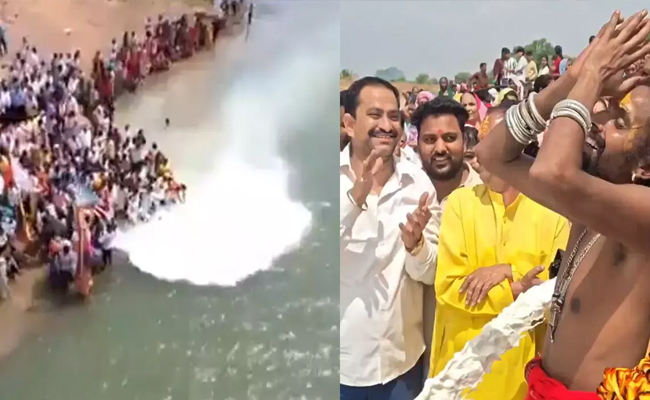
Sehore (PTI): Around 11,000 litres of milk were poured into Narmada river, often called the lifeline of Madhya Pradesh, in Sehore district on the culmination of a 21-day religious event as part of a sanctification ritual, prompting environmentalists to flag its negative impact on the ecosystem.
The event concluded at Satdev village in Bherunda area, located about 90 km from the district headquarters, with a 'mahayagna' on Wednesday.
The milk was offered to the river as part of rituals and prayers for the purity of the waters, the well-being of pilgrims and prosperity, organisers said.
The milk was brought in tankers to the riverbank and later poured into the flowing water amid chanting of mantras in the presence of a crowd of devotees.
However, environmentalists raised concerns over the practice, warning of its potential ecological impact.
"Such large quantities of organic matter can deplete dissolved oxygen in water, adversely affecting the river ecosystem. These impact local communities dependent on the river for drinking water and threaten aquatic life as well as domestic animals," noted environmentalist and wildlife activist Ajay Dube said.
Religious offerings should be symbolic and mindful, he asserted.
Renowned environmentalist Subhash Pandey said 11,000 litres of milk acts as a significant organic pollutant.
"It is highly oxygen-demanding and can lead to oxygen depletion, aquatic mortality, eutrophication (process of plants growing on river surface) and loss of potability. These effects are predictable from dairy-effluent chemistry and have been documented in similar incidents worldwide," Pandey pointed out.
Narmada originates at Amarkantak in the state and traverses 1,312 km westward to Maharashtra and Gujarat, emptying into the Arabian Sea via the Gulf of Cambay.
It is the largest west-flowing river in the peninsula, passing through a rift valley, and acts as a crucial water source for irrigation in MP, Gujarat and Maharashtra.