Karnataka HC quashes detention under Goonda Act for not following guidelines
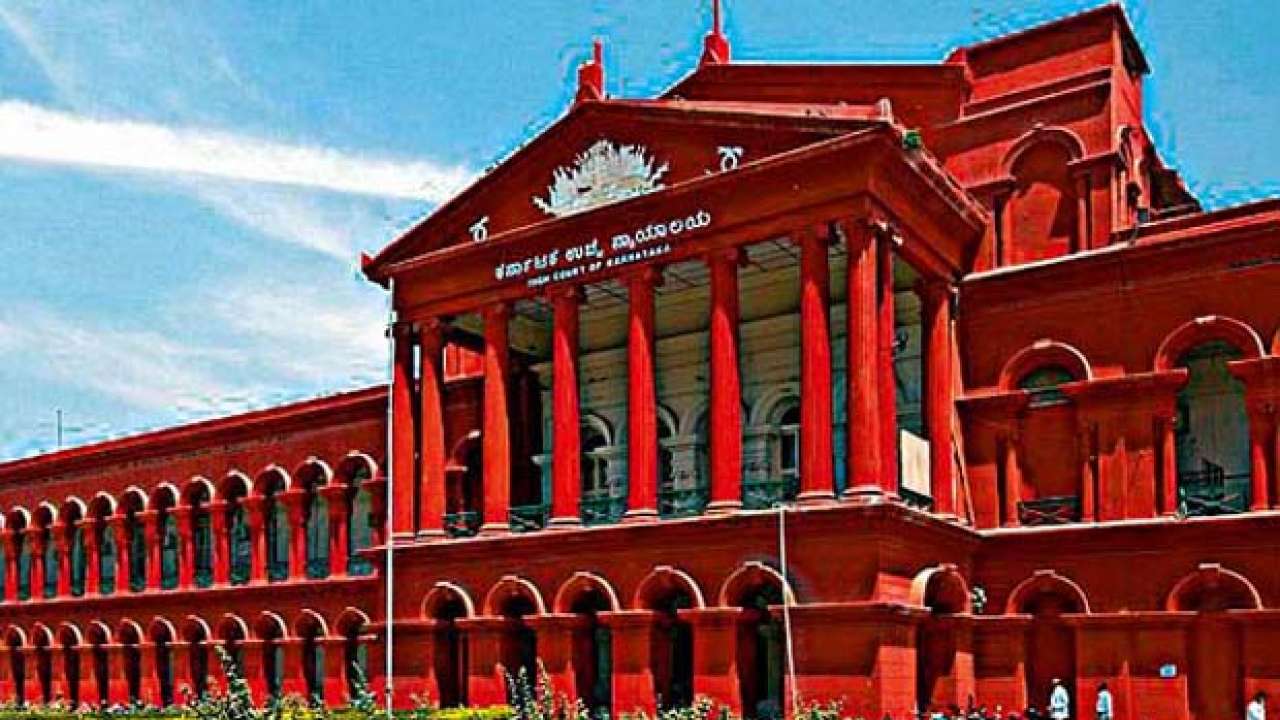
Bengaluru, Dec 16: The High Court of Karnataka has quashed the detention order of a person under the Goonda Act after finding that the detention order did not follow the necessary rules.
Though the police authorities had followed the timeline in issuing the confirmation order to the detention order, they did not follow the timeline prescribed for placing the detention order before the Advisory Board.
"We find lacking in compliance of Section 10 of the Goonda Act, as the same (detention order) was not placed before the Advisory Board within three weeks of passing the detention order dated April 27, 2023. As can be seen from the records submitted by learned Government Pleader, as against the detention order dated April 27, 2023, the file was placed before the Advisory Board on June, 1, 2023 at 5 pm. which is evidently after the lapse of 35 calendar days," the division bench of Justice K Somashekar and Justice Rajesh Rai K said in a recent judgement.
ALSO READ: Karnataka HC restricts visitors to Belagavi assault victim
The bench was hearing a habeas corpus petition filed by one Mohammad Shafiulla, from Kolar, who sought the release of his son Roshan Jameer detained under the Goonda Act (Karnataka Prevention of Dangerous Activities of Bootleggers, Drug-Offenders, Gamblers, Goondas, (Immoral Traffic Offenders, Slum-Grabbers And Video Or Audio Pirates) Act.
It was alleged that Jameer was involved in multiple criminal cases and an order of detention under the Goonda Act was passed on April 27, 2023. This was communicated to him and he was detained the same day and sent to Central Prison, Parappana Agrahara.
The detention order passed by the Deputy Commissioner, Kolar was confirmed by the Secretary, Home Department on May 6, 2023. The file pertaining to Jameer was forwarded to the Advisory Board on May 8, 2023.
After hearing both sides the Board upheld the detention order on June 2. The Secretary, Home Department extended the period of detention for one year on June 6.
The counsel for Shafiulla (Jameer's father) argued before the HC that as per Section-8 of the Goonda Act, the authorities failed to furnish legible copies of the documents to the detenu. The documents supplied were in English and Kannada and Jameer had studied only till second standard in Urdu medium and was unable to read both Kannada and English.
Accepting this contention, the HC said, "As the student of an Arabic school and who has studied the first language as Arabic or Urdu, cannot possibly be considered as well-educated in the languages other than first language as he has studied only for three years in the said school. Hence, we are constrained to state that, the authorities have failed to comply with the mandates of Article 22(5) of the Constitution of India in its letter and spirit."
The HC also found that the authorities had failed to comply with the mandate of Section 10 of the Goonda Act.
"On examination of case on hand, if viewed with the anomalies in the materials provided, it is glaring on the face of records that the Advisory Board did not have sufficient time to examine the records and hence, thereby the order of detention cannot be considered as one that is passed by the mandates of Goonda Act," the HC said and quashed the orders passed by the police authorities detaining him.
It also directed the jail authorities to release him if he is not needed in any other case.
Let the Truth be known. If you read VB and like VB, please be a VB Supporter and Help us deliver the Truth to one and all.
TN Assembly elections: Eight-month pregnant homemaker wins Thiru Vi Ka Nagar seat for TVK

Chennai (PTI): Before giving birth, she had already delivered a mandate—a symbol of hope for Thiru Vi Ka Nagar.
Echoing Delhi’s 2013 “common citizen” political churn associated with the rise of the Aam Aadmi Party (AAP), an eight-month-pregnant homemaker, M R Pallavi, has been elected as an MLA from Chennai’s Thiru Vi Ka Nagar constituency, emerging as one of the notable first-time faces of the Vijay-led TVK in the recently held Tamil Nadu Assembly elections.
In the narrow lanes of Thiru Vi Ka Nagar, a steady stream of media personnel has been making their way to Pallavi’s residence—a scene reminiscent of the result day in Delhi when journalists thronged the modest home of Rakhi Birla, who had won from Mangolpuri on an AAP ticket.
Pallavi, 36, a homemaker educated up to class XII, defeated the DMK candidate K S Ravichandran by a margin of 22,333 votes in the reserved Thiru Vi Ka Nagar Assembly constituency.
Tamilaga Vettri Kazhagam emerged as the single largest party by winning 108 seats, while DMK and AIADMK got 59 and 47, respectively.
Pallavi’s victory has drawn attention due to her personal circumstances. She campaigned extensively while eight months pregnant, going door-to-door to reach voters.
According to local accounts, she even fainted once during the campaign but continued her outreach.
She has not spoken to the media following her victory, as doctors have advised her to rest. Her husband, Rajesh, briefly recounted her campaign efforts.
A self-professed admirer of actor-turned-politician Vijay, Pallavi joined TVK soon after its formation and is now among its first-time legislators.
Doctors have advised her to be hospitalised around May 20, as she is expecting her second child. Ahead of that, voters in Thiru Vi Ka Nagar have entrusted her with representing them in the state Assembly.
Political observers say the rise of candidates like Pallavi signals a possible shift in Tamil Nadu’s political landscape, with voters backing a new party and candidates from non-traditional backgrounds.