Karnataka HC quashes formation of Anti-Corruption Bureau, shifts all cases to Lokayukta
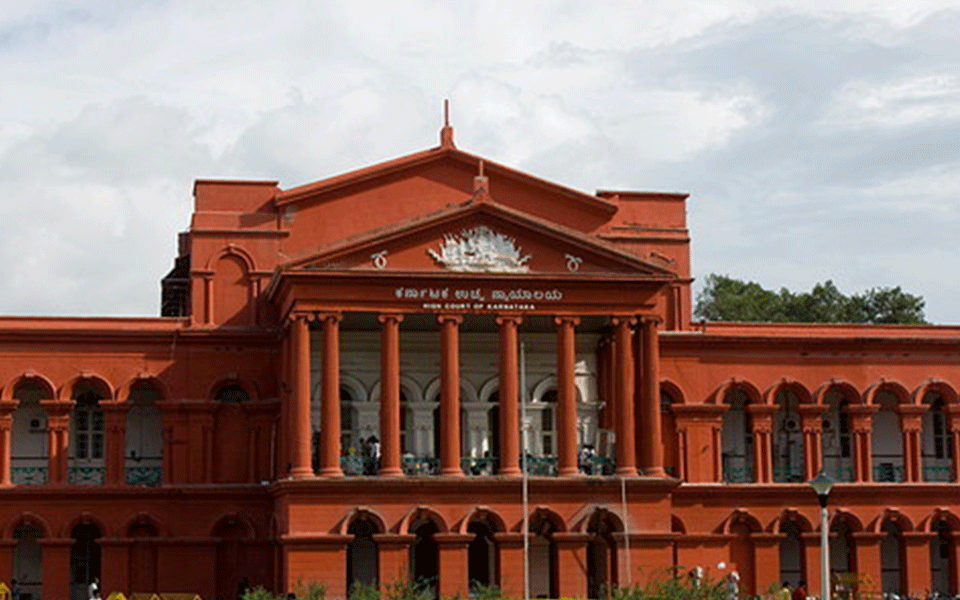
Bengaluru (PTI) : The High Court of Karnataka on Thursday quashed the March 14, 2016 order of the then State government forming the Anti-Corruption Bureau (ACB) and shifted the cases pending before the ACB to the Lokayukta.
The staff and personnel of the ACB would be absorbed in the Lokayukta. The Court then directed the government to appoint competent persons as Lokayukta and Upa-Lokayukta in public interest.
The judgement of the Division Bench of Justice B Veerappa and Justice K S Hemalekha came on a petition challenging the ACB's formation and the subsequent March 16, 2016 government order withdrawing the powers of the Lokayukta police from registering and investigating into cases under the Prevention of Corruption Act.
The formation of the ACB through an "executive order" is not justified and Constitutional, the judgement said. With this the ACB stands abolished.
However, the Court said the actions taken by ACB so far would stand.
The two 2016 notifications of the government were challenged in a bunch of petitions by various petitioners, including the Advocates Association, Bengaluru, Chidananda Urs and 'Samaja Parivartana Samudaya'.
Let the Truth be known. If you read VB and like VB, please be a VB Supporter and Help us deliver the Truth to one and all.
Bengaluru jail introduces biometric tracking system for prisoners

Bengaluru: In a bid to curb misconduct and illegal activities inside Parappana Agrahara Central Prison, prison authorities have introduced a new ‘Prisoners Tracking Movement System’ under which inmates will have to undergo biometric verification while entering every barrack.
According to jail officials, biometric systems have been installed across all major sections of the prison, including barracks, visitor rooms, hospital, canteen, kitchen, library, playground, handicraft units and bakery sections. Staff members have also been deployed at these locations.
Officials said inmates visiting the visitors’ room must now obtain a digital token after biometric verification. Details such as the prisoner’s name, identification number and entry time will be updated in the prison software system. This will help authorities maintain a complete digital record of inmates visiting and returning from meeting rooms.
Similar systems have also been introduced at entry points of the hospital, library and other barracks accessed for work-related purposes. Officials said the system will help identify prisoners involved in suspicious or illegal activities with other inmates and enable authorities to track how much time a prisoner spends at different locations inside the prison.
Authorities stated that AI-powered cameras were already being used inside the prison to monitor inmates as well as prison staff. Along with this, digital tracking of prisoner phone calls and a digital token system for visitor meetings have now been added to strengthen surveillance over inmate movement. Officials said the project has been implemented at a cost of around Rs 2.25 crore.
The prison department has also introduced a canteen usage tracking system to monitor prisoners’ spending patterns. Instead of direct cash payments, inmates can purchase bakery items and snacks using wallets or coupons issued within the prison system.
Officials said the digital system will record details including the buyer’s name, items purchased, quantity, date, time and remaining wallet balance. This will allow prison authorities to maintain complete expenditure records of inmates.