Karnataka HC rejects habeas corpus pleas in Ranya Rao gold smuggling case
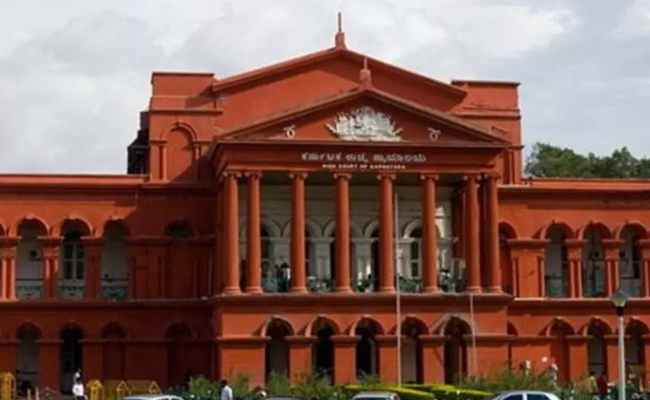
Bengaluru: The Karnataka High Court has dismissed two habeas corpus petitions challenging the detention of accused persons in the gold smuggling case linked to actress Ranya Rao.
According to the report published by Deccan Herald on Tuesday, the petitions were filed by relatives of Konduru Tarun Raju and Sahil Sakariya Jain, who were detained under the Conservation of Foreign Exchange and Prevention of Smuggling Activities Act (COFEPOSA). The court refused to interfere with the preventive detention orders passed against them.
Incidentally, the court had rejected the habeas corpus petition filed by H P Rohini, Ranya's mother, challenging her daughter’s detention under COFEPOSA. Ranya was arrested on Mar 3, 2025, for smuggling 14.2 kg gold into Kempegowda airport.
ALSO READ: Chhattisgarh CM announces Rs 5 lakh aid for Kerala lynching victim’s family
Based on Ranya Rao’s voluntary statement, investigators arrested Tarun Raju and Sahil Jain for allegedly helping her dispose of the smuggled gold and facilitating hawala money transfers to Dubai. Preventive detention orders were issued against them on April 22 under COFEPOSA.
As per the report, the petitions were filed by Rama Raju, a relative of Tarun Raju, and Priyanka Sakariya, cousin of Sahil Jain. They questioned the detention citing procedural deficiencies. The petitioners argued that there is no evidence to show their involvement in the airport seizure or in any other transaction.
However, a division bench comprising Justices Anu Sivaraman and Vijayakumar A. Patil rejected these arguments. The court observed that the detention orders clearly explained the role of each accused and that all procedural safeguards had been followed.
The bench reportedly said the detaining authority had arrived at its decision after carefully examining all relevant materials and upheld the validity of the preventive detention orders.
Let the Truth be known. If you read VB and like VB, please be a VB Supporter and Help us deliver the Truth to one and all.
Hormuz Strait disruptions have caused huge economic impact, energy instability in region: Navy chief

Mumbai (PTI): The Strait of Hormuz disruptions have caused severe economic impact and energy instability in the region, Indian Navy chief Admiral D K Tripathi said on Thursday amid the war in West Asia.
Speaking at an event where INS Sunayna, an offshore patrol vessel, set sail from Mumbai as Indian Ocean Ship (IOS) Sagar, the admiral said competition at sea has no longer remained confined to oil and energy.
It is now expanding towards resources that will shape future growth - such as rare earth elements, critical minerals, new fishing grounds and even data, he said.
The West Asia crisis began on February 28 after a joint attack by the US and Israel on Iran.
Iran's strikes on its neighbours along with its chokehold on the Strait of Hormuz have disrupted the world's energy supplies with effects far beyond West Asia.
"With the conflict in West Asia well into its fifth week, the disruptions in the Strait of Hormuz have caused severe economic impact and energy instability in the region," Tripathi said.
There is significant increase in the marine survey, deep-sea research activity, and Illegal Unreported and Unregulated Fishing (IUU), often encroaching upon the sovereign rights of littoral nations and exploiting gaps in monitoring and enforcement, he said.
Alongside these, threats such as piracy, armed robbery and narco-trafficking backed by unimpeded access of advanced technology to non-state actors, have also become more complex and challenging to counter, the Navy chief pointed out.
Last year alone, the Indian Ocean Region witnessed a staggering 3,700 maritime incidents of varying nature, the admiral said.
Additionally, narcotics seizures in the region exceeded USD 1 billion USD in 2025, highlighting the persistence and spread of such challenges in the region, he said.