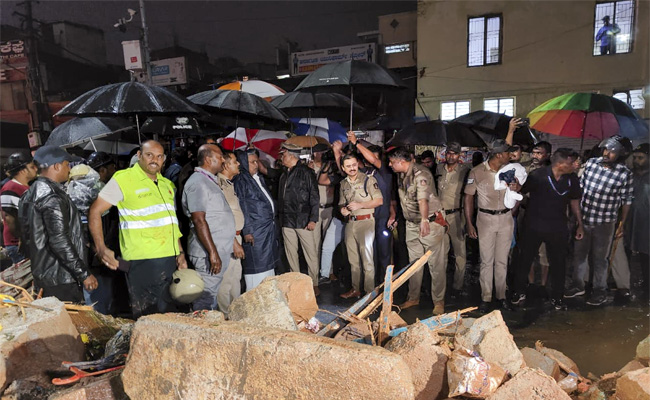
Karnataka HC seeks clarity on rehab of families displaced in Kogilu Layout
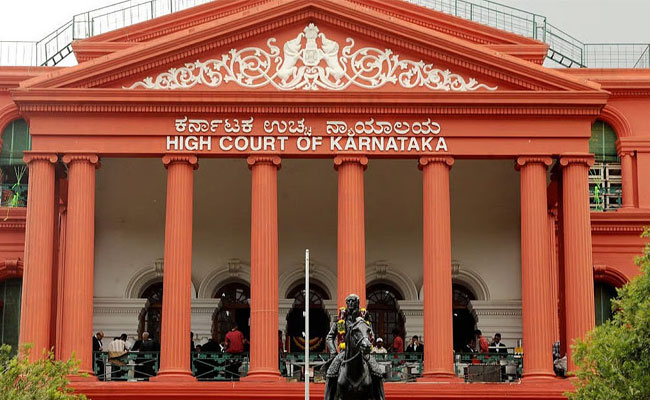
Bengaluru: To assist the court in examining the temporary rehabilitation of families displaced following a demolition drive in Kogilu Layout in north Bengaluru, the High Court of Karnataka has appointed advocate B V Vidyulatha as amicus curiae on Wednesday.
According to a Deccan Herald report, the appointment was decided while hearing a public interest litigation filed by Zaiba Tabassum and others. The petitioners contested the demolition of Waseem and Fakeer colonies on December 20, 2025. They further claimed that the action breached Supreme Court standards, which require prior show-cause warnings before any demolition. The division bench was chaired by Chief Justice Vibhu Bakhru and Justice C M Poonacha.
During the hearing, the bench observed that on the basis of the factual circumstances placed before it, in situ rehabilitation at Kogilu Layout itself may not be feasible. The court noted the state government’s submission that the land in question is part of a solid waste management site as habitation in such an area would be hazardous and potentially fatal to human health.
Advocate General Shashikiran Shetty told the court that verification revealed discrepancies, in response to claims by the petitioners that several evicted families held temporary allotment letters. He submitted that out of seven such letters produced, four were not found in official records, while the remaining three pertained to a different location altogether. He further added that the state’s statement of objections and supporting affidavit contained complete details of 167 affected persons.
The petitioners’ counsel, however, contested the government’s figures and argued that more than 800 people had been affected by the demolition. It was also submitted that the four temporary rehabilitation centres cited by the state were not functioning properly. The advocate general countered this by informing the court that only about 10 to 12 displaced persons had so far approached these centres.
The bench directed the Karnataka State Legal Services Authority to assist the newly appointed amicus curiae. The court also sought a detailed report on the temporary rehabilitation measures undertaken by the authorities, the exact number of people affected along with details of whether adequate arrangements have been made for those displaced.
The state government informed the court that the land at Kogilu Layout comprises an abandoned quarry measuring 9.36 acres and another parcel of five acres, which was handed over to the Bruhat Bengaluru Mahanagara Palike as a landfill site through government orders issued in November 2014 and February 2016. According to the submission, the land has since been continuously used for solid waste disposal by Bengaluru Solid Waste Management Limited.
Let the Truth be known. If you read VB and like VB, please be a VB Supporter and Help us deliver the Truth to one and all.
IMEC momentum to boost Karnataka exports amid global trade disruptions
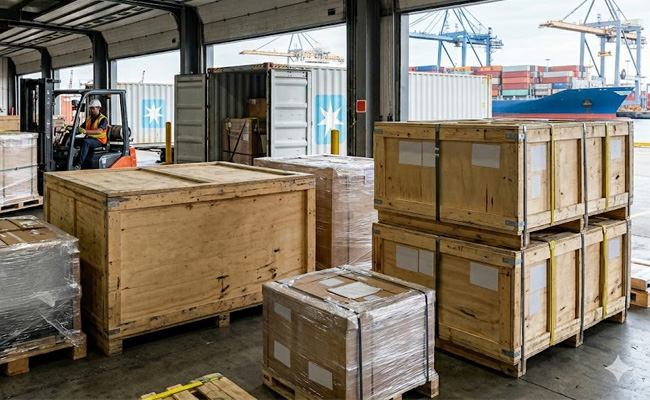
Bengaluru (PTI): Karnataka’s exporters are set to benefit as the India-Middle East-Europe Economic Corridor (IMEC) gathers momentum as an alternative to traditional maritime choke points, a senior tax official said, pointing to shifting global trade routes amid ongoing geopolitical tensions.
Addressing a seminar on “Navigating Geo-Political Challenges: Policy Measures and Preparedness to Build Resilience,” Kotraswamy M, Commissioner of Central Tax, Bengaluru North, said disruptions around key routes such as the Strait of Hormuz and the Suez Canal had underscored the need for more reliable corridors.
The event was organised by the Bangalore Chamber of Industry and Commerce (BCIC) in association with the Indian Institute of Materials Management.
"Owing to geopolitical tensions in West Asia, connectivity was hindered with Strait of Hormuz and Suez Canal as the choke points. Now with India-Middle East-Europe Economic Corridor (IMEC) gaining momentum as alternatives to the choke points, exporters from Karnataka and other states in India stand to gain in the global trade market," Kotraswamy said.
With this development, several critical choke points, especially fuel-related disruptions are expected to increase, he said adding IMEC is now gaining momentum as a more efficient and more reliable pathway, instead of depending on routes like the Suez Canal, the Strait of Hormuz, or even the Cape route, which are costly in terms of freight and sailing time, Kotraswamy said.
He added that exporters were also seeing gains from policy measures under the Goods and Services Tax (GST) regime.
“As exports are treated as zero-rated supplies under GST, the effective tax incidence on exports is zero per cent, allowing businesses to claim refunds on input taxes paid,” he said.
Kotraswamy noted that over 90 per cent of refund claims were now processed within seven days, compared to 15 to 30 days earlier.
He further said recent recommendations had enabled automatic refund processing and reduced documentation, cutting compliance costs by 20 to 25 per cent and easing working capital pressures.
Highlighting the state’s export performance, Prince Mehra of EXIM Bank said Karnataka is the fourth-largest exporter in India, contributing around seven per cent to the country’s merchandise exports and recording a compound annual growth rate of 7.8 per cent from FY19 to FY25.
“In FY25, Karnataka’s exports stood at USD 30.5 billion, driven by telecom instruments (17.3 per cent) and petroleum (14 per cent), followed by electrical equipment (five per cent), RMG/apparel (4.7 per cent), electronics (4.2 per cent), coffee (4.1 per cent) and pharmaceuticals (3.8 per cent),” Mehra said.
He added that the state ranked sixth in NITI Aayog’s Export Preparedness Index 2024 with an untapped export potential of USD 24.4 billion.
Emphasising the need for adaptability, K Ravi, senior vice president of BCIC, said in today’s volatile global landscape, resilience is no longer optional as it is a strategic imperative. Geopolitical challenges are reshaping trade dynamics and compelling businesses to rethink risk, cost, and continuity.
Sivasankari Murugan of ECGC highlighted support mechanisms available to exporters, including insurance products and policy interventions such as the RELIEF Scheme and the Export Promotion Mission.
She said such measures reflected a strong commitment to safeguarding industry competitiveness, and added that platforms like the seminar help stakeholders build the collaborative mindset required to navigate uncertainty.