Karnataka HC sets aside NGT order against MEG over Halasuru Lake pollution

Bengaluru: The Karnataka High Court has quashed a May 20, 2022, National Green Tribunal (NGT) order that held the Madras Engineering Group (MEG) and Centre, Bengaluru, responsible for pollution in Halasuru Lake.
A division bench comprising Chief Justice NV Anjaria and Justice KV Aravind ruled that the NGT's order, which imposed an environmental compensation of ₹2.94 crore on MEG, was issued without granting them an opportunity to be heard, violating principles of natural justice.
The court has remanded the case back to the NGT, Southern Zone, Chennai, for reconsideration. The NGT has been directed to decide afresh on the imposition of environmental compensation after providing a fair hearing to MEG.
However, the High Court ordered MEG to deposit ₹1 crore with the Karnataka State Pollution Control Board (KSPCB) as per the August 2024 NGT directive. This deposit will remain subject to the outcome of the fresh proceedings.
The NGT initiated the case in March 2016 following a news report that alleged pollution by a slaughterhouse, MEG, and the Bengaluru Water Supply and Sewerage Board (BWSSB). The BWSSB was also directed to pay ₹1 crore as environmental compensation.
Additional Solicitor General Arvind Kamath, representing MEG, argued that an open stormwater drain under BWSSB flows through MEG’s premises into the lake, contributing to the pollution. He stated that the sewage load from MEG is minimal and plans for a 1,200-KLD sewage treatment plant (STP) are underway.
The bench noted that no proper liability assessment had been conducted against MEG, and no opportunity was provided for them to present their defence before the demand notice was issued.
The matter will now be re-examined by the NGT.
Let the Truth be known. If you read VB and like VB, please be a VB Supporter and Help us deliver the Truth to one and all.
Karnataka Governor gives assent to legislation against ‘honour killing’ in inter-caste marriages
Bengaluru: The government has brought into force the Karnataka Freedom of Choice in Marriage and Prevention and Prohibition of Crimes in the name of honour and tradition (Eva Nammava Eva Nammava) Act, 2026, intended to restrict ‘honour killings’ in inter-caste marriages.
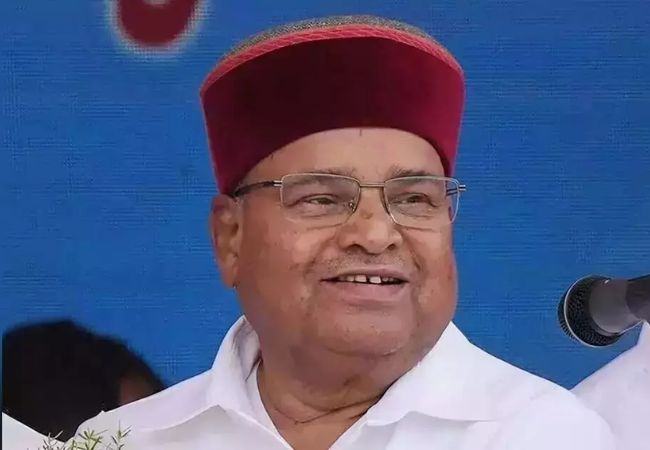
According to The Indian Express, the legislation received assent from Governor Thawar Chand Gehlot on April 9 and was officially notified in the state gazette on April 10. The law had been passed unanimously by the state legislature last month.
The Bill was proposed by the Congress government in the wake of caste-linked ‘honour killings’ in the state, including the December 21, 2025, murder near Hubli of a 20-year-old Lingayat woman by her father for marrying a man from another caste.
The phrase ‘Eva Nammava Eva Nammava’ in the title is in reference to the message of universal humanity that the Lingayat saint Basavanna espoused. Basavanna, who rebelled against the caste system to lay the foundation of the Lingayat faith system, an amalgamation of all castes, used the words meaning ‘he is a part of me’ to say all people are one.
Under the new law, crimes committed in the name of ‘honour’, including murder, assault, threats, and social boycott, are specifically addressed with stringent punishments. ‘Honour killing’ offences carry a minimum imprisonment of five years, while serious assaults attract at least three years in jail.
The new law defines the social boycott of inter-caste couples as forcible eviction to remote corners of villages, refusal to provide services, refusal to provide work, refusal to conduct business, denial of loans and admissions to schools, and makes it punishable.
In the case of ‘honour killings’ per se, the new law prescribes a minimum imprisonment of five years, and in the case of assaults, a prison term that is not less than three years for serious injury and two years for minor injuries.
The offences under the proposed law are cognisable and non-bailable, which means police can carry out arrests without court permissions after taking up a case.
The legislation follows several reported inter-caste relationship-related killings in Karnataka in 2025, including cases in Raichur and another involving 18-year-old Kavita.
The law to protect the freedom of choice in marriages is among several social bills that the Congress government has brought out in line with its policies for the backward and downtrodden communities in the state.