Karnataka HC turns down serial rapist-killer Umesh Reddy's plea to commute death sentence to lifer

Bengaluru, Sep 29: The Karnataka High Court on Wednesday dismissed serial rapist Umesh Reddy's plea for commuting the death penalty awarded to him to life sentence after his mercy petition was rejected by the President in 2012.
A division bench of Justice Aravind Kumar and Justice Pradeep Singh Yerur dismissed the petition.
Reddy had cited inordinate delay in considering his plea for commuting the death sentence to life imprisonment.
The bench granted him six weeks' time challenge the order in the apex court.
Reddy, a constable in the CRPF, who was posted in Jammu and Kashmir and then in the District Armed Reserve in Karnataka, is facing at least 21 rape and murder cases. He was arrested on March 2, 1998 in connection with the rape and murder of a widow in February that year and sentenced to death by a lower court in 2006. Both the High Court and the Supreme Court had upheld the lower court order.
Let the Truth be known. If you read VB and like VB, please be a VB Supporter and Help us deliver the Truth to one and all.
FIR registered after drone spotted flying over ISRO's ISITE campus in Bengaluru
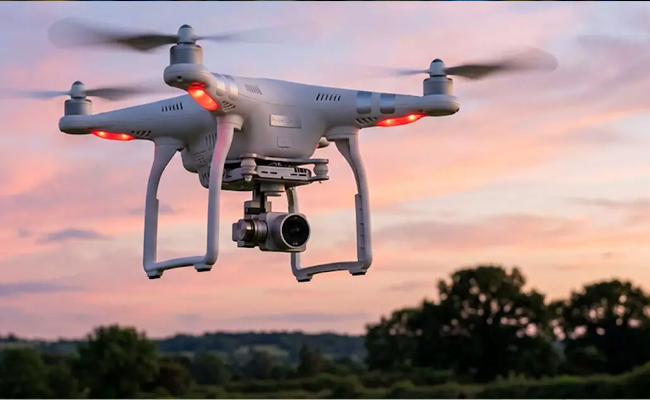
Bengaluru (PTI): An unmanned aerial vehicle was allegedly spotted flying over the ISRO's ISITE campus here, a designated "No Drone Zone", following which a probe has been launched, police said on Tuesday.
The incident occurred at around 8.16 AM on May 2, they said.
A probe was launched following a complaint by a sub-inspector from the CISF who spotted the unidentified drone flying at a height of approximately 80 to 100 feet over the ISITE (Satellite Integration and Test Establishment) campus for about 10 to 12 seconds, police said.
According to the FIR, the ISRO ISITE campus is a highly sensitive and restricted area, designated as a "No Drone Zone." Any unauthorised aerial activity in such a sensitive zone poses a serious threat to security.
Despite being aware that this is a prohibited "No Drone Zone," some unknown individuals have carried out illegal drone activity in the restricted area, the complaint alleged.
Police said a case has been registered against unknown persons at HAL police station under Section 329(3) (criminal trespass) of the Bharatiya Nyaya Sanhita, 2023, along with relevant provisions of the Aircraft Act, for operating a drone in a prohibited area without permission.
Further investigation is underway, they added.