Karnataka HC urges Centre to amend BNSS to ensure rape victims are examined only by female doctors
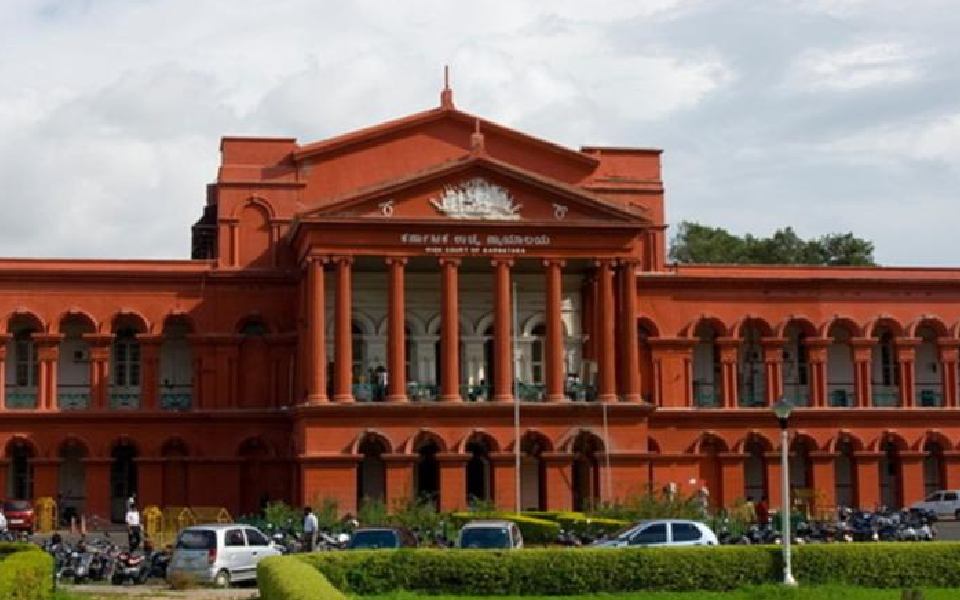
Bengaluru, Jul 29: The Karnataka High Court has urged the Central government to amend Section 184 of the Bharatiya Nagarik Suraksha Sanhita (BNSS) to ensure that adult rape victims are examined only by female doctors, to safeguard their right to privacy.
Justice M G Uma of the single-judge bench directed the Central and State governments to ensure that until the amendment is made, medical examinations of rape victims are conducted by or under the supervision of a female registered medical practitioner.
The court also directed authorities to educate and sensitise stakeholders, including police officials, prosecutors, doctors, medical personnel, and judicial officers, about the importance of handling rape victims with sensitivity.
This directive came while rejecting the bail application filed by a person named Ajay Kumar Bhera, who is accused of rape and attempt to murder.
ALSO READ: AI in policing may lead to targeting marginalised neighbourhoods: CJI DY Chandrachud
Rejecting Bhera's plea, the court noted medical records indicating that the victim had injured the accused during the incident, corroborating her account. Justice Uma stated that the evidence suggested Bhera was responsible for the crime and denied his bail request due to the serious nature of the offence.
The court highlighted that a male medical officer had conducted the victim's medical examination, which lasted about six hours without providing any explanation or opinion.
Emphasising the need for victim-friendly examinations, the court noted that rape victims have a right to privacy that should be respected by police and medical personnel.
Section 164-A of the CrPC (Code of Criminal Procedure), which allowed examination by any registered medical practitioner, has been replaced by Section 184 of the BNSS.
The court criticised the unchanged provision, stating it causes significant injustice and embarrassment to sexual assault victims. Female accused have privacy rights under Section 53 of the CrPC (now Section 51 BNSS) which, the court said, should logically extend to victims as well.
The court urged the Additional Solicitor General of India and the State Public Prosecutor to advocate for amending Section 184 of the BNSS and to educate all relevant parties. It also emphasised the need for regular sensitisation of judicial officers and accountability measures for any lapses.
Additionally, the court observed that the hospital's report was illegible, stressing that medical reports are frequently referred to by investigators, prosecutors, defense lawyers, and courts. It directed hospitals and medical practitioners to provide computer-generated or clearly written medical reports.
Let the Truth be known. If you read VB and like VB, please be a VB Supporter and Help us deliver the Truth to one and all.
RCB secure IPL playoff berth with 23-run win against Punjab Kings
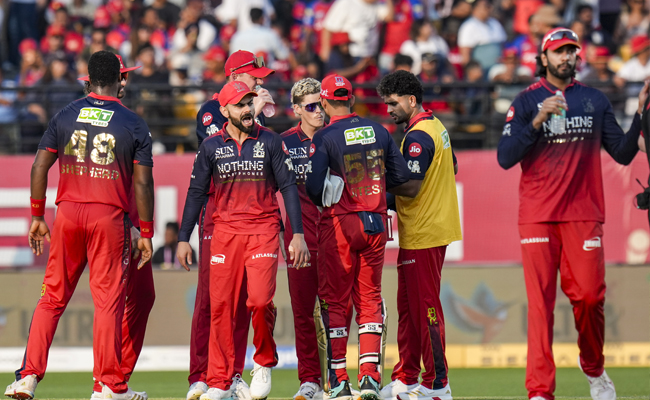
Dharamsala (PTI): Royal Challengers Bengaluru rode on fluent half-centuries from Virat Kohli and Venkatesh Iyer, along with a decisive opening spell from pacer Bhuvneshwar Kumar, to thrash Punjab Kings by 23 runs and seal a playoff berth in the IPL here on Sunday.
Kohli (58 off 37 balls), Iyer (73 not out off 40 balls) and Devdutt Padikkal (45) produced impactful knocks as RCB piled up 222 for 4 in 20 overs.
Bhuvneshwar (2/38) then removed the dangerous Punjab Kings opening pair of Priyansh Arya (0) and Prabhsimran Singh (2) early to all but shut the door on the opposition, who eventually managed 199 for 8 in their allotted 20 overs.
Pacer Rasikh Salam (3/36) compounded Punjab Kings' misery by dismissing skipper Shreyas Iyer (1) in the fourth over as the hosts slumped to 19 for 3.
Late-order batters Shashank Singh (56 off 27 balls) and Marcus Stoinis (37 off 25 balls) attempted to revive the innings with a counter-attacking effort, but the towering RCB total ultimately proved far beyond PBKS' reach.
Earlier, Kohli stitched together a 76-run stand with Devdutt for the second wicket to lay the foundation before adding another 60 runs with Venkatesh for the third wicket as table-toppers RCB delivered yet another authoritative batting display.
Brief Scores:
Royal Challengers Bengaluru: 222 for 4 in 20 overs (Virat Kohli 58, Devdutt Padikkal 45, Venkatesh Iyer 73 not out; Harpreet Brar 2/35).
Punjab Kings: 199 for 8 in 20 overs (Cooper Connolly 37, Suryansh Shedge 35, Marcus Stoinis 37, Shashank Singh 56; Bhuvneshwar Kumar 2/38, Rasikh Salam 3/36).