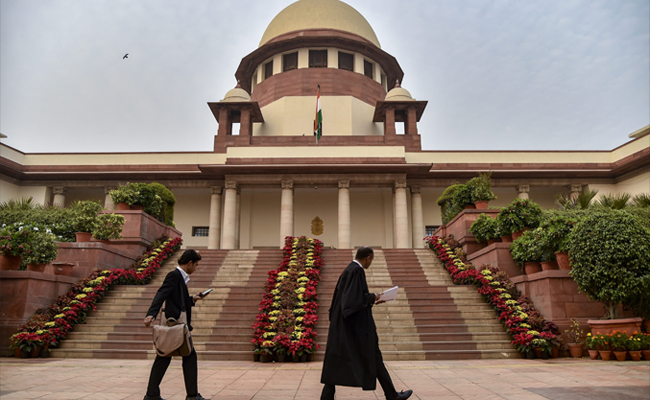
Karnataka high court upholds reinstatement of KPTCL employee suffering from depression

Bengaluru, Nov 2: The High Court of Karnataka has upheld the order of a single judge reinstating a Karnataka Power Transmission Corporation Limited (KPTCL) employee who was dismissed from service for being absent for a total of 632 days owing to depression.
The court upheld the contention of S Kiran (35) that it was only because of work stress that he was absent and not to cause any inconvenience to the employer.
A division bench of Chief Justice Prasanna B Varale and Justice Krishna S Dixit in its recent judgment said, “There may come a point that the ‘stressors’ encountered in the workplace lead to the inability to function in a work environment. A decision to lay an employee off work, with or without just cause, may well escalate the level of depression.” Kiran of Hassan was employed as a Station Attendant (Grade II) on a permanent basis in January 2008.
The judges said, “Distress and depressions are the by-products of modern life, whichever be the calling. Stress is the product of the psychological or emotional pressure that we experience both in our personal and occupational lives. Often it is difficult to insulate the stress, and to determine its impact on day-to-day activities.” A single judge bench had earlier ordered his reinstatement which was challenged by the KPTCL through an appeal.
“The respondent workman has specifically stated that he was undergoing a serious distress of mind and as a consequence, was not able to evince interest in the accomplishment of the job. That is why he had remained absent with no culpable intent to cause any inconvenience to the employer,” the HC noted.
It remarked that the KPTCL being the state enterprise should be a model employer and not act like an agency of the colonial regime.
"The appellant being an entity under Article 12 of the Constitution of India, has to conduct itself as a model employer; that is how a Welfare State should be; it has to treat its employees with fairness & empathy; by that, it wins the heart of workforce and that eventually results in increased productivity.
Otherwise, where would we locate the line that demarcates a Welfare State and a Colonial Regime?” the HC asked dismissing the appeal.
Citing a judgment of a US court, the HC said, “Constitutions are intended to preserve practical and substantial rights, not to maintain theories,” and refused to interfere in the single-judge order.
Let the Truth be known. If you read VB and like VB, please be a VB Supporter and Help us deliver the Truth to one and all.
Iran’s Fars reports missiles hit US warship near Hormuz after it ignored warnings from IRGC
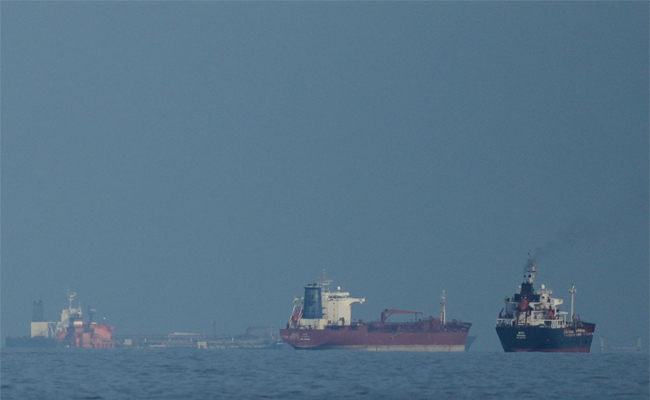
Tehran/Washington: Iran’s Fars News Agency has reported that two missiles struck a US Navy vessel near Jask in the Strait of Hormuz, citing local sources.
According to the report, the vessel was hit after it allegedly ignored warnings from the Islamic Revolutionary Guard Corps (IRGC) to halt.
There has been no official confirmation from US authorities on the reported incident so far.
The development comes shortly after US President Donald Trump said Washington would begin “Project Freedom” to guide stranded ships through the Strait of Hormuz.
US Central Command said the operation would involve 15,000 military personnel along with more than 100 land- and sea-based aircraft, warships and drones.
Further details about the reported strike and any damage or casualties remain unclear.