Karnataka Home Minister Parameshwara urges SIT to complete Dharmasthala probe at earliest
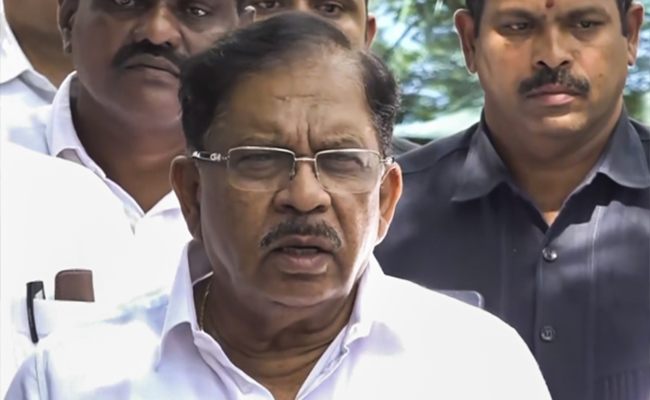
Bengaluru (PTI): Karnataka Home Minister G Parameshwara on Tuesday said the government directed the Special Investigation Team (SIT) probing allegations of “multiple murders, rapes and burials” in Dharmasthala to complete the investigation at the earliest.
He also said the Forensic Science Laboratory (FSL) reports in connection with the case are pending.
Speaking to reporters, Parameshwara said, "SIT is doing its job. FSL reports have to come. The recently discovered materials have been sent to FSL. We have asked them to finalise and send the reports on what was found earlier. We have told the SIT to complete the probe at the earliest."
"One after the other, people coming and filing applications in connection with the probe cannot continue; there should be an end."
Further, he said, "We cannot tell the SIT to complete the probe tomorrow or the day after. They will require information or material to conclude the probe. The FSL report has to come; those reports have to be finalised. Considering all those things, SIT will act."
The controversy erupted after a complainant, later identified as C N Chinnaiah and arrested on charges of perjury, claimed to have buried several bodies, including women with signs of sexual assault, in Dharmasthala over the past two decades, implicating the administrators of the local temple.
The SIT, formed by the state government, has conducted searches at multiple locations identified by the complainant in forested areas along the banks of the Netravathi River, recovering skeletal remains at two sites.
Earlier this month, the SIT recovered additional remains during a search operation in the Banglegudde forest area near the Netravathi bathing ghat.
On a question relating to a Supreme Court order in May dismissing a writ petition filed by the complainant and others, Parameshwara said the SIT may consider that factor in their report.
On the delay in action against activist Mahesh Shetty Thimarody, Parameshwara said, "Let’s see what happens in court. Action will be taken against him, or he will be arrested in accordance with the law by the police. The government will not interfere or give instructions. Police will take action as they have to."
Thimarody is said to be among a group of people who supported the complainant Chinnaiah in the case of allegations against Dharmasthala. He had also been spearheading the campaign seeking justice for a 2012 rape-and-murder case involving a college-going girl.
This followed police reports citing several cases against him, including unlawful assembly, rioting, assault, criminal intimidation, disobedience of police orders, spreading false information, and violations under various sections of the Arms Act.
Let the Truth be known. If you read VB and like VB, please be a VB Supporter and Help us deliver the Truth to one and all.
Vijay unable to prove majority, not invited for CM oath ceremony: Sources
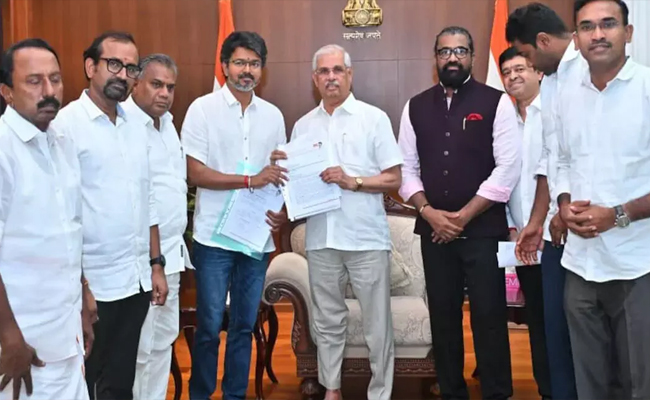
Chennai: Actor-politician Vijay has reportedly not been invited to take oath as Chief Minister of Tamil Nadu after failing to demonstrate support from the required number of MLAs, sources in Raj Bhavan said.
According to media reports that quoted sources in the office of R.N. Ravi Arlekar, Vijay could not prove the backing of 118 legislators, the majority mark in the 234-member Tamil Nadu Assembly.
Despite last-minute efforts to secure support from the Viduthalai Chiruthaigal Katchi (VCK), Amma Makkal Munnetra Kazagam (AMMK), and an IUML legislator, Vijay reportedly managed support from only 116 MLAs, falling short by two members.
Sources said Vijay failed to submit letters of support from the VCK and the Indian Union Muslim League (IUML).
Later, the IUML issued a statement clarifying that it was not part of the TVK-led alliance.
Meanwhile, AMMK leader T.T.V. Dhinakaran is also said to have informed the Governor that his party would support the All India Anna Dravida Munnetra Kazhagam (AIADMK) instead.
Earlier in the evening, Vijay had met Governor Arlekar and staked claim to form the government, stating that he enjoyed the support of 118 MLAs.