Karnataka launches AI-powered digital assistant for govt school teachers to improve learning outcome
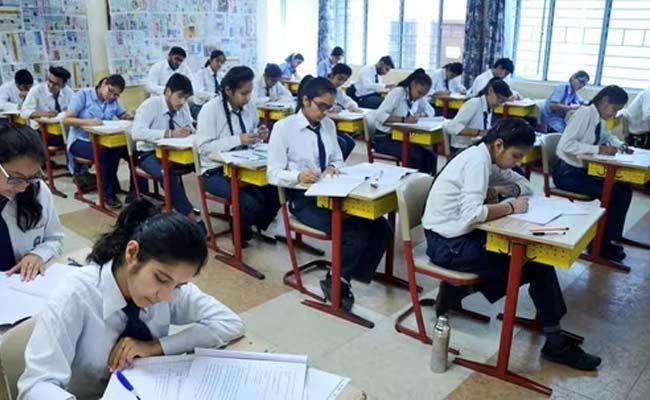
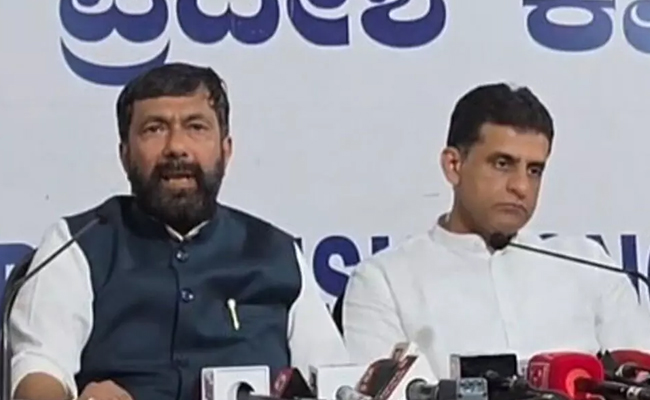
Bengaluru: Karnataka School Education and Literacy Minister Madhu Bangarappa on Friday launched the Shiksha Co-pilot, an AI-powered digital assistant for government school teachers which aims to improve learning outcomes.
The project is a collaboration between the Sikshana Foundation and Microsoft Research India.
Bangarappa stated the project aims to enhance learning outcomes among students and empower teachers to create comprehensive, personalised teaching resources and learning experiences grounded in local curriculum, language and context. He emphasised that automating lesson planning and resource generation will allow teachers to focus more on addressing the individual learning needs of their students. Additionally, he mentioned that Chief Minister Siddaramaiah has instructed them to take the necessary steps to improve the quality of education in government schools through the integration of AI.
“It will also support the dynamic curation of engaging teaching resources such as hands-on activities, assessments, real-world examples/ applications, short videos and comprehensive lesson plans based on teachers’ inputs. It also provides a chat-bot for teachers for self-learning and interactive content generation,” said a release.
The project will initially support 1,000 teachers from government schools across the state, which will later be extended.
Prasanna V.R., Chief Executive Officer of Sikshana Foundation, stated that GenAI has the potential to revolutionise multiple sectors. “We feel that a GenAI-based tool in the hands of the teachers will help in vastly improving learning outcomes,” he added.
Let the Truth be known. If you read VB and like VB, please be a VB Supporter and Help us deliver the Truth to one and all.
ISRO successfully conducts second integrated air drop test for Gaganyaan mission
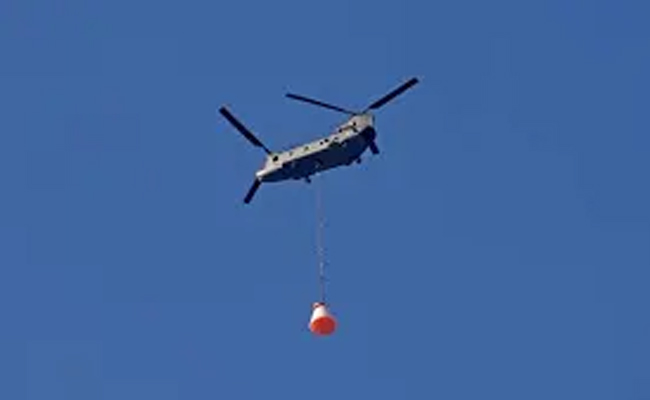
New Delhi (PTI): Space agency ISRO has successfully conducted the second integrated air drop test (IADT-02) for the upcoming Gaganyaan mission at the space station in Andhra Pradesh's Sriharikota.
The system is essential to ensure a safe recovery of the crew module -- the capsule in which astronauts sit during a human flight -- during re-entry and landing.
Union minister Jitendra Singh congratulated the Indian Space Research Organisation (ISRO) for successfully conducting the test.
"Congratulations #ISRO for the successful accomplishment of Second Integrated Air Drop Test (IADT-02) for #Gaganyaan, India's first Human Space flight scheduled next year. The second Integrated Air Drop Test (IADT-02) was successfully conducted at Satish Dhawan Space Station Sriharikota," Singh said in a post on X.
The IADT-02 follows the successful completion of the first IADT, which took place on August 24, 2025, at the Satish Dhawan Space Centre in Sriharikota.
Air drop tests recreate the last leg of a spacecraft's return to Earth. An aircraft or helicopter drops the spacecraft from a height to test various systems under different scenarios.
These are the deployment of the parachute system in case the mission is aborted mid-flight, system performance when one parachute fails to open and the spacecraft's orientation and safety during splashdown etc.
In the IADT-02 test, a simulated crew module, weighing about 5.7 tonnes, was lifted by an Indian Air Force Chinook helicopter to an altitude of about three kilometres and released over a designated drop zone in the sea, near the Sriharikota coast.
In a statement, the ISRO said, "Ten parachutes of four types were deployed in a precise sequence during the descent of the crew module, gradually reducing the velocity for safe touchdown. Subsequently, the simulated crew module was successfully recovered in coordination with the Indian Navy."