Karnataka launches Disaster Risk Reduction Roadmap; aims to cut losses by 75% by 2030
Bengaluru: In a significant move towards enhancing disaster preparedness, the Karnataka State Natural Disaster Monitoring Centre (KSNDMC), in collaboration with UNICEF, launched the Karnataka State Disaster Risk Reduction Roadmap (KSDRR) 2025-2030 on Monday, marking the International Day for Disaster Risk Reduction.
With this initiative, Karnataka has become the fifth state in India to launch the Disaster Risk Reduction Roadmap, following Bihar, Andhra Pradesh, Tamil Nadu and Assam, as reported by The New Indian Express.
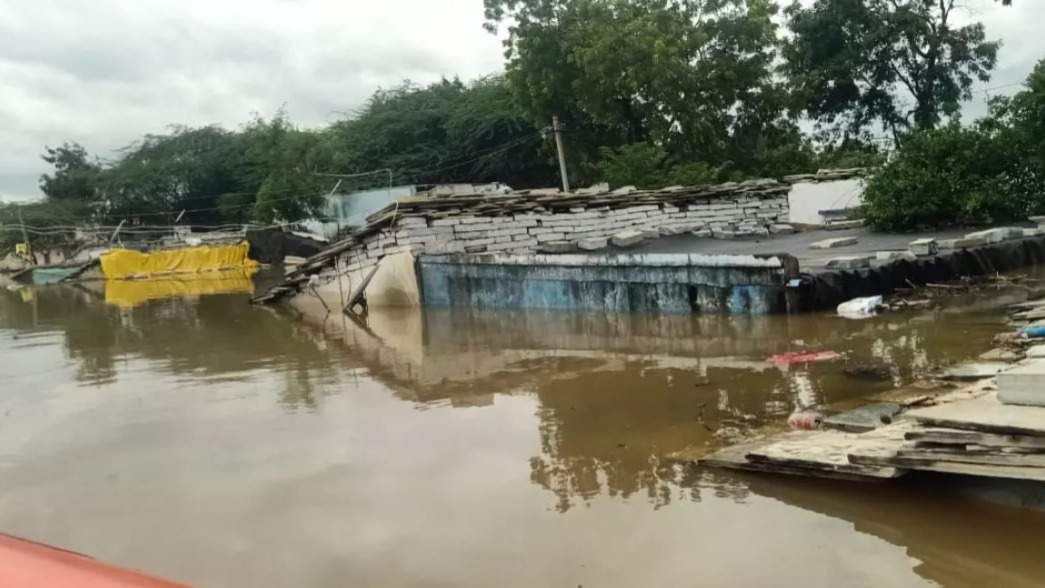
The new roadmap is designed to mitigate the impact of natural disasters and reduce the state’s vulnerability. Over the past five years, Karnataka has suffered an estimated Rs 1 lakh crore in losses due to floods, droughts, lightning, hailstorms, fire, and other calamities. Addressing these challenges, Mullai Muhilan, Director of KSNDMC, emphasised that the goal of the KSDRR is to implement a systematic approach to preventing and managing such disasters.
“The theme on this day is ‘Fund Resilience, Not Disasters’, and that is why this roadmap is a framework of existing solutions to reduce and prevent losses by mitigating floods, drought, earthquakes, heat waves and so on,” TNIE quoted Muhilan as saying.
The KSDRR outlines a multi-phase strategy, which includes a vulnerability profile of Karnataka, highlights DRR developments, initiatives taken in the state, financial arrangements, and defines the roles and responsibilities of stakeholders as per the National Disaster Management Act, 2005.
The roles and responsibilities, work implementation in the road map are based on three major milestones divided to achieve in five years. All departments, gram panchayats have prepared disaster management plans with latest data as baseline information.
In milestone 2 for the year 2027-28, the roadmap envisions that the state has to collaborate and partner with various stake holders from local to global level. In milestone 3, for the year 2029-30, it mentions reducing infrastructure damage, human and animal deaths, casualties by 75%.
“Currently, KSNDMC has applications including Varuna Mitra, dedicated mainly to providing weather forecast to farmers across the state. Similarly, we have Megha Sandesha, a mobile app developed in collaboration with the Indian Institute of Science. This app was created to mitigate urban floods and it provides information to various government bodies especially BWSSB, and others. We are still working on this app to provide information and data to BDA, GBA on the areas that might flood in the future. They can use this data before giving clearance to buildings of layouts,” explained Muhilan.
As part of the roadmap, several government departments have been directed to work towards risk identification, risk reduction, preparedness, financial protection, and resilient recovery. For instance, the Education Department will be responsible for developing school-level disaster management plan.
The roadmap also outlines a robust infrastructure for real-time disaster monitoring. Karnataka has already installed 6,500 telemetric rain gauge stations at the gram panchayat level, alongside 850 telemetric weather stations at the taluk level. Other installations include lightning and thunderstorm sensors, water level sensors in Bengaluru and surrounding cities, and seismic sensors at major dam sites.
Let the Truth be known. If you read VB and like VB, please be a VB Supporter and Help us deliver the Truth to one and all.
Karnataka: GBA city corporation polls likely between June 14 and 24
Bengaluru (PTI): Karnataka State Election Commissioner G S Sangreshi on Friday said elections to the five city corporations under the GBA will be held anytime between June 14 and June 24.
He said the exact date for the polls will be announced after a week, asserting that the power to postpone the elections, as requested by GBA authorities, lies with the Supreme Court.
The Supreme Court had directed the Karnataka government and the State Election Commission to conduct Bengaluru local body elections by June 30.
On Friday, the SEC held a consultation meeting with the GBA Chief Commissioner and commissioners of the five city corporations regarding the election schedule, as per the provisions of the GBA Act.
“During the meeting, I informed GBA officials that only the election date has to be fixed, as all other measures and formalities for conducting the polls have already been completed,” Sangreshi said.
“They requested the Commission to consider factors such as rains, exams, census work, SIR, and manpower shortages while fixing the date and sought additional time,” he added.
Speaking to reporters after the meeting, he said, “I told them this meeting was not for seeking time. Elections to the five corporations under the GBA must be held before June 30, as directed by the Supreme Court, and a compliance report must be submitted to the court. I do not have the power to postpone the elections as requested.”
The Supreme Court has already given a “final opportunity,” and both the SEC and the government must comply with its directions, the State Election Commissioner said.
He asked GBA officials to suggest suitable dates between June 14 and June 24.
“While stating that they are ready for elections, the officials highlighted operational challenges, including manpower shortages. However, I have informed them that the elections will have to be held between June 14 and June 24. After a week, I will announce the final date,” he said.
Reiterating that he does not have the power to postpone the elections, Sangreshi said the authority rests with the Supreme Court, and elections must be conducted as scheduled.
“We have consulted the GBA as per the rules. It is up to them to suggest a date within the given window. If they need more time, they must approach the court. Our responsibility is to fix the date and complete the polls before June 30,” he said.
The matter regarding manpower and other concerns raised by GBA officials is already before the Supreme Court, and the State Election Commission has also filed a petition in this regard. The case is yet to be heard.
“Since the matter has not come up for hearing, the earlier order remains binding. Therefore, preparations are underway,” he added.
The tenure of the previous elected body under the erstwhile Bruhat Bengaluru Mahanagara Palike (BBMP) ended on September 10, 2020, and since then, a government-appointed administrator has been managing its day-to-day affairs.
Bengaluru was divided into five municipal corporations—Central, East, West, North, and South—under the Greater Bengaluru Authority in September 2025, replacing the BBMP.
Sangreshi had earlier said that elections to the five corporations would be conducted using ballot papers instead of Electronic Voting Machines.
This follows the Congress government’s decision last September to recommend the use of ballot papers in all future panchayat and urban local body elections, citing concerns over declining public confidence in EVMs.
The state government subsequently enacted the Karnataka Gram Swaraj and Panchayat Raj (Amendment) Act, 2026, paving the way for the use of ballot papers in local body elections.