Karnataka leads in AI: Minister Priyank Kharge at Impact Summit
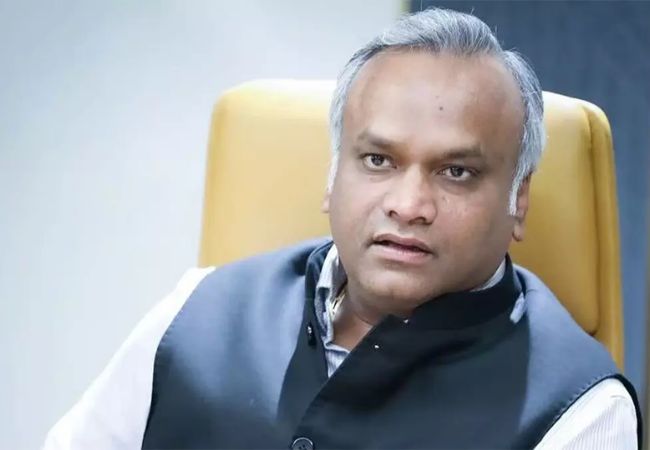
Bengaluru (PTI): Minister Priyank Kharge on Wednesday highlighted the state’s leadership in AI and deep technology while engaging with global industry leaders and startups at a four-day summit held in New Delhi, officials said.
During the event, Priyank witnessed the signing of a strategic MoU between H Company and St John’s Medical College & Research Institute, Bengaluru, to pilot advanced enterprise AI for hospital operations and workflow automation, strengthening responsible AI in healthcare, the minister’s office said in a statement here.
Speaking on the sidelines of the India AI Impact Summit, the minister said Karnataka is ahead of the curve in AI.
“We are already home to leading global AI players such as Harvey AI and Anthropic, and The Walt Disney Company is expanding its AI network in Bengaluru,” he added.
Noting Bengaluru’s position among the top global cities for AI talent, he added, “Under our DeepTech Decade, we are supporting startups with grants of up to Rs 1 crore. We are engaging with global leaders and innovators to ensure responsible AI use, build the right skill sets, create strong incubators, and establish Centres of Excellence that can foster startups and strengthen e-governance.”
The minister also attended a roundtable organised by the US-India Business Council (USIBC), where discussions focused on strengthening technology collaboration, investment partnerships, and innovation-led growth between Karnataka and global enterprises.
He met Timo Harakka, Member of Parliament of Finland, to explore possibilities for collaboration between Karnataka and Finland in AI and deep-tech sectors, including joint research, innovation partnerships, and startup exchanges.
The Karnataka IT Minister also visited the Indian Army showcase at the summit, which featured advanced AI-driven defence and strategic technology applications, highlighting the role of AI in national security and modernisation efforts.
He toured the Karnataka Pavilion and the ArtPark Pavilion, interacting with founders and teams from Karnataka’s innovation ecosystem and reviewing emerging AI and deep-tech solutions, the statement added.
Let the Truth be known. If you read VB and like VB, please be a VB Supporter and Help us deliver the Truth to one and all.
Smoke engulfs bus carrying convicted Cong MLA Vinay Kulkarni

Bengaluru (PTI): A major accident was averted after a bus carrying murder convict Congress MLA Vinay Kulkarni and 16 accomplices developed a technical snag near Parappana Agrahara Central Prison, with thick smoke engulfing the vehicle, police sources said on Thursday.
The incident took place on Wednesday, when a Special Court for MPs and MLAs in Bengaluru convicted Kulkarni and 16 others in the 2016 murder case of BJP leader Yogesh Goudar.
The court held them guilty of criminal conspiracy and murder, and directed the CBI to take the accused into custody.
Following the verdict on Wednesday, Kulkarni was taken to the Parappana Agrahara Central Prison. The court will pronounce the quantum of sentence on Thursday.
According to police sources, a suspected short circuit combined with a diesel leak led to heavy smoke inside the bus, triggering panic among the occupants, including personnel of the Central Bureau of Investigation escort team.
Police sources said the CBI team acted swiftly and evacuated all those onboard, including Kulkarni, ensuring that no one was injured.
“The situation was brought under control immediately, and all passengers were safely moved out,” sources added.
The convicts were later shifted to alternative vehicles, including cars, and escorted safely from the spot without any casualties.
Police sources noted that the timely intervention of the escort team helped avert what could have been a major mishap.
STORY | Smoke engulfs bus carrying convicted Cong MLA Vinay Kulkarni
— Press Trust of India (@PTI_News) April 16, 2026
A major accident was averted after a bus carrying murder convict Congress MLA Vinay Kulkarni and 16 accomplices developed a technical snag near Parappana Agrahara Central Prison, with thick smoke engulfing the… https://t.co/dAzoxIBUaN
_vb_87.jpeg)