Karnataka legislative council passes Bill to regulate hoardings, levy advertisement fee
Bengaluru, Mar 18 (PTI): The Karnataka legislative council on Wednesday passed two amendment Bills related to advertisement in urban areas and the transfer of police officers.
Both the bills were adopted by the Karnataka Assembly on March 16.
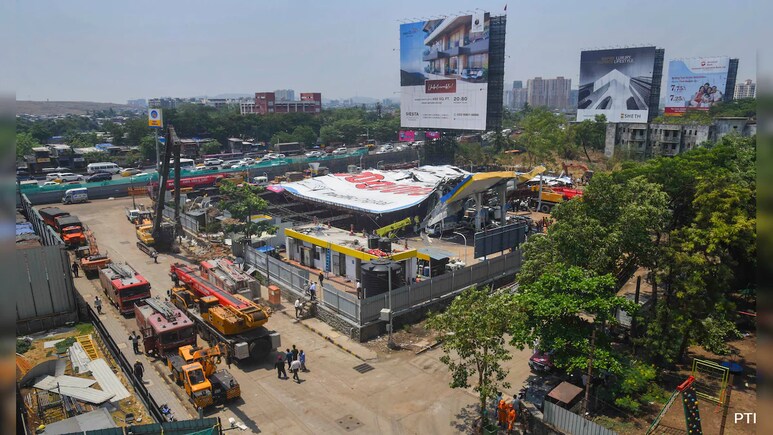
The Karnataka Municipalities and Certain Other Laws (Amendment) Bill, 2026, which was moved by the state Urban Development and Town Planning Minister B S Suresha were aimed at regulating outdoor advertisements and enabling municipal bodies to levy and collect fees on hoardings and billboards across the state.
Suresha tabled the bill in the council for adoption.
The members of the ruling and opposition parties discussed the bill extensively, after which it was cleared by the House.
ALSO READ: 'No full stop in politics': PM bids farewell to 59 RS members, hails Deve Gowda, Kharge, Pawar
The Karnataka Police (Amendment) Bill, 2026, moved by the Karnataka Home Minister G Parameshwara, empowers the Police Establishment Board (PEB) to immediately transfer police officers up to the rank of Deputy Superintendent of Police (DySP) for misconduct, negligence, or dereliction of duty.
This amendment allows for action before the mandatory two-year tenure expires. The Act covers cases of "misconduct or gross negligence or dereliction of duty or an act of moral turpitude".
The Police Establishment Board (comprised of senior officials) is authorised to take action directly rather than waiting for lengthy government approval, aiming to reduce political interference and speed up disciplinary actions.
The move is intended to handle recurring irregularities and corruption, including scenarios where officers are trapped by the Lokayukta police and improve efficiency.
ALSO READ: Bengaluru police arrest illegal gun supplier from Bhopal
The legislation, introduced by state Home Minister G Parameshwara, ensures tighter discipline within the police force while providing a cleaner legal mechanism for moving officers.
Karnataka Planning and Statistics Minister D Sudhakar tabled the Karnataka Regional Imbalances Redressal Committee report, which was prepared by a panel headed by economist M Govinda Rao.
The report identified 93 "most backward" taluks among 236 in the state, with 60 per cent of them concentrated in North Karnataka, particularly in Kalaburagi and Belagavi divisions.
This report highlights that, despite significant expenditure, regional disparities persist, with 75 per cent of all taluks facing some form of imbalance.
Let the Truth be known. If you read VB and like VB, please be a VB Supporter and Help us deliver the Truth to one and all.
No unannounced load shedding in Kerala, outages due to overload, says Minister
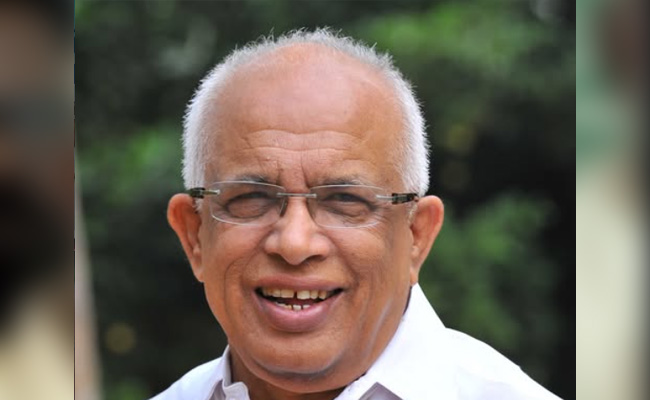
Palakkad (PTI): Kerala Electricity Minister K Krishnankutty on Saturday said there was no unannounced load shedding in the state, attributing recent power interruptions to temporary overload caused by high consumption.
Clarifying concerns raised from various parts of the state, the minister said the disruptions are not deliberate but occur when demand peaks, particularly between 10 pm and 11 pm.
"It is not being done intentionally. Power consumption has risen sharply, and when there is excessive and indiscriminate usage, the system experiences overload, leading to natural supply interruptions," he told reporters here.
His remarks come amid complaints that several areas have been witnessing frequent power cuts, often lasting around 15 minutes and occurring multiple times during the night.
Krishnankutty said the state's power demand has crossed 6,195 MW, putting pressure on the supply system. He added that around 70 per cent of Kerala's electricity is procured from outside, and existing power banking arrangements have been exhausted.
"We have approached the Regulatory Commission seeking permission to purchase more power. However, this will come at a higher cost," he said.
The minister said the government is trying to avoid increasing electricity tariffs and urged consumers to exercise restraint in usage to help manage the situation.
Responding to opposition criticism over the ruling LDF's earlier claims of a decade without power cuts, he said the current situation is not unique to Kerala.
A power crisis is emerging across the country, he said, and sarcastically asked the Opposition to take note of the role of natural factors in this.
Krishnankutty expressed confidence that the situation would improve within two days, while cautioning that long-term energy security would depend on enhancing in-state power generation.
He also warned that future generations could face serious challenges if adequate electricity production capacity is not developed within Kerala.