Karnataka legislative session to focus on leadership row, farmers’ issues, flood relief
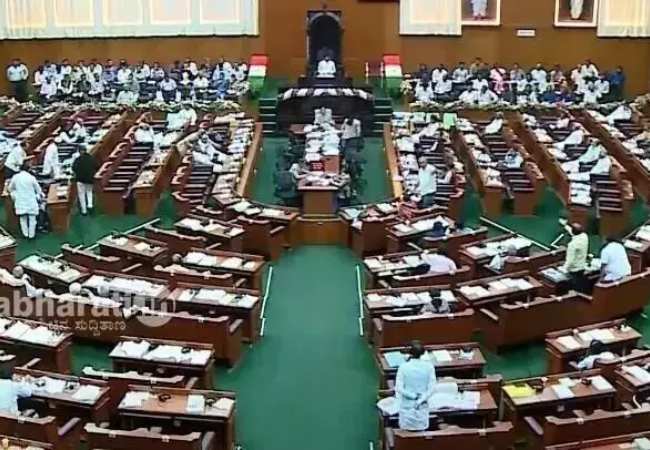
Belagavi (PTI): The 10-day winter session of the Karnataka Legislature, starting December 8 here, is expected to focus on the Congress leadership tussle, farmers’ grievances, and flood relief.
The unified opposition of the BJP and JD(S) has drawn up a strategy to corner the ruling Congress on multiple issues.
BJP leaders have announced plans to move a no-confidence motion following the leadership row between Chief Minister Siddaramaiah and his deputy D K Shivakumar.
Siddaramaiah has asserted that he will complete the full five-year term, while Shivakumar has claimed he was promised the chief ministership midway through the Congress government’s tenure.
The power tussle intensified after the government completed two-and-a-half years on November 20.
Following a war of words on social media, the two leaders later presented a united front through ‘breakfast diplomacy’. However, the fight is far from over, as the party's high command held a meeting in New Delhi on Saturday to discuss the issue in detail.
Congress general secretary K C Venugopal told reporters in Delhi on Saturday that the party had discussed Karnataka and that further meetings are expected. Law and Parliamentary Affairs Minister H K Patil said on Thursday that the government has not received any notice of a no-confidence motion from the opposition.
Farmers’ protests have given the opposition additional ammunition to target the government.
About a month ago, sugarcane growers staged an unprecedented strike, blocking roads to demand Rs 3,500 per tonne against the state government’s offer of Rs 3,200 per tonne.
Chief Minister Siddaramaiah sought the Centre’s intervention, citing flaws in the Fair and Remunerative Price (FRP), which remains frozen at Rs 31 per kilogram, leaving mills unable to pay farmers.
He urged Prime Minister Narendra Modi to revise the sugar MSP, ensure mills can pay farmers, provide assured ethanol offtake for Karnataka distilleries, and issue a central notification for handling and transportation costs to enable transparent, farmer-friendly pricing.
To calm the agitating farmers, the state government offered an additional Rs 100 per tonne, shared equally by the state and mills, raising the net cane price to Rs 3,200-3,300 per tonne.
After the sugarcane strike, maize growers have also protested, demanding procurement at Rs 3,000 per quintal.
The current MSP is Rs 2,400 per quintal, and farmers are seeking a Rs 600 bonus. Ahead of the session, the state government announced increasing maize procurement from 20 quintals per farmer to 50 quintals at Rs 2,400 per quintal.
The session will also see the tabling of 21 bills, including measures to check hate speech and hatred crimes, a law against misinformation, the Daily Wage Employees Welfare (Amendment) Bill, and the Karnataka Social Boycott (Prevention, Prohibition and Redressal) Bill.
Other key bills include the Karnataka Scheduled Castes (Sub-Categorisation in Reservation) Bill, the Karnataka Domestic Workers (Social Security and Welfare) (Amendment) Bill, and the Karnataka Apartment Ownership (Regulation) Bill.
Law and order issues may also come up during the session in light of recent incidents of robbery and dacoity across the state.
Let the Truth be known. If you read VB and like VB, please be a VB Supporter and Help us deliver the Truth to one and all.
ED searches: Karnataka CM Siddaramaiah accuses Centre of targeting Cong leaders
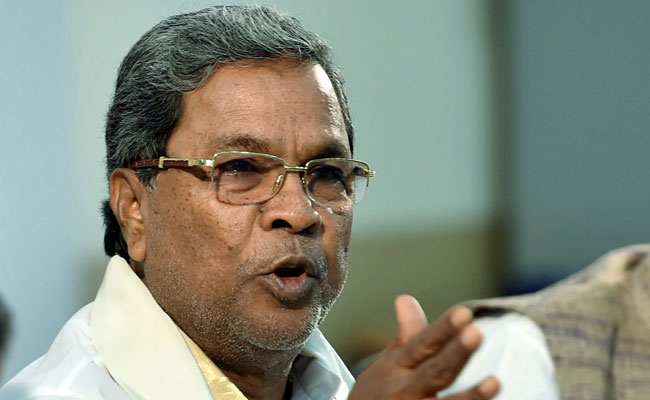
Chamarajanagara (Karnataka) (PTI): Karnataka Chief Minister Siddaramaiah on Tuesday accused the central government and its agencies of consistently targeting Congress members by using searches on their properties, and questioned why similar action is not taken against BJP leaders.
He was reacting to searches conducted by the Enforcement Directorate on Monday on several individuals, among them the sons of Karnataka Congress MLA N A Haris and the grandson of former Union Cabinet minister K Rahman Khan, in connection with a cryptocurrency-linked money laundering case.
"The central government always targets Congress leaders. Will they raid the houses of BJP leaders?" Siddaramaiah said in response to a question. More than a dozen premises in the city were searched as part of the operation carried out by the ED under the provisions of the Prevention of Money Laundering Act (PMLA).
The premises searched comprised those of Mohammed Haris Nalapad and Omar Farook Nalapad, the sons of the MLA; Aqeeb Khan, the grandson of veteran Congress leader K Rahman Khan; and an alleged crypto hacker, Srikrishna Ramesh, alias Sriki, officials said.
The money laundering case stems from Karnataka Police FIRs and charge sheets filed in a 2017 case involving the hacking of national and international websites, theft of bitcoins, and the sale of these stolen virtual digital assets (VDAs) through crypto platforms by the alleged hacker Sriki and his associates.
Mohammed Haris Nalapad, Omar Farook Nalapad, and Aqeeb Khan are alleged to be beneficiaries of the proceeds of crime generated through this crypto-linked activity, officials added.