Karnataka Minister Rajanna asks Shivakumar not to 'misuse' AICC, high command's name
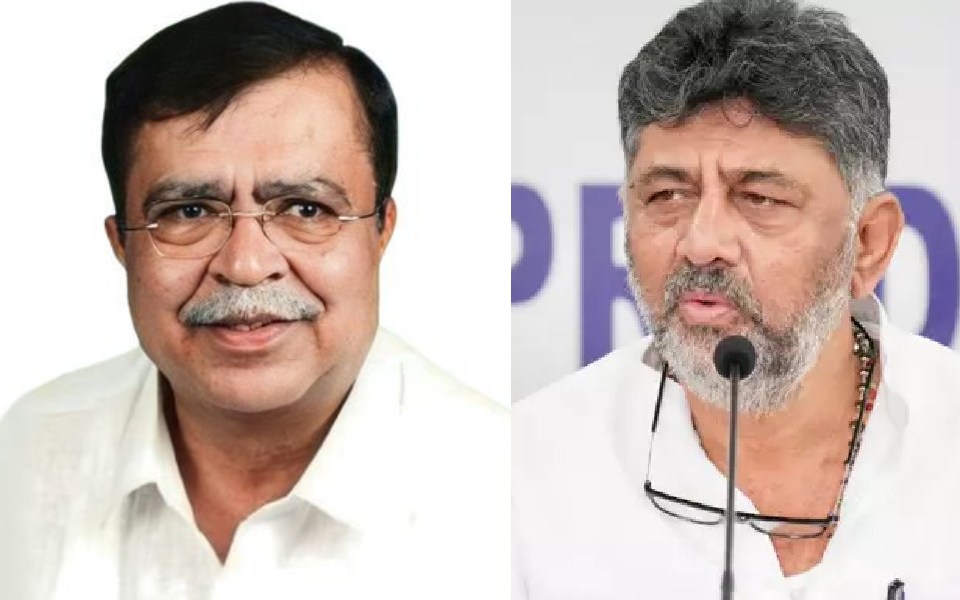
Bengaluru, Feb 17 (PTI): The power tussle within the ruling Congress in Karnataka seems to be intensifying with Cooperation Minister K N Rajanna on Monday hitting back at Deputy Chief Minister D K Shivakumar, urging him not to "misuse" the name of the AICC and the party high command.
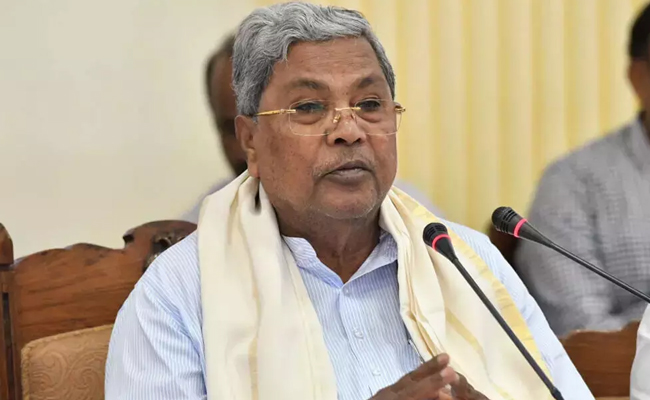
He was reacting to Shivakumar's statement on Sunday—in which he indirectly hit out at Rajanna and other party leaders and ministers considered close to Chief Minister Siddaramaiah—stating that there is no need for anyone to make statements 'misusing' the name of the CM, the undisputed leader of the Congress party in Karnataka.
Shivakumar's statement was in response to a section of party leaders who have been advocating for Siddaramaiah to complete his full term as Chief Minister, stating that his leadership is crucial for the party to retain power in the next election amid speculations about a potential leadership change in Karnataka later this year.
ALSO READ: Siddaramaiah is our leader, no need to 'misuse' his name: Karnataka Deputy CM DK Shivakumar
The state Congress chief, Shivakumar who has made no secret of his ambition to become the CM, chose not to respond to Rajanna's comments.
He merely said that he doesn’t want to indulge in discussions at the moment and would address the issue after returning from his Kerala and Rajasthan tour.
Addressing media here, Rajanna said, "I too agree that the Chief Minister's name should not be misused. We should also tell him (Shivakumar) not to misuse the AICC and high command's name, as he repeatedly mentions the AICC and the high command. For everything, he refers to the AICC—will the AICC come and speak on every issue? If issues are brought to their notice, they may give their opinion or instructions."
"We will all abide by the high command's directive and that’s a different matter. In politics, people misuse things according to their convenience."
Asked whether he was alleging that Shivakumar was misusing the AICC's name, the Minister replied, "Yes, it is not an allegation, but a fact."
Rajanna, in response to a question, remarked that having served in the Congress party for nearly 50 years and being a senior member, he need not learn about party discipline from anyone else.
Asked whether Shivakumar's statement not to misuse CM Siddaramaiah's name was a warning directed at him and others, he replied that it is only a statement and warnings won't work.
"If we have done wrong, a warning may be given. But what have we done wrong," he asked.
Regarding the demand for CM Siddaramaiah to complete a full five-year term, Rajanna said it is the opinion voiced by other senior ministers and that he too has expressed his agreement with it.
"Whatever our opinion may be, ultimately the decision is made by the high command. Siddaramaiah himself said during the Congress Legislature Party (CLP) meeting that—regardless of our aspirations, he will ultimately abide by the instructions of the Congress high command. When the CM himself says he will abide by the high command, we will also abide by it," he said.
He added that the high command would decide after gathering legislators' views.
There was stiff competition between Siddaramaiah and Shivakumar for the CM's post after the declaration of the Assembly election results in May 2023.
The Congress managed to convince the latter and appointed him as the Deputy Chief Minister.
At the time, reports were suggesting that a compromise had been reached based on a 'rotational chief minister formula,' according to which Shivakumar would become CM after two and a half years.
However, these reports have not been officially confirmed by the party.
Rejecting any personal differences or disgruntlement with Shivakumar, Rajanna in his reply to a question said there may be issue-based differences.
"Shivakumar is a good organiser, and I appreciate that. I have no jealousy towards him. Am I wishing to become Chief Minister? No. When there is a difference of opinion on issues I express my opinion. It is not the government's or anyone else's opinion; it is my opinion," he said.
Asked whether expressing his personal opinion was impacting the party and the government, the Minister clarified that he only speaks out on matters that will have a positive impact, not negative ones.
Rajanna has also been insisting that Shivakumar should not hold two positions—Deputy CM and Karnataka Congress president—in keeping with the party’s ‘one man, one post’ policy.
In response to a question on this matter, Rajanna said that a press statement was released by the party in Delhi on May 18, 2023, based on which he has raised certain points, and that there was nothing personal in it.
"At that time, they (the high command) stated in the release that Shivakumar would continue as president until the Parliament elections," he explained, adding that the AICC president had recently indicated that a change in the state president would occur at the right time.
"We will wait for that moment," he said.
Let the Truth be known. If you read VB and like VB, please be a VB Supporter and Help us deliver the Truth to one and all.
Two arrested in K'taka for assaulting minors, uploading CSAM content

Bengaluru (PTI): Two men were arrested for allegedly sexually assaulting two minor girls, recording the acts on mobile phones and uploading the videos online as child sexual abuse material, police said on Thursday.
The accused have been identified as Kiran Kumar (29), hailing from Chitradurga district, and Aditya M K (20), hailing from Shivamogga district, they said.
A probe was initiated after information was received from the NCRP portal regarding a suspected instance of creation of Child Sexual Abuse Material (CSAM) for online dissemination, police said.
Accordingly, a case was registered at Kaggalipura Police Station under relevant sections of the IT Act on May 10, they added.
Investigation revealed that two minor girl victims were exploited and videos were created and uploaded to the internet. The child victims have subsequently recorded their statements as per procedure and further necessary legal steps have been taken, Pronab Mohanty Director General of Police, Cyber Command, said in a statement.
Based on the statements of the victims, the accused persons, who allegedly assaulted the minors, recorded the acts on mobile phones and uploaded the videos online, were arrested, he said.
Following the probe, sections 65(2) (rape) and 70 (gangrape) of the Bharatiya Nyaya Sanhita, along with relevant sections of the POCSO Act, have been added to the FIR, police said.
Officials collected relevant information and on May 12, arrested the accused persons and seized three mobile phones belonging to them, in which the videos had allegedly been recorded, he said.
The accused were later produced before the court and taken into police custody for further investigation, he added.
According to him, in CSAM cases, police usually apprehend offenders who have downloaded such content or have kept them in their possession after obtaining them from elsewhere, usually the internet.
"The present case is one of the very few instances where content creators and uploaders have been apprehended," Mohanty added.