Karnataka poll: BJP spent over Rs 122 cr for campaign, Rs 84 cr for media and publicity
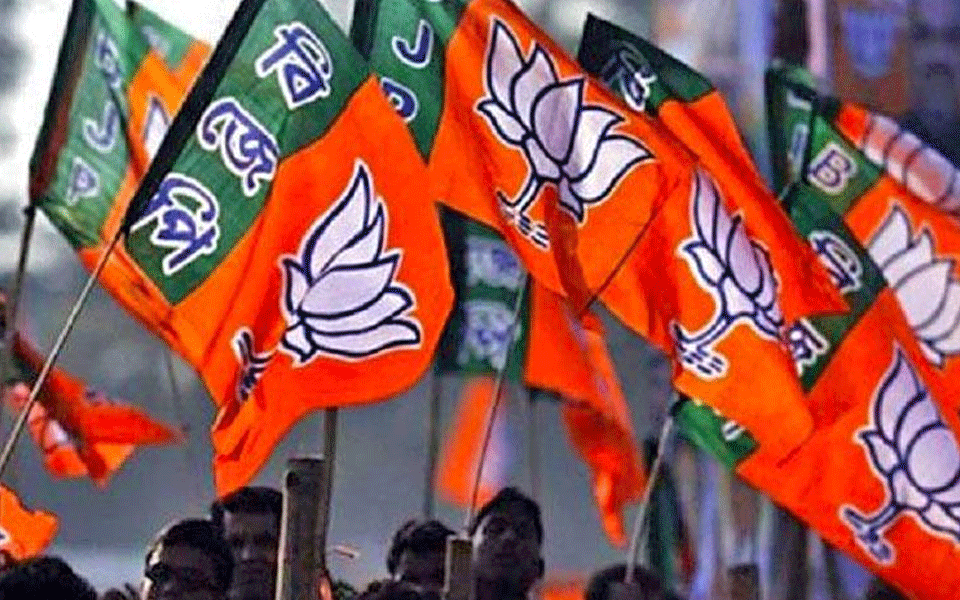
New Delhi, Jan 16: The BJP has spent over Rs 122 crore to contest assembly elections in Karnataka, with more than Rs 84 crore used for media and publicity, according to the expenditure details submitted by the party to the Election Commission.
The party incurred an expenditure of another Rs 14 crore for contesting similar polls in three northeast states.
It recently submitted 'election expenditure statements' for polls in four states and said it has spent Rs 122.68 crore during the Karnataka polls that took place in May last year. The JDS-Congress coalition formed government in the state after the polls.
Out of the total funds, more than Rs 84 crore was spent on advertisements in print and electronic media, bulk SMSes, cable, websites and general party propaganda, the BJP said in its report to the EC.
This was followed by expenditure of over RS 16 crore for travel of its star campaigners in the state, the report said.
The party also sent to the commission a similar report of expenses, made by its central office and state units, for contesting polls in the Northeast states of Meghalaya, Tripura and Nagaland.
The report filed by the BJP stated that over Rs 14.18 crore has been spent to contest polls in these states, where elections took place last year.
While in Meghalaya the party spent Rs 3.8 crore, it spent Rs 6.96 crore in Tripura and Rs 3.36 crore in Nagaland.
The expenses include cost incurred by the party under various heads like star campaigners, media, publicity, processions, helicopter sorties, election paraphernalia and road travel of its leaders and candidates.
Let the Truth be known. If you read VB and like VB, please be a VB Supporter and Help us deliver the Truth to one and all.
Rickelton's ton in vain as SRH beat MI by 6 wickets
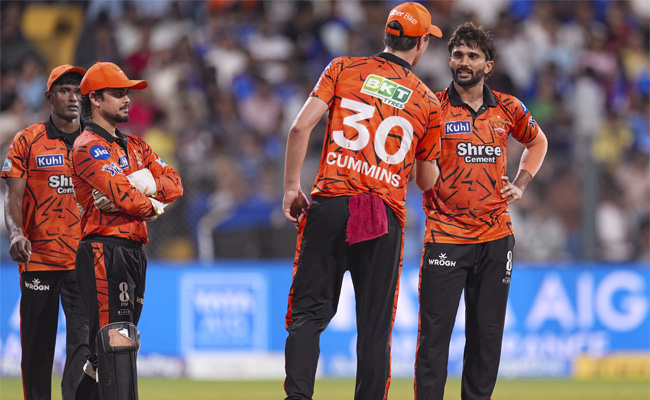
Mumbai (PTI): Ryan Rickelton's whirlwind unbeaten ton was overshadowed by Heinrich Klaasen's unbeaten 65 as Sunrisers Hyderabad defeated Mumbai Indians by six wickets in an IPL match here on Wednesday.
Chasing an imposing 244-run target, Travis Head (76 off 30) and Abhishek Sharma (45 off 24) shared 129 runs for the opening wicket to set the platform for SRH.
Klaasen (65 not out off 30 balls) then displayed his all-round hitting abilities to guide SRH home with the help of Nitish Kumar Reddy (21) and Salil Arora (30 not out off 10) in 18.4 overs.
Earlier, Rickelton's knock powered MI to 243 for five.
MI rode on a 93-run stand between Rickelton (123 not out off 55 balls) and Will Jacks (46 off 22) in 7.1 overs for the opening stand to power the side.
MI skipper Hardik Pandya scored a valuable 31 off 15 balls before being dismissed.
Praful Hinge (2/54), Eshan Malinga (1/29), Sakib Hasan (1/39) and Nitish Kumar Reddy (1/31) were the wicket-takers for SRH.
Brief Scores:
Mumbai Indian: 243 for 5 in 20 overs (Ryan Rickelton 123 not out; Praful Hinge 2/54).
Sunrisers Hyderabad: 249 for 4 in 18.4 overs (Travis Head 76, Heinrich Klaasen 65 not out; AM Ghazanfar 2/51).