Karnataka: Polls for 4 Rajya Sabha seats on June 10
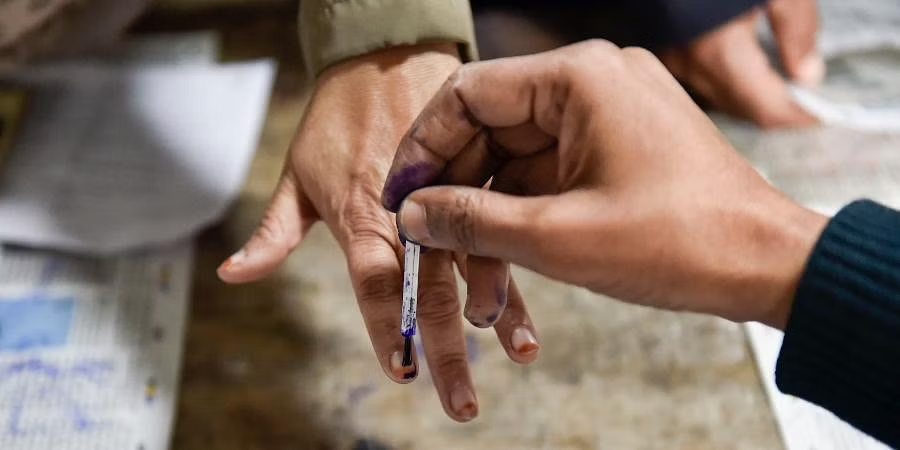
Bengaluru, May 12: Biennial elections to four Rajya Sabha seats from Karnataka and two graduates' and teachers' constituencies of the state Legislative Council will be held on June 10 and 13 respectively, the Election Commission of India said on Thursday.
The elections to four seats of Rajya Sabha is necessitated as the term of office of members - Nirmala Sitharaman (Union Finance Minister) and K C Ramamurthy of BJP, and Jairam Ramesh and late Oscar Fernandes of Congress is due to expire on June 30.
While the term of office of four sitting members of Karnataka Legislative Council from 2 graduates' and 2 teachers' Constituencies is expiring on July 4.
The four members are Nirani Hanamant Rudrappa of BJP from North-West Graduates' constituency, K T Srikantegowda of JD(S) South Graduates' constituency, Arun Shahapur of BJP from North-West Teachers' constituency and Basavaraj Shivalingappa Horatti of JD(S) from West Teachers' constituency.
The date of issuing of notification for Rajya Sabha poll in the state is on May 24, last date of making nominations is May 31 and scrutiny of nominations will take place on the next day. Last date for withdrawal of candidatures is June 3, counting of votes will take place on June 10 after the polling hours between 9 am to 4 pm.
While in the case of MLC polls, issue of notification is on May 19, last date of making nominations is May 26, scrutiny of nominations will take place on the next day. Last date for withdrawal of candidatures is May 30 and counting of votes will take place on June 15.
Members of Rajya Sabha are elected by the method of indirect election, by elected members of the Legislative Assembly of that State, in accordance with the system of proportional representation by means of the single transferable vote.
For MLC polls to two each graduates and teachers constituencies, members are elected by an electorate consisting of graduates and teachers.
The Model Code of Conduct concerning MLC elections will come into force with immediate effect.
The ruling BJP has already announced the candidates for three -- two sitting MLCs, Arun Shahpur (North West Teachers' constituency) and Hanumant Rudrappa Nirani (North West Graduates' constituency), and former MLC M V Ravishankar (South Graduates' Constituency).
Basavaraj Horatti, who is currently the Legislative Council Chairman and was elected on a JD(S) ticket last time is likely to be BJP's candidate from West Teachers' constituency.
Congress has fielded Madhu G Madegowda from South Graduates' constituency, Basavaraja Gurikara from West Teachers' constituency, and Prakash Hukkeri from North East Teachers' constituency.
JD(S) has decided to field Chandrashekhar Loni as its candidate from North West Teachers' constituency.
Let the Truth be known. If you read VB and like VB, please be a VB Supporter and Help us deliver the Truth to one and all.
Congress using hijab issue to pacify minority anger, alleges Karnataka LoP R Ashoka
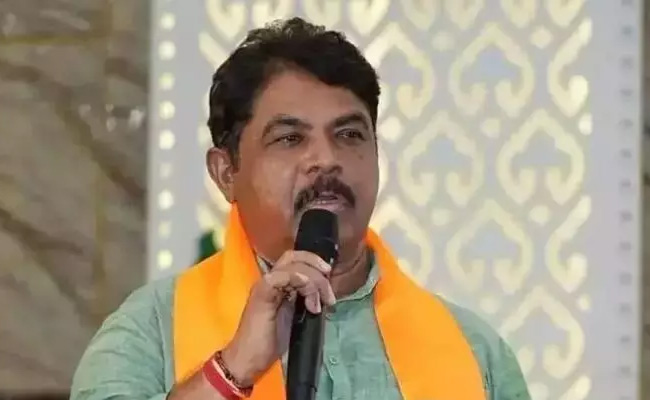
Bengaluru: Leader of Opposition in the Assembly R. Ashoka has accused the Congress government of using the hijab issue to placate what he described as discontent among minority voters after the Davanagere by-election.
In a post on X on Wednesday, Ashoka alleged that the state government, instead of addressing issues such as price rise, corruption, farmers’ distress and law and order, was attempting to retain its minority vote base by reviving the hijab issue.
Referring to the 2022 dress code introduced by the BJP government, which prohibited hijab in schools and colleges, Ashoka said the Karnataka High Court had upheld the policy and emphasised the importance of discipline in educational institutions.
He questioned the Congress government’s move to revisit the issue and asked whether setting aside the court-backed policy to benefit one community could be described as secularism.
Ashoka further alleged that while the government was willing to permit hijab, it continued to prohibit saffron shawls.
He accused the government of dividing students on religious lines rather than treating schools and colleges as spaces of equality.
Drawing a comparison with Mamata Banerjee’s government in West Bengal, Ashoka claimed that excessive appeasement politics had harmed the state and warned that the Congress in Karnataka could face a similar political response.
He said voters in Karnataka would teach the Congress a lesson for what he termed “vote-bank politics” and for compromising constitutional and judicial principles.