Karnataka Rakshana Vedike (NGF) activists damage signboards in Bengaluru for not using Kannada

Bengaluru (PTI): The Karnataka Rakshana Vedike (Narayana Gowda faction) on Wednesday targeted business establishments in Bengaluru and damaged their signboards and name plates which did not use Kannada.
The activists took out rallies in various parts of the city, especially in the business hubs such as MG Road, Brigade Road, Lavelle Road, UB City, Chamarajapet, Chickpet, Kempe Gowda Road, Gandhi Nagar, St Marks Road, Cunningham Road, Residency Road and Sadahalli Gate near Devanahalli.
The activists said the business establishments were "undermining the official language of Karnataka, which is Kannada."
Many malls, shops, commercial buildings, companies and factories, especially multinational companies, faced the ire of KRV activists. They destroyed and defaced signboards and name plates which were not in Kannada. Later, the agitating members including the KRV convener T A Narayana Gowda, were taken under preventive custody by police.
Speaking to reporters, Gowda said the name plates and signboards in Karnataka should be in Kannada.
"As per rule 60 per cent of the signboards and name plates should be in Kannada. We are not against your business but if you are doing business in Karnataka then you have to respect our language. If you ignore Kannada or put Kannada letters in small, we will not let you operate here," Gowda said.
VIDEO | Members of Karnataka Rakshana Vedike tear down posters in English on Bengaluru streets, warning commercial establishments to install billboards in Kannada. pic.twitter.com/LVQUUVj2DV
— Press Trust of India (@PTI_News) December 27, 2023
Let the Truth be known. If you read VB and like VB, please be a VB Supporter and Help us deliver the Truth to one and all.
Delhi sees 140 per cent rise in fire calls in April as city reels under intense heat
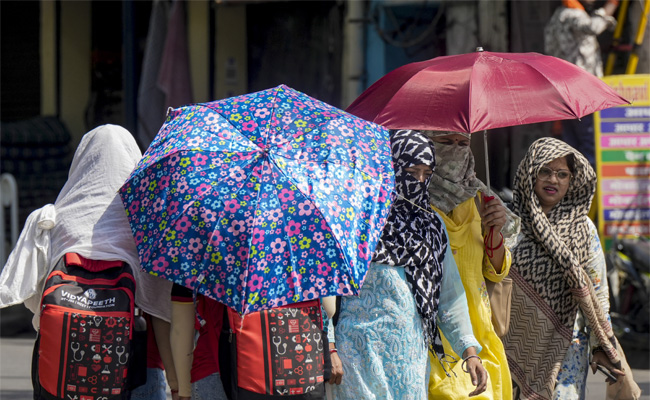
New Delhi (PTI): As temperatures climb across the national capital, fire incidents have surged sharply, with the Delhi Fire Services responding to over 3,200 calls this month until April 26, even as daily calls have risen by around 140 per cent compared to the pre-April period.
Before April, the department was receiving around 70 to 80 calls daily, which has now increased to nearly 190 to 200 calls per day, especially since last Monday, amid the ongoing spell of heat, an official said.
"Heat alone is not the only factor, but it is certainly a major contributing one," a DFS official told PTI, adding that as temperatures rise, the load on electrical infrastructure increases significantly.
"Air conditioners run continuously, wiring heats up, and transformers operate under stress, which raises the chances of short circuits and fire incidents," the official explained.
The official further added that the weather is also extremely dry at this time, which compounds the vulnerability, making even a small spark dangerous.
Once a fire starts, it tends to spread faster than usual under such conditions, he said.
"We do observe a seasonal rise in fire incidents during summer months every year, but this time the increase has been sharper," the official underscored, adding that the combination of sustained high temperatures, dry winds and increased power usage is making the situation more challenging.
"Our teams are on alert and responding to a significantly higher volume of calls on a daily basis," the official emphasised.
The spike in fire calls comes as Delhi continues to reel under high temperatures, fluctuating between 40 and 42 degrees Celsius in recent days.
On April 25, the city recorded a maximum of 42.8 degrees Celsius, 5.1 degrees above normal, making it the highest April temperature recorded in the last four years, since 2022 when the mercury had reached 43.5 degrees Celsius on April 28.
On Monday, at Safdarjung, the city’s base station, the maximum temperature was recorded at 42.3 degrees Celsius, 3.3 degrees above normal, making it the second-hottest day of the month.
Palam also recorded a maximum of 42.3 degrees Celsius, about 2.1 degrees above normal, while Lodhi Road logged 42.4 degrees Celsius, about 4.4 degrees above normal.
The Ridge station recorded the highest maximum at 43.8 degrees Celsius, about 4.3 degrees above normal, followed by Ayanagar at 43.2 degrees Celsius, around 3.7 degrees above normal.
However, some respite is expected in the coming days, with the weather office forecasting thunderstorms, gusty winds and light rain from Tuesday onwards, which could bring a dip in temperatures next week.