Karnataka records 14,087 out-of-school children; ranks third in South India
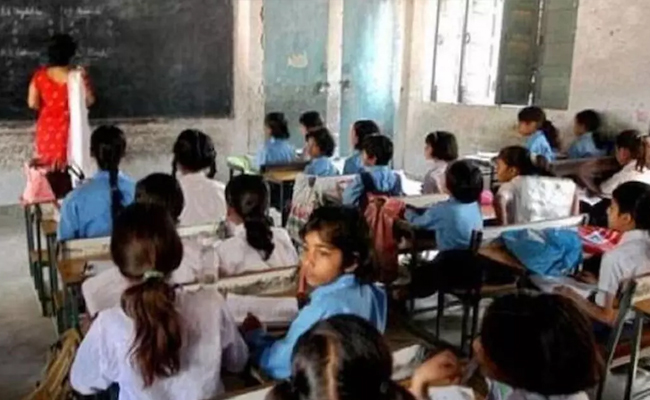
Bengaluru: Karnataka has emerged as the third-highest state in South India in terms of out-of-school children, according to the latest data released by the Union Ministry of Women and Child Development.
According to a report published by The New Indian Express on Saturday, information provided in Parliament in response to a question raised by Congress MP Renuka Chowdhury shows that during the 2025–26 academic year, Karnataka recorded 14,087 out-of-school children, of whom 6,462 are adolescent girls. The figures mark a sharp increase compared to the previous year.
In 2024–25, there were 9,422 out-of-school children, of whom only 115 were girls. Karnataka ranks 12th nationally, while Gujarat, Assam, and Uttar Pradesh top the chart.
In South India, Andhra Pradesh topped the list with a staggering 46,463 out-of-school children, including 17,584 adolescent girls. Tamil Nadu stood second with 19,897 children, of whom 9,054 were girls. Telangana recorded 4,753 out-of-school children, including 2,006 girls, while Kerala reported the lowest number at 1,773, with 539 girls.
The Ministry reportedly stated that it is providing free education to children through schemes such as Samagra Shiksha, upgradation and operation of Kasturba Gandhi Balika Vidyalayas, Morarji Desai Residential Schools, free uniforms and textbooks, and the construction of hostels for SC and ST girl students, among others.
Despite these measures, thousands of children remain out of school due to persistent challenges such as lack of basic infrastructure, including toilets and drinking water, shortage of teachers, child marriage, teenage pregnancies, and the fact that free and compulsory education is mandated only up to the age of 14 and not 18. In Karnataka alone, out of 46,460 schools, around 170 schools still lack toilet facilities.
Kathyayini Chamraj, Executive Trustee at CIVIC, recently submitted a memorandum to Laxmi Hebbalkar, Minister for Women and Child Development, urging the government to introduce mandatory pre-registration marriage certificates.
Instead of police intervention at wedding venues, the government should make pre-registration marriage certificates compulsory through the tahsildar to verify the age of couples, she said, adding that this would help curb child marriages and reduce school dropouts among adolescent girls.
Chamraj also called for extending free and compulsory education to children aged 15 to 18, along with options for vocational education and apprenticeships. She emphasised that it is crucial for multiple government departments to work together, allocate funds, and ensure essential facilities such as toilets and drinking water in schools.
Let the Truth be known. If you read VB and like VB, please be a VB Supporter and Help us deliver the Truth to one and all.
Davangere South bypoll: Congress ahead by narrow lead after 14th round
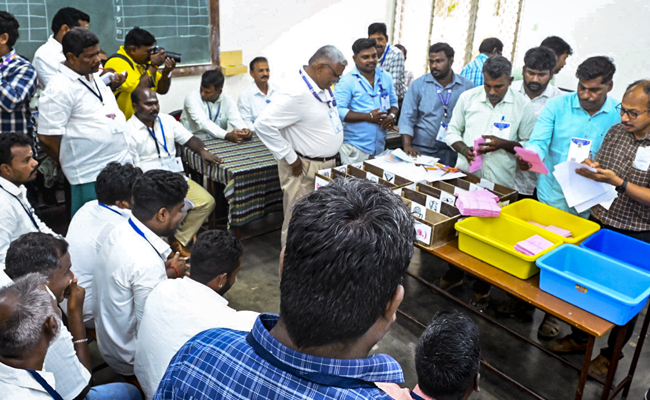
Davangere: The Congress candidate is leading in the Davangere South Assembly by-election after the completion of the 14th round of counting.
According to the latest figures, the Congress has secured 46,460 votes, while the BJP stands at 39,037 votes, trailing by 7,423 votes.
The SDPI candidate has polled 15,303 votes so far.
Counting is still underway, and final results are awaited.