Karnataka registers 10.2 per cent GSDP growth in 2023-24
Bengaluru: Karnataka has registered a robust GSDP growth of 10.2 per cent in 2023-24, the state government said on Monday. Citing a data from the Ministry of Statistics and Programme Implementation (MoSPI), the government said in a statement that the state has significantly surpassed the national average of 8.2 per cent.
"Initially, the National Statistical Estimate (NSE) had projected a modest 4 per cent GSDP growth for Karnataka, but this was revised to 13.1 per cent by the end of the fiscal year, indicating early underestimation of the state’s economic performance," the statement read.
The government pointed out that this feat was achieved despite severe challenges, including the worst drought in a decade and a slowdown in global IT markets. The state’s agriculture sector faced negative growth due to drought conditions, while Karnataka’s dependence on the IT and hardware sectors—accounting for 28 per cent of its Gross State Value Added (GSVA)—made it vulnerable to global economic downturns, according to the statement.
The Indian IT industry’s growth, which slowed from 15.5 per cent in FY 2022 to 8 per cent in FY 2023, reflected global recessionary fears and inflation. For FY 2024-25, the NSE forecasts Karnataka’s GSDP to grow at 9.4 per cent, slightly below the national average projection of 10.5 per cent, the statement said.
However, the Ministry of Finance projects a more optimistic 14 per cent growth for the state, supported by strong fiscal indicators, it added. "As of September 2024, Karnataka recorded a 10 per cent year-on-year increase in GST collections and a 24 per cent surge in stamp duty revenue, signaling a healthy economic trajectory," the government said.
Karnataka’s per capita GSDP remains among the highest in the country, on par with Telangana, reflecting the strength of Congress-led governance in both states, the statement said. The state government gave credit to its pro-people policies, including its five guarantees, saying they have ensured that the benefits of growth reach all sections of society.
Let the Truth be known. If you read VB and like VB, please be a VB Supporter and Help us deliver the Truth to one and all.
Speaker UT Khader attends local cricket tournament during Bhatkal visit
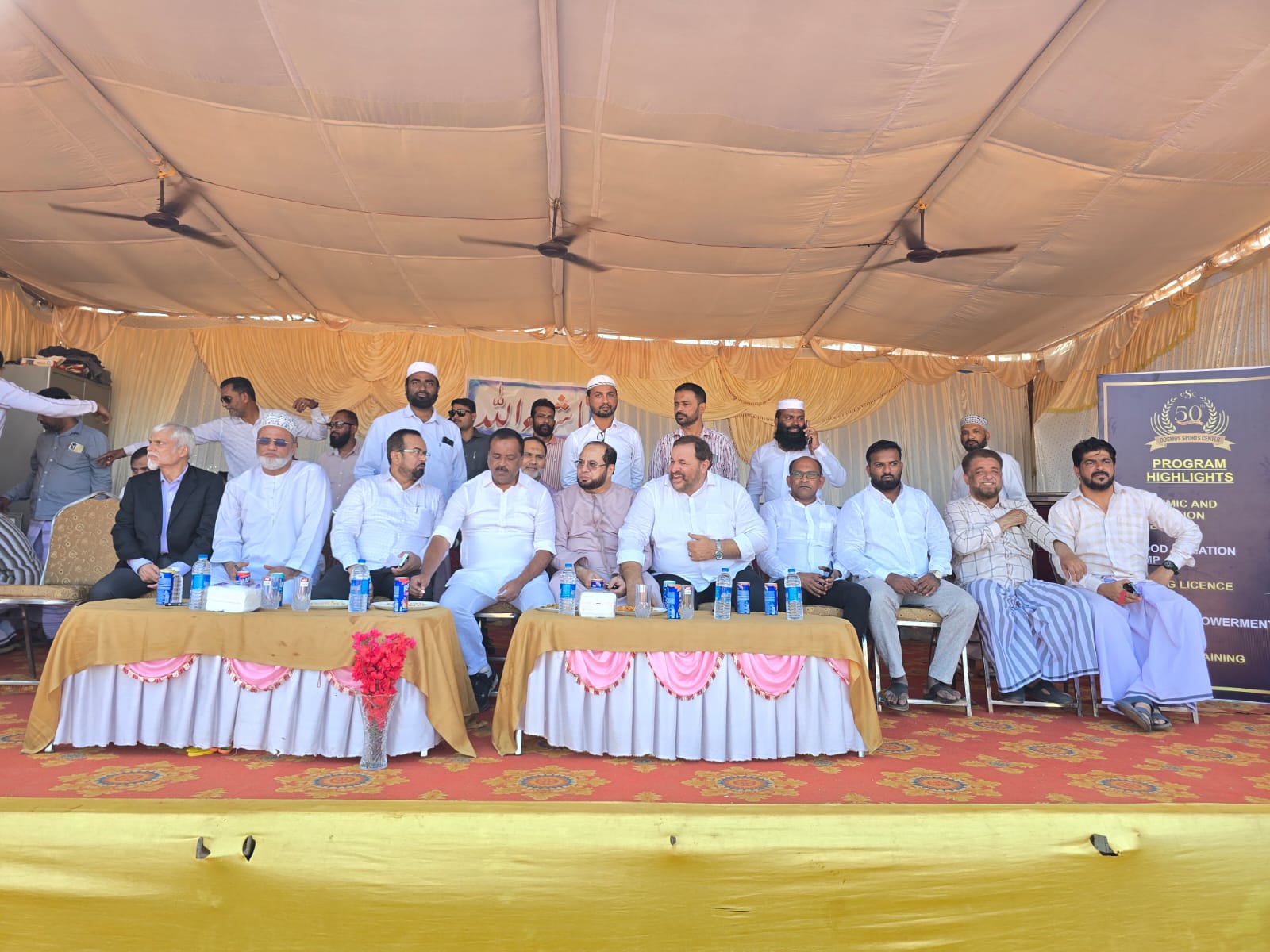
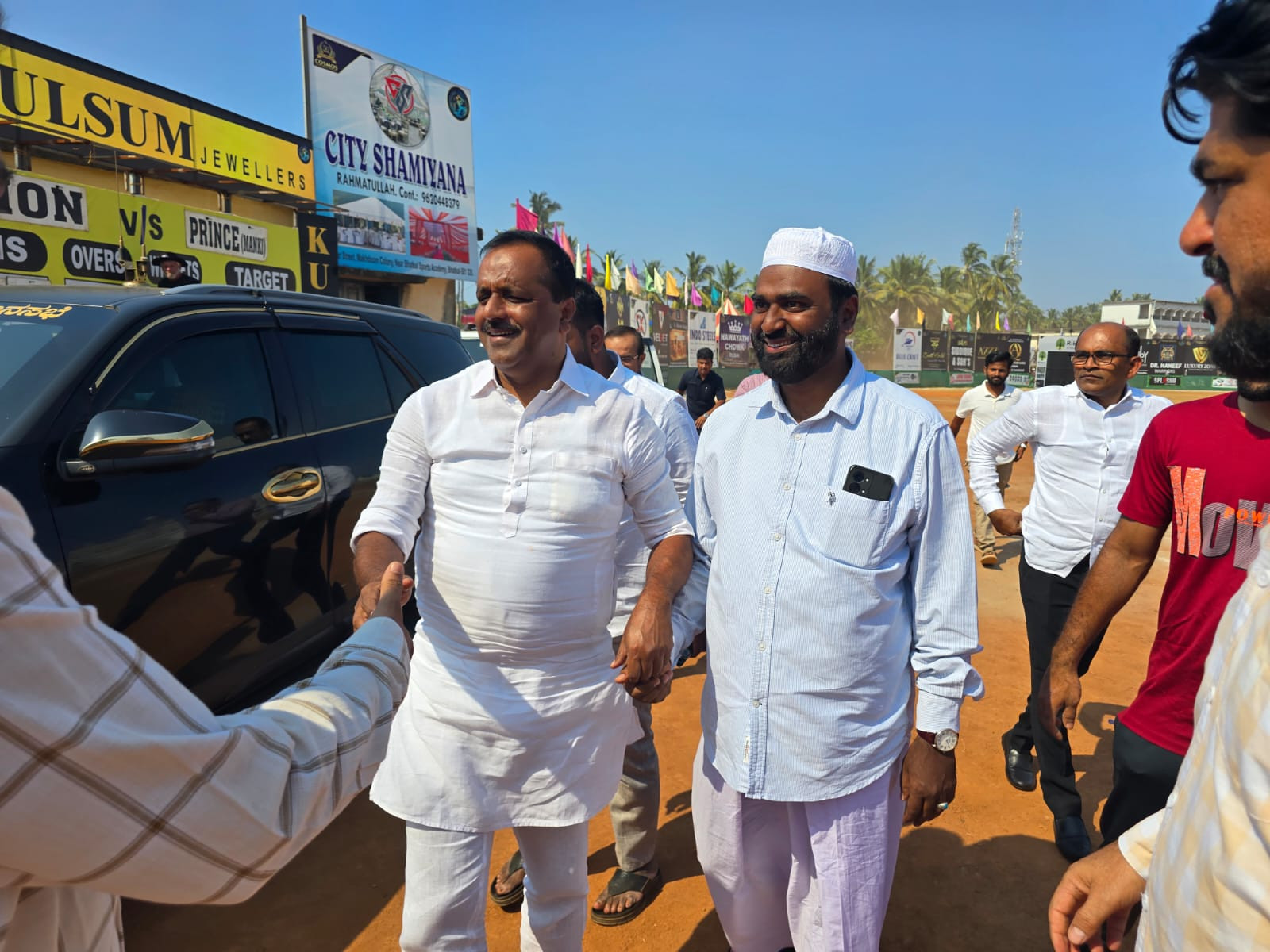
Bhatkal: Speaker of the Karnataka Legislative Assembly U. T. Khader visited Bhatkal in Uttara Kannada district on Saturday and attended a local cricket match being played as part of a tournament organised by the Cosmos Sports Centre of Bhatkal.
After attending a programme at Anjuman Hami-E-Muslimeen, Khader proceeded to the Bhatkal Taluka Stadium, where the tournament is underway. He was accompanied by office-bearers of the Cosmos Sports Centre and several local community leaders.
Those present during the visit included President of Majlis-e-Islah Wa Tanzeem and former JD(S) leader Inayathullah Shabandri, Vice President of Tanzeem Atiqur Rahman Muniri, General Secretary Abdul Raqeeb MJ, President of Cosmos Sports Centre Ismail Anjum, Managing Director of Mohtisham Complexes S. M. Arshad, former president of the Bhatkal Muslim Youth Federation Imtiyaz Udyawar, among others.
Addressing players and organisers, Khader extended his best wishes to the participating teams and urged the players to uphold the spirit of sportsmanship. He said such tournaments help promote unity and brotherhood among the youth.
The cricket tournament began on November 21 and will conclude with the final match on December 21. It is being organised as part of the golden jubilee celebrations of the Cosmos Sports Centre.
Cosmos Sports Centre is one of the member clubs of the Bhatkal Muslim Youth Federation and is known for its active role in promoting sports in the town. Apart from sporting activities, the centre is also involved in various social and community initiatives, including efforts to promote education among students.