Karnataka should ramp up production of millets like ragi: Union Food Secretary
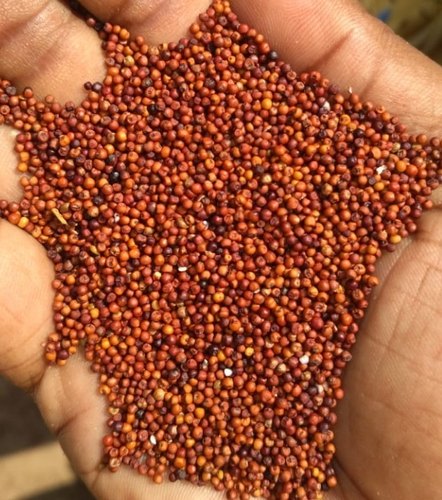
New Delhi, Jan 8: Karnataka, being a large producer of ragi, should ramp up production of millets and also meet the requirement of other states, Union Food Secretary Sudhanshu Pandey said on Saturday in a meeting with state officials.
Pandey, in the meeting with the state chief secretary and other officials, said the Karnataka government should also tie up with the Indian Institute of Millets in Hyderabad for increased market penetration of millet products through startups.
"The Food Secretary further informed that the requirement of millets of other states can also be met by Karnataka with the Centre bearing all the handling and transportation costs," an official statement said.
The state should ramp up millets output as 2023 has been declared as the International year of Millets, he added.
The Union Food Secretary also suggested the state government to procure fortified rice locally and undertake fortification of rice at milling stage itself.
He said FRK (fortified rice kernels) units be set up to achieve the long-term objective of 100 per cent fortified rice for aspirational and heavy burdened districts.
Further, Pandey asked the state government to rope in its health department to monitor health development of children to get benefits under the Integrated Child Development Scheme and Midday Meal Scheme under which fortified rice distribution is undertaken.
This apart, Pandey said the central government has already approved procurement of local varieties of paddy in Udupi and Dakshina Kannada for self-consumption by the state.
On the state's request to release advance subsidy, the Union Food Secretary asked the Karnataka government to submit their provisional expenditure before commencement of procurement operations based on which advances can be released.
The state government suggested having one unified software for procurement operations to which Pandey said the same is under consideration.
With Karnataka being one of the largest producers of sugar, Pandey suggested that the ethanol production and blending be encouraged as the state is one of the eight identified states for introduction of 100 ethanol bunks in metros.
He also informed that 'One Nation One Ration Card' for migrant labourers, coffee plantation workers and other settlement workers engaged in construction activities can be actively taken up by the state government for real benefit of the poor.
Let the Truth be known. If you read VB and like VB, please be a VB Supporter and Help us deliver the Truth to one and all.
High-level inquiry committee set up to probe fire in Rajdhani Express: Railway Board
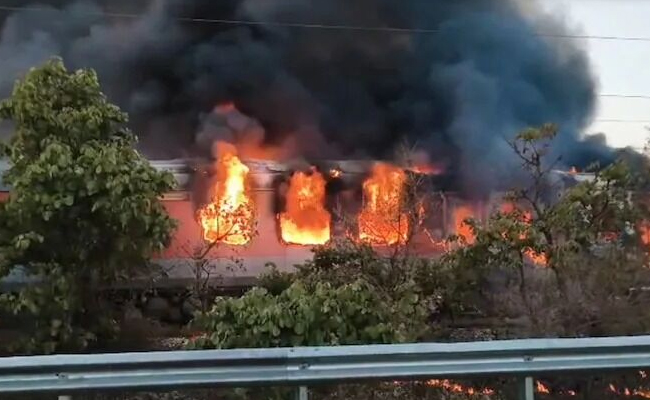
New Delhi (PTI): The West Central Railway Zone has constituted a high administrative grade-level inquiry committee to investigate the fire on the Thiruvananthapuram Central-Hazrat Nizamuddin Rajdhani Express on Sunday.
The fire erupted at 5.15 am in the B-1 passenger coach of the train between Vikramgarh Alot and Lunirichha stations under the Kota Railway division, one-and-a-half hours after it left the Ratlam Junction in Madhya Pradesh, according to an official. The fire also damaged the luggage brake and generator car behind the coach.
"The committee has been nominated by the general manager of West Central Railway (WCR). It comprises senior officers from the West Central Railway, Integral Coach Factory in Chennai, and RDSO (Research Designs and Standards Organisation)," the Railway Board said in a press note.
"Principal chief safety officer, WCR, has been appointed as the convener of the committee," it said, also mentioning other committee members such as principal chief electrical engineer, principal chief mechanical engineer, principal chief security officer from the WCR zone, and principal chief mechanical engineer from the Integrated Coach Factory, among others.
As per the provisions of the Accident Manual, the committee has been directed to complete the inquiry within the stipulated timeframe.
The Board stated that the committee will conduct a detailed examination of the causes of the incident, technical aspects and safety parameters so as to prevent recurrence of such incidents in future.
"Indian Railways remains committed to ensuring the safety and security of passengers and is taking all necessary measures in this regard," it added.