Karnataka slashes cost of RT-PCR tests by Rs 500

Bengaluru: The Karnataka government's COVID-19 task force has decided to reduce the cost of the Reverse Transcription Polymerase Chain Reaction (RT-PCR) tests by Rs 500, Deputy Chief Minister C N Ashwath Narayan said on Friday.
The cost of RT-PCR tests for those referred from government hospitals to private labs have been reduced from Rs 2,000 to Rs 1,500 and for those going directly to private labs from Rs 3,000 to Rs 2,500, the DCM's office quoted him as saying after the task force meeting.
He said, at the meeting it was also decided to purchase 20 lakh new rapid antigen test kits and 18 lakh RT- PCR test kits.
Stating that the ICMR has warned about infections increasing in state capital Bengaluru, and necessary precautionary measures are being taken, Narayan said, it was decided at the meeting to purchase equipment worth Rs 12 crore to start 115 bed ICU at the KC General Hospital in the city.
All necessary measures are being taken to bring down the death rate, for which certain tests should be done.
If it is difficult to conduct such tests at government hospitals, it will done at private labs, the minister said.
"By doing such tests, the stage of disease can be identified so as to administer required treatment and thereby bring down the death rate," he said, adding that plasma therapy will be extended across the state and necessary arrangements will be made for this.
Let the Truth be known. If you read VB and like VB, please be a VB Supporter and Help us deliver the Truth to one and all.
Congress using hijab issue to pacify minority anger, alleges Karnataka LoP R Ashoka
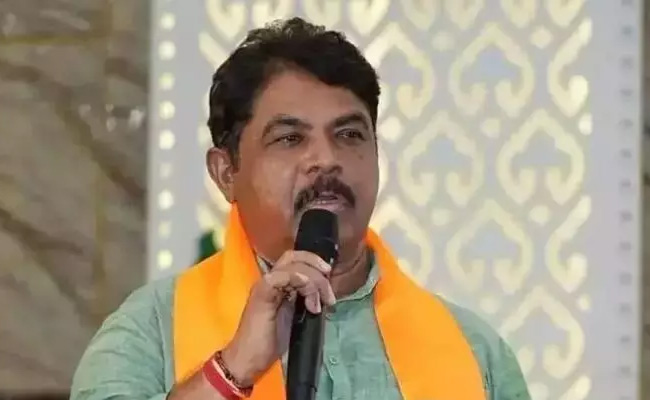
Bengaluru: Leader of Opposition in the Assembly R. Ashoka has accused the Congress government of using the hijab issue to placate what he described as discontent among minority voters after the Davanagere by-election.
In a post on X on Wednesday, Ashoka alleged that the state government, instead of addressing issues such as price rise, corruption, farmers’ distress and law and order, was attempting to retain its minority vote base by reviving the hijab issue.
Referring to the 2022 dress code introduced by the BJP government, which prohibited hijab in schools and colleges, Ashoka said the Karnataka High Court had upheld the policy and emphasised the importance of discipline in educational institutions.
He questioned the Congress government’s move to revisit the issue and asked whether setting aside the court-backed policy to benefit one community could be described as secularism.
Ashoka further alleged that while the government was willing to permit hijab, it continued to prohibit saffron shawls.
He accused the government of dividing students on religious lines rather than treating schools and colleges as spaces of equality.
Drawing a comparison with Mamata Banerjee’s government in West Bengal, Ashoka claimed that excessive appeasement politics had harmed the state and warned that the Congress in Karnataka could face a similar political response.
He said voters in Karnataka would teach the Congress a lesson for what he termed “vote-bank politics” and for compromising constitutional and judicial principles.