Karnataka to decide on relaxing curbs on Ganesha festival based on inputs from experts: CM Bommai
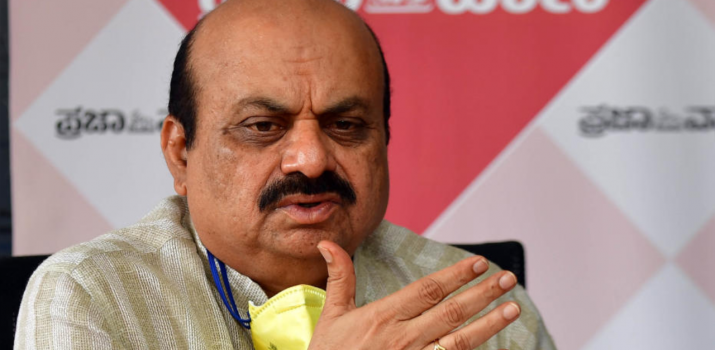
Bengaluru, Aug 31: Karnataka Chief Minister Basavaraj Bommai on Tuesday said the government will take a decision on relaxing restrictions on Ganesha festival celebrations, on September 5, after getting necessary inputs from the districts and the expert committee.
The Chief Minister who held a meeting with senior Ministers, officials and experts on Monday had deferred a decision on allowing full-fledged Ganesha festival celebrations for which several BJP leaders and groups with Sangh Parivar background were mounting pressure.
"Right decision has to be taken at the right time, all the inputs that were required from various districts were not there at yesterday's meeting. We have sought inputs from Deputy Commissioners and Superintendents of police of all the districts, and the health department has been asked to do a complete analysis," Bommai said in response to a question on "delay" in the decision.
Speaking to reporters here, he said, "the opinion was to take guidance from the expert committee on what decision has to be taken and necessary measures to be put in place. They have sought some time, so on September 5 we will hold a meeting, and we will decide on it." Several organisations and political leaders, mostly from the BJP and with Sangh Parivar background have been demanding relaxation of restrictions on Ganesha festival.
Citing COVID, the government had earlier banned the public celebration of the Ganesha festival by setting up pandals, and had said that people must celebrate it in their homes and no procession will be allowed while bringing the Ganesha idol or during the immersion of the idols.
Meanwhile, terming the road accident that occured in the city during the early hours of Tuesday in which seven youth, including a Tamil Nadu MLA's son, were killed as "shocking", Bommai said, police will inquire into the reasons for the accident.
"One should be careful while driving during the night time for safety of self and others. Safety rules like speed limit, signals, road humps have to be followed, to avoid such accidents," he said.
Let the Truth be known. If you read VB and like VB, please be a VB Supporter and Help us deliver the Truth to one and all.
Allahabad HC orders probe into 'reinstatement' of teacher in UP's Barabanki
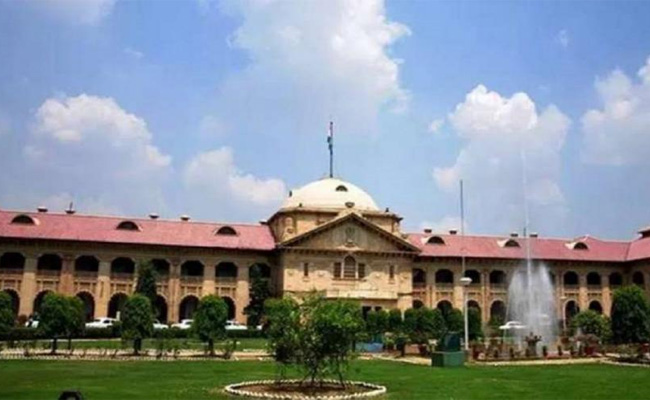
Lucknow (PTI): The Lucknow Bench of the Allahabad High Court on Friday ordered a probe by the special task force (STF) into alleged irregularities in the rejoining of a teacher at City Intermediate College in Barabanki, observing that the reinstatement appeared to be prima facie illegal.
The court also directed the recovery of the salary paid to the teacher during the disputed period.
A bench of Justice Rajeev Singh passed the order on a petition filed by the college management committee. The court expressed doubts over the roles of the District Inspector of Schools (DIOS), Barabanki, the college principal and the teacher concerned and hence, directed a detailed inquiry into the matter.
Taking note of alleged manipulation of records and misleading submissions, the court ordered the immediate transfer of the Barabanki DIOS to ensure a fair probe. It also directed the initiation of disciplinary proceedings against the then joint director of education of the Ayodhya division.
In its order, the court found that the teacher, Abhay Kumar, was initially appointed as an assistant teacher in 2018 but joined an Eklavya Model Residential School in Chhattisgarh as a lecturer in June 2024 without obtaining permission from the management. His subsequent request to retain the lien was rejected.
Despite this, he was allowed to rejoin the Barabanki College in September 2025 on the directions of the joint director of education and the DIOS, and was even paid the salary for October 2025. The court termed the rejoining "wholly illegal" and lacking any legal basis.
The bench also expressed concern over lapses in communication within the education department and directed the Uttar Pradesh chief secretary to ensure that official orders are communicated through email and WhatsApp as well, to prevent disputes.
The matter is next listed for hearing on May 28 when a compliance report is sought.