Karnataka tops India Justice Report 2025, but struggles with prisons, legal aid, gender equality

Bengaluru: Karnataka has emerged as the top performer among 18 large and mid-sized states (with a population of over one crore each) in India, according to the India Justice Report 2025 (IJR), a key national ranking assessing the delivery of justice across the country.
The report, cited on Wednesday by The New Indian Express, revealed that Karnataka continues to maintain its strong position from the previous edition of the report, securing the top spot in the overall ranking for justice delivery.
The IJR evaluates states based on their performance in four key areas: police, judiciary, prisons, and legal aid. Karnataka stands out for its effective implementation of reservation quotas for Scheduled Castes (SC), Scheduled Tribes (ST), and Other Backward Classes (OBCs) in both the police and judiciary sectors. The state has also set a benchmark with a mere 1.2 percent vacancy rate at the officer level within the police force, the lowest among all large states. Additionally, Karnataka boasts the highest number of paralegal volunteers in the country.
Karnataka is followed by Andhra Pradesh, Telangana, Kerala, and Tamil Nadu. But, despite being a top ranking state, the report highlighted significant areas of concern, particularly in prisons, legal aid, and women’s representation within the police force.
The IJR 2025 raised alarm over the state’s prison system, particularly the high number of undertrial prisoners (UTPs). According to the report, 80 percent of inmates in Karnataka’s prisons are under trial, the highest figure recorded since 2015. This increase in UTPs reflects broader systemic issues, including limited access to legal aid at the grassroots level, especially in villages.
Furthermore, Karnataka’s progress in integrating women into the police force remains far from ideal. The state has set an ambitious target to raise the percentage of women in police roles to 25 percent, but the reality falls short. According to the IJR 2025, women constitute only 9 percent of the total police force, with a mere 6 percent representation at the officer level.
Commenting on the findings, Justice Madan B. Lokur (Retd.), former judge of the Supreme Court, emphasised that the barriers to accessing justice begin at the very first point of contact with the system. “With our failure to properly equip and train frontline justice providers — police stations, legal aid actors including paralegal volunteers and district courts — we fracture public trust,” TNIE report quoted him as saying.
“The strength of our entire justice framework rests on these critical first points of contact. The burden continues to remain on the individual seeking justice, and not the state to provide it,” he added.
Maja Daruwala, Chief Editor of the India Justice Report, called for urgent reforms to ensure that justice is not just a constitutional ideal but an everyday reality for all citizens. “As India moves forward into a hundred years of being a democratic, rule-of-law nation, the promise of rule of law and equal rights will remain hollow unless underwritten by a reformed justice system,” Daruwala said, noting that reform is not optional but urgent.
Let the Truth be known. If you read VB and like VB, please be a VB Supporter and Help us deliver the Truth to one and all.
Barakah International School records 100% results in CBSE class 10, over 38 distinctions
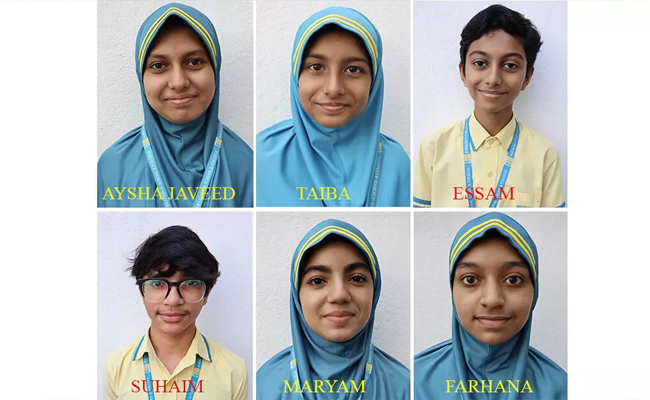
Mangaluru: Barakah International School and College has once again recorded a 100% pass result in the Central Board of Secondary Education (CBSE) Class 10 examinations, with students securing high scores and a significant number of distinctions.
The results of the examinations held for the academic year 2025–26 were announced by the board on Wednesday, April 15.
Leading the batch, school topper Aysha Saleem Javeed secured 96.4 %. She was closely followed by Maryam Taybah, who scored 94.4 %, while Inas Syed and Fidha Falaq secured 92 % each. Essam Khalid Syed and Suhaim scored 90.6 %, and Maryam Mohammed Iqbal along with Fathima Farhana secured 90% each.
Notably, over 38 students achieved distinction, highlighting the collective dedication, perseverance, and hard work of the students, as well as the unwavering commitment of the teaching faculty.
The management, principal, and staff of Barakah International School expressed their heartfelt appreciation for the students’ achievements.
They also acknowledged the vital role played by parents in supporting their children’s academic journey,
Barakah International School and College, Adyar, offers education from Pre-KG to degree level.