Karnataka Transport Minister flags safety, service issues in Bengaluru's e-bus network
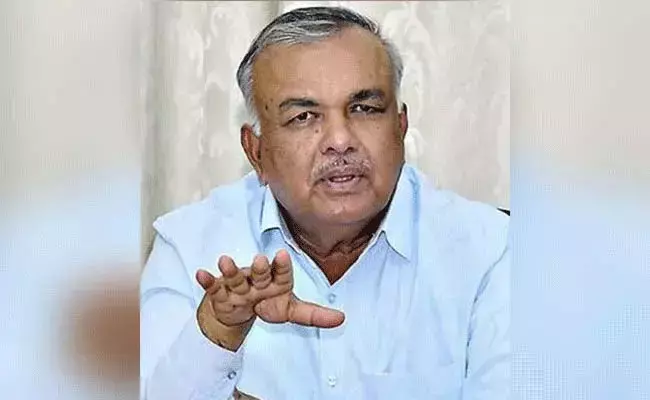
Bengaluru, Oct 27 (PTI) Karnataka Transport Minister Ramalinga Reddy has urged Union Heavy Industries Minister H D Kumaraswamy to review the performance of operators running electric buses under the Gross Cost Contract (GCC) model, citing "safety lapses" and "poor service standards" in Bengaluru’s e-mobility network.
In a letter dated October 25, Reddy raised concerns over the performance of GCC operators functioning under schemes such as FAME II (Faster Adoption & Manufacturing of Electric Vehicles in India), CESL (Convergence Energy Services Limited), Smart City Project and Special Assistance to States for Capital Investment 2023-24.
CESL's model of aggregation-based procurement under a Gross Cost Contract (GCC) framework ensures both efficiency and affordability. Under this model, private operators will own, operate, and maintain the buses, while city authorities will pay a fixed per-kilometer fee.
While Reddy appreciated the environment friendly initiative of electric mobility in public transport across the nation and particularly in Bengaluru, the minister said that he was writing with a "sense of pressing concern and compelling urgency regarding the operational efficacy and service discipline of certain GCC operators" who have been entrusted with the deployment and operation of electric buses in Bengaluru.
“The performance of operators under GCC, predominantly Original Equipment Manufacturers such as NTPC Vidyut Vyapar Nigam, Tata Motors Limited (TML), Switch Mobility, and their associated operating entity, OHM Global Mobility, has fallen significantly short of the standards expected from industry leaders of their stature,” the minister said in his letter.
He claimed that the operators have "failed" to address critical issues such as lack of structured driver training, poor maintenance, frequent cancellations, breakdowns, battery-related problems and insufficient driver preparedness, leading to rise in accidents and repeated flash strikes.
Reddy also pointed out that against the proposed minimum manpower deployment of 2.3 personnel per bus, operators have been deploying only 1.9 to 2.0 personnel per bus as a cost-cutting measure, which has “stained the reputation of BMTC and, by extension, the image of Bengaluru as a progressive metropolis.”
“This glaring gap has rendered frontline personnel ill-equipped to uphold even the most basic standards of service excellence,” he said.
The minister noted that BMTC currently operates about 65,000 trips every day with 7,067 buses — 5,423 diesel-powered and 1,644 electric. While diesel buses maintain a strong safety record with accidents at 0.05 per lakh kilometres, electric buses have recorded a higher accident rate of 0.07 per lakh kilometres, he said.
He urged the Union Minister to initiate a performance review of GCC operators under FAME II, CESL and other projects, with particular emphasis on breakdowns, safety compliance and driver training.
Reddy recommended to include binding clauses in future tender documents, mandating comprehensive and certified driver training protocols by GCC operators, prior to commencement of services.
He also urged the Union Minister to institute a compliance monitoring mechanism jointly undertaken by State Transport Utilities and the Ministry, to ensure adherence to safety and service benchmarks.
“I remain confident that you shall view this matter and take corrective steps at the earliest in the larger interest of commuter welfare and the credibility of e-mobility initiatives,” Reddy added.
Let the Truth be known. If you read VB and like VB, please be a VB Supporter and Help us deliver the Truth to one and all.
Iran reimposes restrictions on Strait of Hormuz, accusing US of violating deal to reopen it
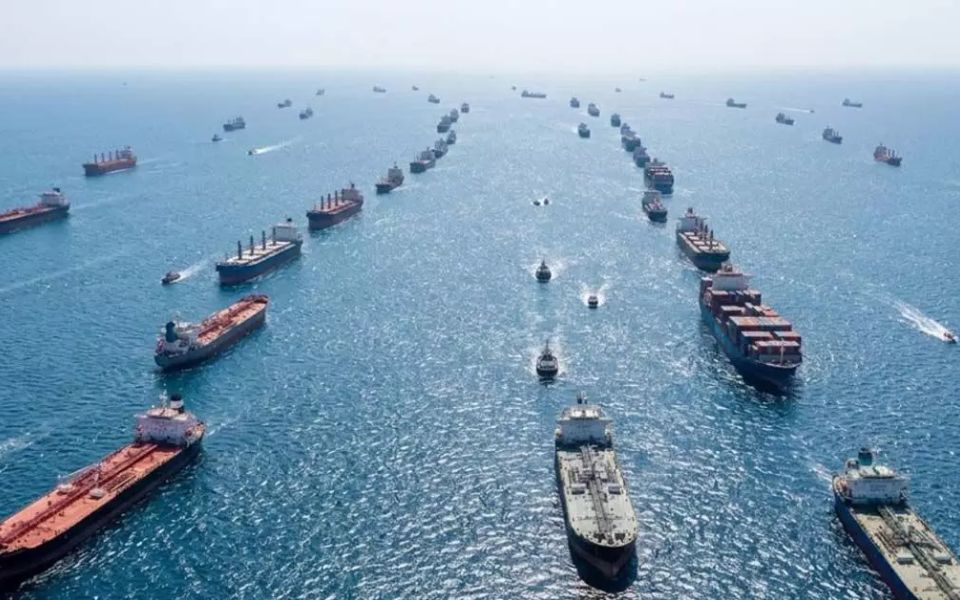
Cairo (AP): Iran swiftly reversed course on reopening the Strait of Hormuz, reimposing restrictions on the critical waterway on Saturday after the US said it would not end its blockade of Iran-linked shipping.
Iran's joint military command said on Saturday that “control of the Strait of Hormuz has returned to its previous state ... under strict management and control of the armed forces.” It warned that it would continue to block transit through the strait as long as the US blockade of Iranian ports remained in effect.
The announcement came the morning after US President Donald Trump said that even after Iran announced the strait's reopening on Friday, the American blockade “will remain in full force” until Tehran reaches a deal with the US, including on its nuclear programme.
The conflict over the chokepoint threatened to deepen the energy crisis roiling the global economy after oil prices began to fall again on Friday on hopes the US and Iran were drawing closer to an agreement. Roughly one-fifth of the world's oil passes through the strait, and further limits would squeeze already constrained supply, driving prices higher once again.
Control over the strait has proven to be one of Iran's main points of leverage and prompted the United States to deploy forces and initiate a blockade on Iranian ports as part of an effort to force Iran to accept a Pakistan-brokered ceasefire to end almost seven weeks of war that has raged between Israel, the US and Iran.
Iran said it fully reopened the Strait of Hormuz to commercial vessels after a 10-day truce was announced between Israel and the Iranian-backed Hezbollah militant group in Lebanon. But after Trump said the blockade would continue, top Iranian officials said his announcement violated last week's ceasefire agreement between Iran and the US and warned the strait would not stay open if the US blockade remained in effect.
A data firm, Kpler, said movement through the strait remained confined to corridors requiring Iran's approval.
US forces have sent 21 ships back to Iran since the blockade began on Monday, US Central Command said on X.
Truce in Lebanon could help US-Iran peace efforts
------------------------------------------------------------
The ceasefire in Lebanon could clear one major obstacle to an agreement. But it was unclear to what extent Hezbollah would abide by a deal it did not play a role in negotiating, and which will leave Israeli troops occupying a stretch of southern Lebanon.
Trump said in another post that Israel is “prohibited” by the US from further strikes on Lebanon and that “enough is enough” in the Israel-Hezbollah war.
The State Department said the prohibition applies only to offensive attacks and not to actions taken in self-defence.
Shortly before Trump's post, Israeli Prime Minister Benjamin Netanyahu said Israel agreed to the ceasefire in Lebanon “at the request of my friend President Trump,” but that the campaign against Hezbollah is not complete.
He claimed Israel had destroyed about 90 per cent of Hezbollah's missile and rocket stockpiles and added that Israeli forces “have not finished yet” with the dismantling of the group.
In Beirut, displaced families began moving toward southern Lebanon and Beirut's southern suburbs despite warnings by officials not to return to their homes until it became clear whether the ceasefire would hold.
The Lebanese army and UN peacekeepers in southern Lebanon reported sporadic artillery shelling in some parts of southern Lebanon in the hours after the ceasefire took effect.
An end to Israel's war with Hezbollah was a key demand of Iranian negotiators, who previously accused Israel of breaking last week's ceasefire with strikes on Lebanon. Israel had said that the deal did not cover Lebanon.
The fighting has killed at least 3,000 people in Iran, more than 2,290 in Lebanon, 23 in Israel and more than a dozen in Gulf Arab states. Thirteen US service members have also been killed.