Karnataka unveils GCC policy, aims to generate USD 50 billion economic output by 2029
Bengaluru (PTI): The Karnataka Government on Friday launched a draft Global Capacity Centres (GCC) policy with the aim to generate USD 50 billion economic output and attract 500 new GCCs by 2029, creating 3.5 lakh jobs.
According to officials, this policy is designed to enhance investor confidence, promote seamless collaboration with the local innovation ecosystem, and position Karnataka as a global leader in AI research and development.
Crafted through extensive industry research and stakeholders consultations, it draws insights from over 500 discussions with experts and industry leaders, they said, adding, the result is a comprehensive framework that sets ambitious goals for growth, incentives, and collaboration.
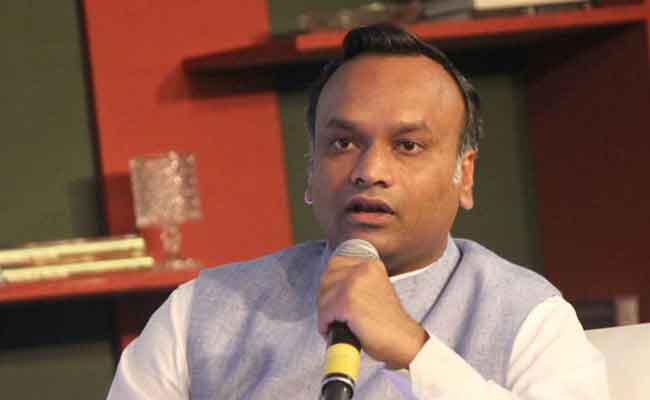
Speaking at the event, Information Technology and Biotechnology Minister Priyank Kharge said: "Today, we proudly launch India's first dedicated policy for Global Capability Centres (GCCs), reaffirming Karnataka's position as the top destination for innovation and business transformation. GCCs have evolved from back-office operations to becoming critical drivers of global strategic initiatives, R&D, and technology solutions."
He emphasised that with a workforce of over 1.2 million and contributing USD 22.2 billion to the economy, GCCs have been a vital source of growth and employment for Karnataka.
"Through this policy, we expect the GCC sector to grow at a compound annual rate of 12-14 per cent over the next decade and foresee Karnataka holding nearly 50 per cent of the National GCC market share by 2029. We are committed to creating an ecosystem that fosters innovation, supports R&D, and nurtures top talent, ensuring Karnataka remains the most attractive destination for GCCs globally," Kharge said.
The draft policy is now open for public comments, and the government invited inputs from all stakeholders to refine and strengthen the policy further.
Secretary to the Government of Karnataka's Department of Electronics, IT, BT and S&T, Ekroop Caur, presented an overview of the draft GCC policy, detailing its objectives, vision, and goals and emphasised that it seeks to expand the GCC ecosystem beyond Bengaluru through the introduction of the 'Beyond Bengaluru Package', aimed at attracting investments and fostering development across the state.
"Our target is to establish 500 new GCCs by 2029, which will create 3.5 lakh new jobs and generate an economic output of USD 50 billion," she said.
According to officials, a key highlight of the policy is the establishment of Global Innovation Districts, with three new state-of-the-art technology parks — one in Bengaluru and two in "Beyond Bengaluru" clusters.
These parks will feature cutting-edge infrastructure to foster collaboration between startups, tech leaders, and academia. Anchor investors in these districts will receive special incentives, with mega projects eligible for customised packages, they said.
Let the Truth be known. If you read VB and like VB, please be a VB Supporter and Help us deliver the Truth to one and all.
The Latest: Kuwait blames Iran for drone strikes as Trump casts doubt on ceasefire
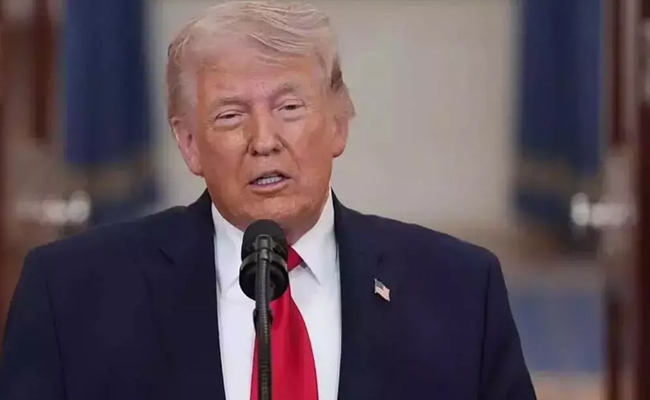
Dubai (AP): US President Donald Trump appeared to cast doubt on the effectiveness of the two-week ceasefire over Iran's continued chokehold over the Strait of Hormuz, while Kuwait accused Iran and its proxies of launching drone attacks targeting it on Thursday despite the ceasefire.
Iran's paramilitary Revolutionary Guard denied launching attacks on Persian Gulf states after Kuwait's announcement.
Israeli Prime Minister Benjamin Netanyahu offered a potential boost to ceasefire efforts in the region when he said he had approved direct talks with Lebanon. The Lebanese government has not responded as of Friday morning.
The announcement came after Israel's pounding of Beirut Wednesday killed more than 300 people. The negotiations are expected next week in Washington, according to a person familiar with the matter.
Questions remained over what will happen to Iran's stockpile of enriched uranium at the heart of tensions, how and when normal traffic will resume through the Strait of Hormuz, and what happens to Iran's ability to launch future missile attacks and support armed proxies in the region.
Talks between the United States and Iran on a resolution to the conflict are expected to start Saturday in Islamabad, with the White House saying Vice President JD Vance would lead the US delegation.
Here is the latest:
Air defence fire and explosions heard in Iran
=============================
Multiple times overnight into Friday morning, people around Iran's capital, Tehran, and other parts of the country said they heard what sounded like air defence fire and explosions.
However, Iran's government did not acknowledge any attack during that period.
After past exchanges of fire with Israel, similar incidents happened as troops remained on edge.
Japan releases more oil reserves
======================
Japan said it will release an additional 20 days' worth of oil reserves in May, in a second round to address supply uncertainty over the war in the Middle East.
Japanese Prime Minister Sanae Takaichi said the planned release of the government reserves will start in early May, after an earlier release last month.
Japan started releasing about 50 days' worth of oil reserves in March, including from those held by the state, the private sector and oil-producing Gulf nations.
As of April 6, Japan had 230 days' worth oil reserves, including 143 days' worth in government stockpiles, according to the Natural Resources and Energy Agency.
Takaichi said her government is working to secure oil imports via routes that do not include the Strait of Hormuz, while Japan seeks to diversify suppliers.
Pakistan to issue visas on arrival ahead of talks
===============================
Pakistan said Friday it would issue visas on arrival for those travelling to Islamabad for the Iran-US talks, signalling the interest in the world's media in the event.