Karnataka's fresh caste census to cost Rs 420 crore: CM Siddaramaiah
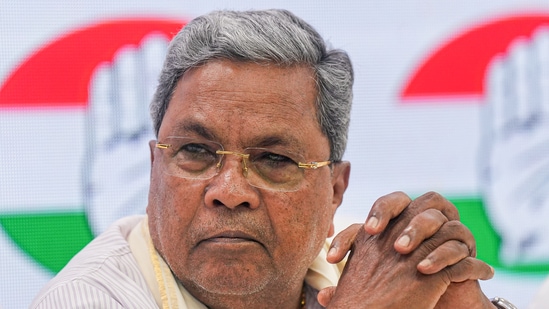
Bengaluru (PTI): Karnataka Chief Minister Siddaramaiah on Friday said the state's Social and Educational Survey, popularly known as the 'caste census' will be conducted between September 22 and October 7 at an estimated cost of Rs 420 crore.
He said the survey will be conducted "scientifically," with a 60-question questionnaire prepared for the exercise.
"To know the social and educational status of 7 crore people, a fresh survey is being conducted by the Karnataka State Commission for Backward Classes, headed by Chairperson Madhusudhan R Naik. They have been asked to complete the survey and submit the report at the earliest. The commission has said it will submit it by December," Siddaramaiah told reporters here.
The chief minister said government school teachers will be deployed for the survey during the Dasara holidays. They will be given training and each one of them will survey 120-150 houses in a block.
"About 1,75,000 government school teachers will be employed for the survey, each receiving remuneration of up to Rs 20,000. Remuneration is the major cost component, amounting to around Rs 325 crore. Overall, Rs 420 crore has been allocated for the survey, and additional funds will be provided if needed," he added.
The government had spent Rs 165.51 crore on an earlier Social and Educational Survey in 2015, which was later discarded.
Emphasising that the survey is a crucial step towards achieving social justice and providing equal opportunities for all 7 crore people and 2 crore families in the state, as enshrined in the Constitution, the CM appealed to citizens to participate in this survey, answer all the questions put forth by the enumerators truthfully and to the best of their knowledge.
"To help you prepare, Asha workers will visit your house in advance, before the survey, to provide the application form," he said.
Each household will be geo-tagged using its electricity meter number and will be assigned a Unique Household ID (UHID), a process that has already been completed for 1.55 lakh houses. Even households without an electricity connection will be thoroughly surveyed to ensure no one is excluded, Siddaramaiah said.
During the data collection process, ration cards and Aadhaar details will be linked to mobile numbers. The survey itself will consist of a detailed questionnaire containing 60 questions, regarding details like religion, caste, educational qualification, social situation, employment, land holding among others, he said.
For those who are not at home during the survey and to address grievances, if any, a dedicated helpline number (8050770004) has been set up. Citizens can also participate online, he added.
Responding to a question on this caste census, amid caste enumeration in the national census announced by the centre, Siddaramaiah said, the national census will not have a socio-educational survey data.
The Karnataka Cabinet on June 12 approved a fresh survey, effectively nullifying the 2015 exercise, citing Section 11(1) of the Karnataka State Commission for Backward Classes Act, 1995, which mandates a revision of the state backward classes list once every 10 years.
The decision followed directions from Congress leaders, including party President Mallikarjun Kharge and Rahul Gandhi, to hold caste re-enumeration to address complaints from communities excluded from the previous survey.
Several communities, notably Karnataka's two dominant groups--Vokkaligas and Veershaiva-Lingayats--had expressed strong reservations about the 2015 survey, calling it "unscientific" and demanding a fresh enumeration. There were also opposing voices from within the ruling Congress party for the 2015 survey.
Let the Truth be known. If you read VB and like VB, please be a VB Supporter and Help us deliver the Truth to one and all.
Real Madrid fines Valverde and Tchouaméni half a million euros each for altercation

Barcelona (AP): Real Madrid slapped players Federico Valverde and Aurélien Tchouaméni with half-a-million-euro ($588,000) fines on Friday for their altercation during practice.
The massive fines came a day after the midfielders tussled when the team trained. Valverde said in a post on social media on Thursday that no punches were thrown. But Valverde knocked his head on a table and he suffered a small cut that required a brief hospital visit.
On social media, Valverde initially called it a “meaningless fight” with a teammate and said “everything has been blown out of proportion."
His employers, however, considered it a significant enough breach of team discipline to nail both Valverde and Tchouaméni with fines that bite even the bank account of a top soccer player. The half-a-million euro penalties reflect the reputational damage the club was enduring in a chaotic end to a disappointing season.
In a statement, the 15-time European champion said its disciplinary action was concluded after both players expressed to the club “their complete remorse for what happened and apologized to one another.”
Madrid added they also apologized to their teammates, the coaching staff and club supporters, as well as showing their willingness to accept whatever disciplinary action the club deemed “opportune.”
Tchouaméni was back training with Madrid on Friday, two days before they play at Barcelona in a clasico. Madrid has to win otherwise Barcelona will be crowned La Liga champion.
After being notified of the fine, he posted a public apology to the club and its fans on social media.
“What happened this week in training is unacceptable,” Tchouaméni wrote. "I say this while thinking about the example we are expected to set for young people, whether in football or at school.
“Above all, I am sorry for the image we projected of the club.”
Valverde was not at practice due to the head knock.
Both players are set to play in the World Cup next month, with Tchouaméni playing for France and Valverde for Uruguay.
Chaotic end to a poor season
===================
The run-in between the players, who for seasons have played side by side in Madrid's midfield, came after they argued this week in previous training sessions. But tempers boiled over on Thursday. Spanish media was rife with reports that the players previously disagreed over the club's decision to let coach Xabi Alonso go after just months on the job.
It was not the only altercation involving Madrid players during training this week. Álvaro Carreras confirmed he was in a “minor” incident with a teammate. Spanish media said he and fellow defender Antonio Rüdiger got into a scuffle.
Álvaro Arbeloa, the coach who was promoted from Madrid's reserve team when Alonso was fired in January, will face tough questions on what went wrong inside the changing room when he gives a press conference on Saturday ahead of the clasico at Camp Nou.
Madrid is facing a second consecutive campaign without a major trophy amid rumors in the Spanish media that club president Florentino Pérez is considering bringing back Jose Mourinho to straighten out his underperforming team.