Kolar high school teacher suspended for indecent behavior with girl student

Kolar: A high school teacher in Narasapura in Kolar taluk was suspended on Wednesday for communicating with a girl student in an indecent manner, while the locals and parents of the students also took the teacher to task.
DDPI Krishnamurthy issued the order suspending C M Prakash, Kannada assistant teacher of the Karnataka Public School in Narasapura, for having asked a Class 10 girl an inappropriate question and sent her a vulgar message.
Kolar Block Education Officer Kannaiah S N is learned to have visited the school and spoken to the locals, parents and students about the incident. A report was submitted to the DDPI.
Sources in the education department said that they received complaints of the teacher messaging the girl, “Where are you? What are you doing? Enjoy,” on WhatsApp. The accused also asked her if she knew what a honeymoon was and touched her inappropriately.
The teacher is learned to have admitted in writing during interrogation to having committed such actions.
In addition, the locals and parents of the students arrived at the school and, in front of the block education officer, severely criticized the teacher for having behaved so with the girl.
The suspended teacher is learned to have behaved in a similar manner earlier too, and been suspended for such actions.
Let the Truth be known. If you read VB and like VB, please be a VB Supporter and Help us deliver the Truth to one and all.
4 workers die after being buried under coal slurry in Jharkhand's Dhanbad
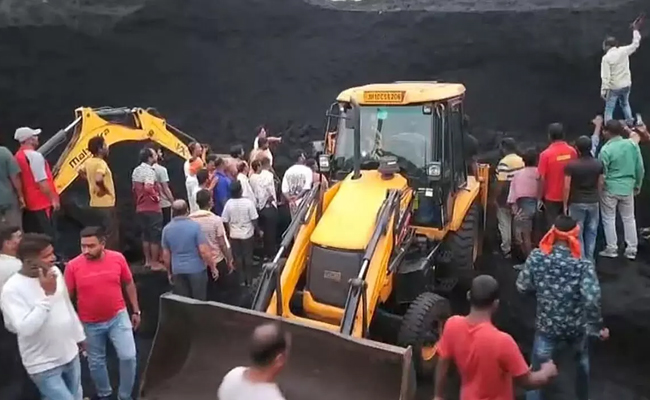
Dhanbad (Jharkhand) (PTI): At least four workers died after being buried under coal slurry in Jharkhand's Dhanbad district on Saturday, a police official said.
The incident took place at Moonidih coal washery in the command area of Bharat Coking Coal Limited (BCCL).
"Bodies of all four workers were dug out of debris during a rescue operation," Putki police station in-charge Waqar Hussain told PTI.
The incident took place when coal slurry was being loaded into trucks by workers, during which a large chunk of slurry fell and trapped several workers underneath, officials said.
The deceased have been identified as Manik Bauri, Dinesh Bauri, Deepak Bauri, and Hemlal Gope.
Meanwhile, the family members of the deceased and local villagers placed the bodies in front of the washery gate and began a protest.
They demanded compensation, jobs for dependents and action against those responsible for the incident.
Police and administration officials are trying to pacify the protesters, an official said.