K'taka BJP alleges arrest of Ram temple agitation activists after 31 years
Bengaluru, Jan 1: The opposition Bharatiya Janata Party in Karnataka on Monday alleged that the Congress government is reopening old cases related to Babri mosque demolition as two saffron party activists from Hubballi who had participated in the Ram temple agitation 31 years ago have been arrested.
However, Hubballi-Dharwad Police Commissioner Renuka K Sukumar said the police traced the accused in cases pending for long, which was a "routine" police procedure.
The two, who are now in their sixties, were arrested on Sunday, the BJP said.
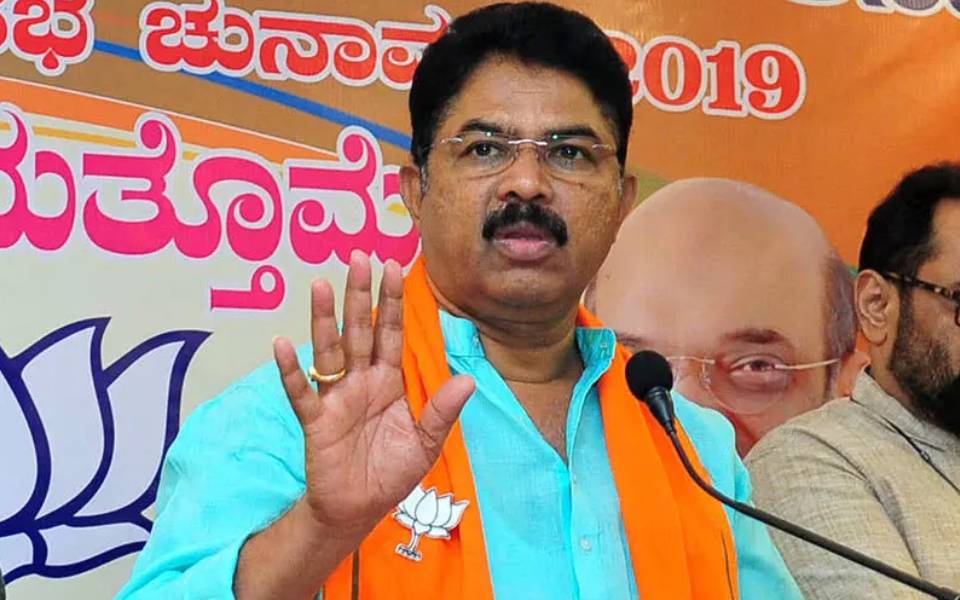
Addressing reporters here, the leader of opposition, in Karnataka assembly, R Ashoka, alleged that the Congress is "terrorising" Hindu activists by reopening cases related to commotions during the agitation in Ayodhya 31 years ago.
ALSO READ: Have not yet got invitation for consecration of Ram temple in Ayodhya: CM Siddaramaiah
According to the former minister, the arrested persons have been charged with pelting stones during the disturbance.
"The Congress government in Karnataka is reopening the 31-year-old case. Two workers in Hubballi who had taken part in the Ram temple agitation were arrested and jailed. It gives an impression that they are being hounded for taking part in the Ram temple agitation at a time when people are eagerly waiting for the historic occasion of the consecration of the grand temple in Ayodhya," Ashoka alleged.
Citing media reports about the arrests of two activists, he claimed that the Congress government is "terrorising" Ram devotees by sending them to jail, when Prime Minister Narendra Modi himself asked people to celebrate the construction of Ram Temple in Ayodhya.
"Even I and former Chief Minister B S Yediyurappa took part. Do you have the courage to arrest me and Yediyurappa," he asked.
Ashoka warned the government that it would pay a heavy price if it followed the politics of vendetta and that the BJP would stage a vehement agitation.
Condemning the arrest, he wondered why the Congress government in Karnataka was digging up old cases and arresting innocent Ram devotees after 31 years after the incident.
"This is a matter of shame for Congress. This shows how you want to bring Tipu culture to Karnataka. I condemn it. I demand that they be released, and their cases withdrawn," Ashoka said.
Responding to this, the Hubballi-Dharwad Police Commissioner said that in many cases the accused go absconding, because of which they remain as long pending ones. Police routinely makes efforts to trace the accused in these cases, the official said.
"As an outcome of our exercise to trace 37 long-pending cases, we were successful in securing the absconding accused. These cases involve property crimes, murder, narcotics and cyber crime," the police officer said.
"In one such rioting case which was reported in 1992, we were successful in apprehending one of the accused. For us, it is just another case of a riot in which the accused was absconding. We have secured them along with absconders in other cases," she explained.
According to her, in Hubballi-Dharwad region, there are more than 150 pending cases including murder and theft.
Over a period of time when we are not able to secure the accused persons or the accused are not attending court proceedings, the cases are designated as long pending cases by the court," Sukumar said.
Let the Truth be known. If you read VB and like VB, please be a VB Supporter and Help us deliver the Truth to one and all.
Sujit Nair raises concerns over speculation of DMK-AIADMK understanding to block TVK
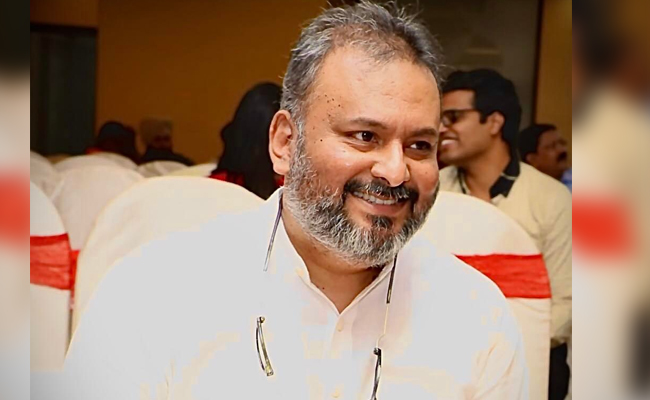
Chennai: Journalist and political commentator Sujit Nair has expressed concern over speculation that the Dravida Munnetra Kazhagam and the All India Anna Dravida Munnetra Kazhagam could explore a post-poll understanding to prevent Vijay-led Tamilaga Vettri Kazhagam from forming the government in Tamil Nadu.
In a social media post, Sujit Nair said the election verdict in Tamil Nadu reflected a clear public demand for political change and argued that the mandate should be respected irrespective of political preferences.
Referring to reports and political discussions surrounding a possible understanding between the DMK and AIADMK, he said he hoped such developments remained only speculative conversations and did not turn into reality.
Nair stated that if such an alliance were to take shape, it would raise serious questions about ideological politics in the country. He said TVK had emerged through a democratic electoral process and that the legitimacy to govern in a parliamentary democracy comes from the people’s verdict.
According to him, attempts to prevent an electoral winner from forming the government through unexpected political arrangements may be constitutionally valid, but many people could view them as politically opportunistic.
He further said that such a move could particularly affect the political image of the DMK, which has historically projected itself around ideology, social justice and opposition politics. Nair said that in ideological terms, the DMK appeared closer to TVK than to the AIADMK, and joining hands with its long-time political rival only to remain in power could weaken its broader political narrative.
He added that the same questions would apply to the AIADMK as well, as the party had spent decades positioning itself against the DMK and such an arrangement could create discomfort among its cadre and supporters.
Drawing a comparison with Maharashtra politics in 2019, Nair said he had expressed similar views when the Shiv Sena formed an alliance with the Indian National Congress and the Nationalist Congress Party after the Assembly elections.
He said post-poll alliances between long-standing political rivals often create a public perception that ideology and electoral mandates become secondary when political power equations come into play.
Nair also said such developments increase public cynicism towards politics and reinforce the belief among voters that ideology is often sidelined after elections.
He maintained that the Tamil Nadu verdict was emphatic and said respecting both the spirit and substance of the mandate was important for the credibility of democratic politics.