K'taka Cabinet okays hike in SC/ST quota, to issue govt order
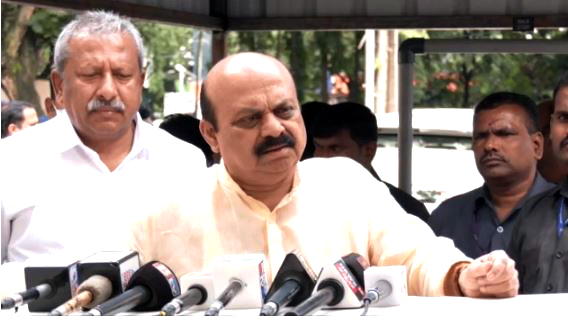
Bengaluru, Oct 8: The Karnataka Cabinet on Saturday accorded its formal approval to increase the Scheduled Castes and Tribes (SC/STs) quota in the State.
The State government would issue an order with which quota for SCs would go up from 15 per cent to 17 per cent and for STs from 3 per cent to 7 per cent. Following this, it would also initiate the process to have the quota included under the 9th Schedule of the Constitution by making a recommendation to the Centre.
"The Cabinet met today and as was decided in an all-party meeting yesterday (Friday) it accepted Justice H N Nagamohan Das Commission report in which it recommends hiking the quota for SCs from 15 per cent to 17 per cent and for STs from 3 per cent to 7 per cent," Chief Minister Basavaraj Bommai said after a special meeting of the Cabinet.
Speaking to reporters, he said it has been decided to immediately issue an order and a gazette notification to this effect
"To give legal protection to this decision, it has to be included under the Schedule 9 of the Constitution, and for all procedures relating to it, the Law Department, Law Commission, Constitutional experts, in consultation with the Advocate General, will make a recommendation (to centre) and try to implement it,"he added.
Law and Parliamentary Affairs Minister J C Madhuswamy said the Cabinet's decision would be implemented through a government order, and the modalities be explained in the order, which is expected to be issued in 2-3 days.
Asked as to why the government decided to issue an executive order before the Constitutional amendment, Madhuswamy said, "The government runs on some specific purpose and ideologies...We are in a democracy...Can we discuss if the laws we make will stand judicial scrutiny?"
At present, Karnataka provides 32 per cent reservation for OBCs, 15 per cent for SCs and 3 per cent for STs, totalling 50 per cent.
With the decision to hike SC/ST quota, the reservation tally in Karnataka would be at 56 per cent, exceeding the 50 per cent cap fixed by the Supreme Court, and the way before the State is via the Schedule 9 route, through a constitutional amendment where the Centre and Parliament will come into picture.
The decision to hike SC/ST quota is also being seen by some with a political prism, with Assembly elections due in about six months.
The Bommai government was under tremendous pressure from SC/ST lawmakers to implement the commission's report. Also, the 'Valmiki Gurupeetha' seer Prasannananda Swami has been on a hunger strike demanding the ST quota hike.
The Opposition parties, especially the Congress had been attacking the government for the delay in implementation.
Many have doubts whether this decision would stand the test of legal scrutiny as reservation would now exceed the 50 per cent cap, the Chief Minister said adding that as per the Indra Sawhney case the STs who are away from the mainstream socially and educationally can be considered as a special case and reservation can be given.
He said both Justice H N Nagamohan Das and Justice Subhash B Adi committee have clearly mentioned in their reports as to how this Karnataka's hike in quota is a special case, by noting that reservation should be proportional to population, and by highlighting education and social backwardness of these communities with figures. "So, basically, there are strong grounds."
"Further, in various States where there is a good number of SC/ST population like - Madhya Pradesh, Chattisgarh, Rajasthan, Jharkhand and Tamil Nadu- the reservation has crossed 50 per cent. Also the Centre had made a constitutional amendment to provide reservation for economically weaker sections crossing the 50 per cent cap," he said pointing out that though both these have been challenged in courts; there are no adverse judgements so far.
Responding to a question, Bommai said the government would take appropriate decisions regarding internal reservation demand among the SCs/STs, after thoroughly studying the Sadashiva Commission report and court judgements in this regard, and duly consulting experts, leaders and all stakeholders.
The Cabinet today also decided to set up a development corporation for the Alemari (nomadic) communities.
Let the Truth be known. If you read VB and like VB, please be a VB Supporter and Help us deliver the Truth to one and all.
Woman Police Commissioner goes undercover to assess women's safety in Hyderabad
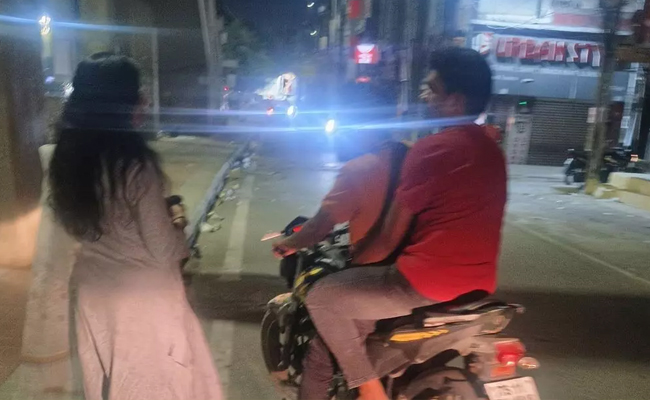
Hyderabad (PTI): Soon after taking over as Malkajgiri Police Commissioner B Sumathi went undercover and took up a field visit after midnight on May 1 to assess law and order, including women's safety.
Sumathi assumed charge as the Malkajgiri Police Commissioner on May 1.
On the same night, the senior IPS officer, in plainclothes, moved through the streets of Dilsukhnagar here, standing alone for some time to get a first-hand knowledge of law and order situation, official sources said on Wednesday.
"It was a general checking and she later interacted with police officials," they said.
The sources said about 30-40 individuals who approached her were counselled regarding their behaviour towards women in public places.
Sumathi, who earlier headed the Special Intelligence Branch (SIB), of the Telangana Police, oversaw the long drawn process of the Maoists joining the mainstream.