K'taka Congress to go ahead with Mekedatu padayatra from Jan 9-19 despite COVID restrictions
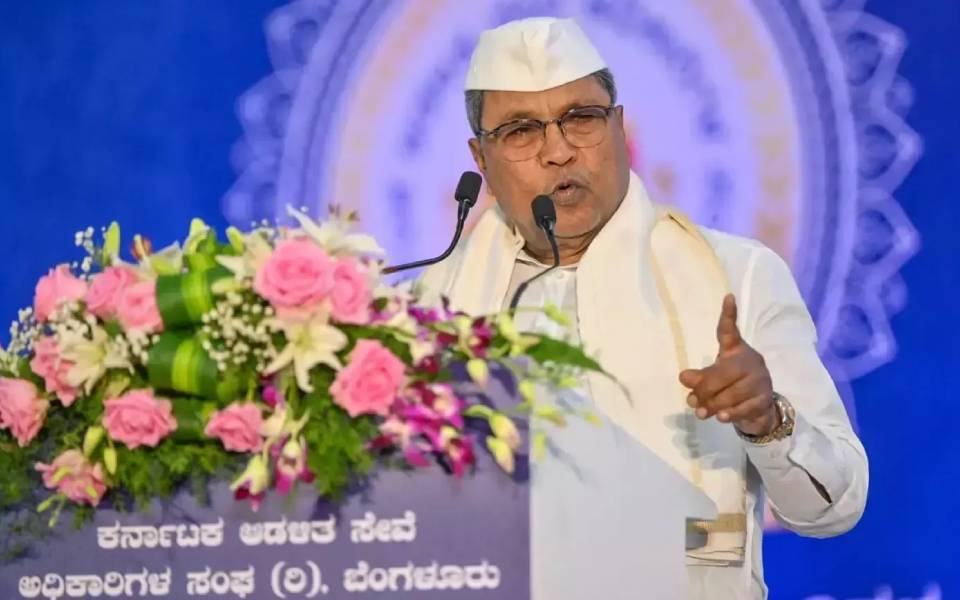
Bengaluru, Jan 5: The Congress in Karnataka on Wednesday decided to go ahead with its 'padayatra' (march) from Mekedatu to Bengaluru, demanding implementation of the Mekedatu project across the Cauvery river, despite the government's COVID-19 restrictions.
Describing government's COVID containment measures, announced on Tuesday night, as a "conspiracy" to "scuttle" their padayatra, state Congress president D K Shivakumar and Leader of Opposition in the State Assembly Siddaramaiah told a joint press conference that they will go ahead, abiding by the guidelines.
The Congress' march from Mekedatu to Bengaluru, covering a distance of over 100 kilometres, demanding implementation of the Mekedatu project, which is being opposed by neighbouring Tamil Nadu, is scheduled from January 9 to 19.
"At the meeting of senior leaders of the Congress party, it was discussed in detail, and the consensus decision is that we should go ahead with the padayatra demanding implementation of Mekedatu drinking water project," Siddaramaiah said.
Speaking to reporters here, he accused the BJP government in the state of wanting to scuttle the padayatra and with that intention on Tuesday it issued an order imposing certain COVID restrictions.
"There is a conspiracy in the government's attitude, and in order to expose this conspiracy to the people of Karnataka, we will go ahead with padayatra, by taking all precautions like using sanitizers, wearing masks, maintaining distance and wearing hand gloves...the government's intention is not bona fide, it is malafide and the restriction imposed are deliberate," he added.
The Karnataka government on Tuesday decided to impose curfew on weekends and restrict public gatherings to fight the third wave of COVID-19 till January 19. It has also decided to continue the night curfew for two more weeks, and has prohibited all rallies, dharnas, protests, among others.
State Congress chief Shivakumar said their "walk for water" is being supported by several organisations, but state government and the ruling BJP is unable to digest it, "has conspired to scuttle it by imposing COVID restrictions". "There is no medicine for jealousy".
Noting that the government's order prohibits all rallies, dharnas, protests till January 19 morning, he said, "we are marching for the state's interest, not to do politics. We will go ahead with the march for water, following all the rules and guidelines as per schedule."
"BJP should mind that no one can stop flowing water, blowing wind and rising sun.....we are committed to our decision to go ahead with the padayatra," he added.
When questioned about taking out the padayatra when COVID cases are rapidly increasing, Siddaramaiah, accusing the government of "double standards", said "does it (rules and guidelines) apply only to Congress party and not for BJP? Why did PM Narendra Modi go to Punjab today? Why CM has gone to Nagamangala today? Does it not apply to them? They are running the government. Their responsibility is more than the opposition."
The ruling party is violating their own government's circular, but expects Congress to abide by it, he said, adding that "we will obey and respect the law, we are law abiding citizens. We will go ahead with the padayatra by taking all precautions."
Asked what if they are stopped by authorities, he said, "no chance at all....let's see...we are ready to face any consequences...if they impose prohibitory orders myself, Shivakumar and couple of other leaders will march by following rules."
Claiming that BJP fears that it will get exposed, as they haven't done anything for implementation of Mekedatu project, Siddaramaiah further alleged that the state government has failed to impress on the Centre, which is showing "step-motherly attitude" towards Karnataka, to provide necessary approvals and clearances for the implementation of the project.
The Congress government initiated the project while in power, but the BJP has wasted time, he alleged, as he also criticised the saffron party for not stopping its Tamil Nadu president K Annamalai from protesting against the implementation of the project.
"They are more interested in expanding BJP in Tamil Nadu, rather than implementing the project in the interest of the state," the former CM added.
Mekedatu is a multipurpose (drinking and power) project, which involves building a balancing reservoir, near Kanakapura in Ramanagara district of Karnataka.
The project once completed is aimed at ensuring drinking water to Bengaluru and neighbouring areas (4.75 TMC) and also can generate 400 MW power, and the estimated cost of the project is Rs 9,000 crore.
Let the Truth be known. If you read VB and like VB, please be a VB Supporter and Help us deliver the Truth to one and all.
Ordinance issued to increase number of Supreme Court judges from 34 to 38
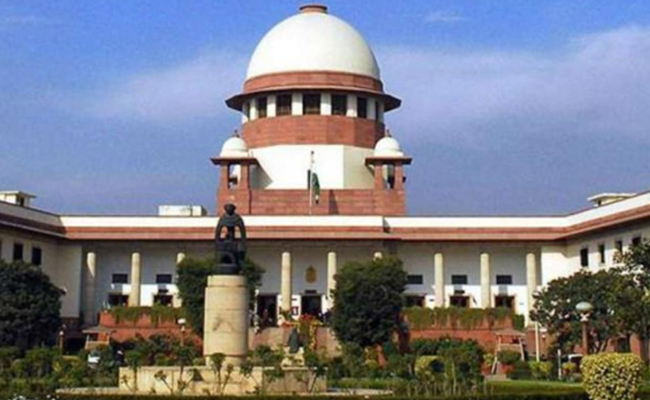
New Delhi (PTI): The government has promulgated an ordinance to increase the strength of the Supreme Court from the present 34 judges to 38, including the Chief Justice of India.
The law ministry notified the ordinance on Saturday, which amended the Supreme Court (Number of Judges) Act, 1956, to increase the sanctioned strength of the top court.
So far, the sanctioned strength of the top court was 34, including the Chief Justice of India (CJI). Now, the number of judges has been increased by four, taking the sanctioned strength to 38.
The top court will now have 37 judges, other than the CJI.
With the apex court having two vacancies at present, and the ordinance coming into force immediately, the Supreme Court Collegium will now have to recommend six names for appointment as judges in the top court.
A bill will be brought in the Monsoon Session of Parliament to convert the ordinance – an executive order – into a law passed by Parliament.
The Union Cabinet had cleared a draft bill on May 5 to increase the number of apex court judges.
The strength of the Supreme Court was last increased from 30 to 33 (excluding the CJI) in 2019.
The Supreme Court (Number of Judges) Act, as originally enacted in 1956, put the maximum number of judges (excluding the CJI) at 10.
This number was increased to 13 by the Supreme Court (Number of Judges), Amendment Act, 1960, and to 17 by another amendment to the law.
The Supreme Court (Number of Judges) Amendment Act, 1986, augmented the strength of judges from 17 to 25, excluding the CJI.
A fresh amendment in 2009 further increased the strength from 25 to 30.
Article 124(3) of the Constitution lists the qualifications required to become a Supreme Court judge.
An Indian citizen who has either served as a high court judge for at least five years, or as an advocate for 10 years, or is a distinguished jurist, can be appointed to the top court.
The strength of the Supreme Court is increased based on the recommendations of the CJI, who writes to the Union law minister. After consulting the finance ministry, the Department of Justice under the law ministry moves the Cabinet with a draft bill.