K'taka defends move to discontinue Jan Aushadhi Kendras in govt hospitals; Minister writes to Nadda
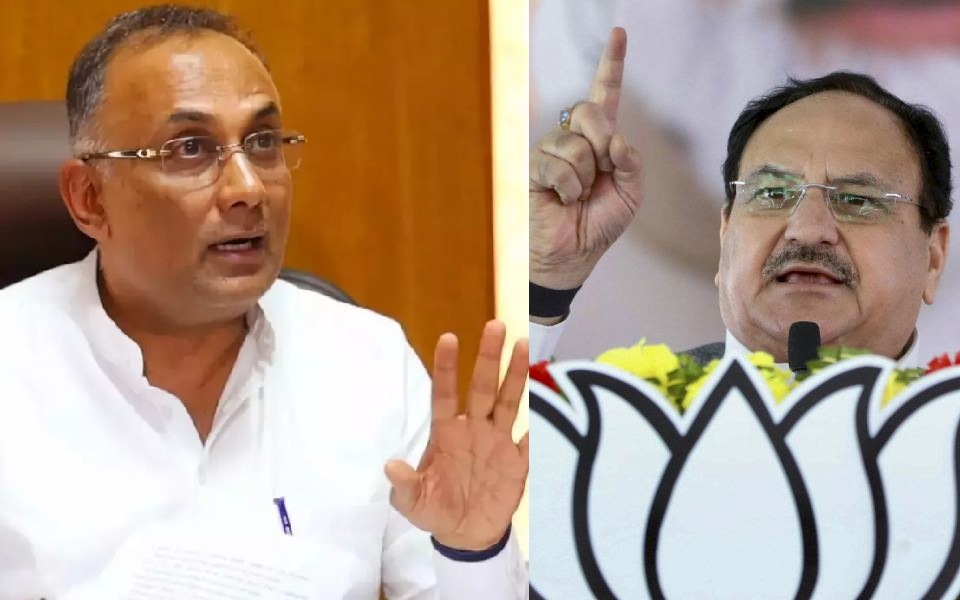
Bengaluru, Aug 6 (PTI): Karnataka Health Minister Dinesh Gundu Rao has defended the state government’s decision to discontinue Jan Aushadhi Kendras operating within government hospital premises, saying the move is intended to ensure the free and assured supply of essential medicines to patients and to reduce their out-of-pocket expenditure.
Rao’s clarification came in response to concerns raised by Union Health Minister Jagat Prakash Nadda in a recent letter to Chief Minister Siddaramaiah regarding the closure of JAKs within government hospitals in Karnataka.
In a letter addressed to Nadda on August 5, Rao stated that the Karnataka government is committed to the free supply of all essential medicines, as listed in the Essential Medicines List (EML), across government healthcare institutions.
To streamline public healthcare delivery and eliminate the risk of patients being denied medicines at government facilities, the State Government has directed that prescriptions by government doctors be limited to medicines available within the hospital supply, Rao said.
He further explained that medicines are regularly provided to government hospitals through the Karnataka State Medical Supplies Corporation Limited (KSMSCL). Hospitals have also been allocated sufficient funds and have standing instructions to purchase medicines locally in case of any shortage.
"This effort aims to ensure universal access to essential medicines for patients visiting government hospitals—entirely free of cost," Rao said.
Justifying the move to discontinue JAKs within government hospital premises, the minister said the decision was taken to prevent doctors from directing patients to purchase medicines from these outlets, thereby ensuring they are not denied free medicines available at the hospitals.
"However, this decision does not restrict the operation of Jan Aushadhi Kendras outside government premises. Citizens remain free to access them as per their choice," Rao clarified.
He noted that Karnataka ranks among the top states in terms of the number of operational JAKs, with over 1,417 currently functioning.
Of these, only 184 are located within the premises of government hospitals under the Department of Health and Family Welfare, while the rest operate independently outside government campuses.
"This move is primarily aimed at benefiting poor and marginalised patients who rely heavily on government hospitals for healthcare," Rao said.
Highlighting the affordability of medicines sold under the Pradhan Mantri Bhartiya Janaushadhi Pariyojana (PMBJP), Rao noted that the scheme offers medicines at prices 50-80 per cent lower than branded alternatives. He added that PMBJP is implemented by the Pharma and Medical Bureau of India (PMBI), a society registered under the Societies Registration Act.
"It is requested that PMBI be directed to supply medicines to the Karnataka Health Department at the same rates offered to JAKs. This will go a long way in supporting the state’s free drug supply initiative," Rao urged in the letter.
Reiterating the state’s commitment to affordable and quality healthcare, Rao said Karnataka is continually working to improve its public health supply chain and ensure rational medicine usage.
"We deeply value your concern for public health and reaffirm our shared commitment to the welfare of the people," he concluded.
Let the Truth be known. If you read VB and like VB, please be a VB Supporter and Help us deliver the Truth to one and all.
Congress using hijab issue to pacify minority anger, alleges Karnataka LoP R Ashoka
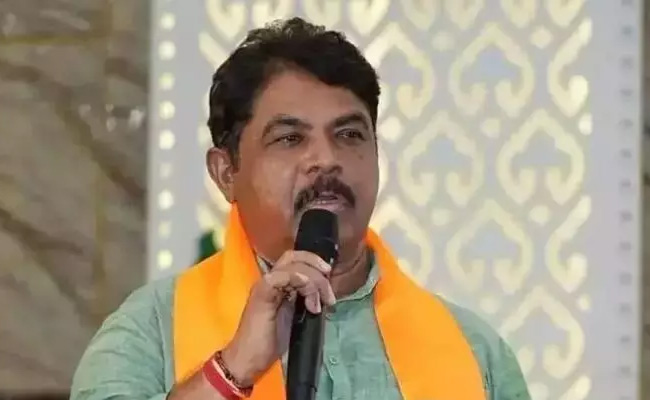
Bengaluru: Leader of Opposition in the Assembly R. Ashoka has accused the Congress government of using the hijab issue to placate what he described as discontent among minority voters after the Davanagere by-election.
In a post on X on Wednesday, Ashoka alleged that the state government, instead of addressing issues such as price rise, corruption, farmers’ distress and law and order, was attempting to retain its minority vote base by reviving the hijab issue.
Referring to the 2022 dress code introduced by the BJP government, which prohibited hijab in schools and colleges, Ashoka said the Karnataka High Court had upheld the policy and emphasised the importance of discipline in educational institutions.
He questioned the Congress government’s move to revisit the issue and asked whether setting aside the court-backed policy to benefit one community could be described as secularism.
Ashoka further alleged that while the government was willing to permit hijab, it continued to prohibit saffron shawls.
He accused the government of dividing students on religious lines rather than treating schools and colleges as spaces of equality.
Drawing a comparison with Mamata Banerjee’s government in West Bengal, Ashoka claimed that excessive appeasement politics had harmed the state and warned that the Congress in Karnataka could face a similar political response.
He said voters in Karnataka would teach the Congress a lesson for what he termed “vote-bank politics” and for compromising constitutional and judicial principles.