K'taka Deputy CM DK Shivakumar says he will retire from politics if it is proved he took commission
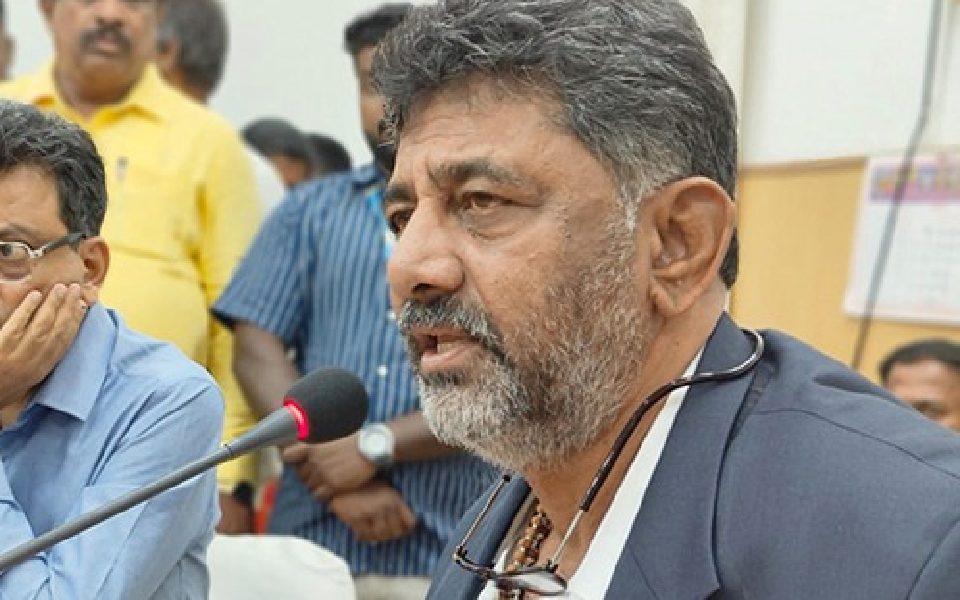
Bengaluru, Aug 11: Karnataka Deputy Chief Minister D K Shivakumar said he would retire from politics if it is proved that he has taken commission (bribe).
Hitting out at former chief minister Basavaraj Bommai and former minister R Ashoka for accusing him of collecting commission, he said he sought to know whether the two BJP leaders would resign if their allegations prove false.
"I will retire from politics today itself if I have taken commission from anyone. But will Bommai and Ashoka announce their political retirement if they (allegations) prove wrong?" Shivakumar said.
Shivakumar, who holds the Bengaluru development portfolio, said the investigation into the various works taken up by the BBMP will cover all aspects and not just one department.
ALSO READ: No commission allegation on Congress by contractors, says Priyank Kharge
Meanwhile, Bommai told PTI that the Congress government is indulging in severe corruption in the entire state, especially in the Bruhat Bengaluru Mahanagara Palike (Metropolitan Bengaluru Municipal Corporation).
"The Contractors' Association has gone to the Governor and given a representation, they tweeted to Rahul Gandhi also and they have met us also. So we have taken up their cause," he said.
"There is deep, open corruption going on. No payments have been made to the contractors for the past three months. They are citing some inquiry as a reason (for stalling payments). Let them do the inquiry. We are not stopping them. Let them do an inquiry and hang the guilty but genuine people who have worked for the past six months, there is no payment happening," Bommai said.
According to him, he had released a payment of Rs 650 crore in April this year when he was chief minister.
Bommai said the property tax collected by the BBMP should be given to the contractors who completed works genuinely.
Let the Truth be known. If you read VB and like VB, please be a VB Supporter and Help us deliver the Truth to one and all.
Thumbay Group begins work on Sharjah’s first private integrated psychiatric, rehabilitation hospital
Sharjah: Thumbay Group has laid the foundation stone for the Thumbay Psychiatric and Rehabilitation Hospital at Sharjah Healthcare City, a 120-bed facility that the company says will be the region’s first private, fully integrated hospital dedicated to psychiatric care, neuro-rehabilitation and addiction recovery.
The groundbreaking ceremony was led by Dr. Abdelaziz Saeed Al Mheiri, who is also a member of the Sharjah Executive Council, in the presence of Dr. Thumbay Moideen.
Spread across 110,000 square feet, the hospital is being developed to address growing demand for specialised mental health and rehabilitation services in the UAE and the wider Gulf region.
The facility will include inpatient and outpatient services in psychiatry, neuro-rehabilitation, addiction treatment, child and adolescent mental health, and care for mood and anxiety disorders. It will also feature VIP inpatient villas designed to provide privacy and support long-term recovery.
A mosque, named the Thumbay Masjid, will be constructed within the campus and will be open to the public.
The hospital is being designed to meet standards for Commission on Accreditation of Rehabilitation Facilities (CARF), an internationally recognised accreditation system for rehabilitation facilities.
Speaking at the event, Dr. Abdelaziz Saeed Al Mheiri said the project reflects Sharjah’s commitment to strengthening healthcare infrastructure in all aspects of wellbeing.
“Mental health and rehabilitation have long needed dedicated infrastructure, and we are proud to support a private partner whose vision matches the ambition of this Emirate,” he said.
Dr. Thumbay Moideen said the project was a response to a growing need for specialised mental healthcare services in the region.
“We have spent over three decades building healthcare in this region, and the one conversation that has grown louder every year is mental health. Families have been carrying this quietly for too long. This hospital is our answer. It is purpose-built, not retrofitted, and it has been designed around dignity, recovery, and outcomes that families can trust,” he said.
Construction is scheduled to begin in June 2026, and the hospital is expected to become operational by mid-2027.
Once completed, the facility will become part of Thumbay Group’s network of healthcare, education and diagnostic institutions across the UAE.