K'taka govt gives clearance for Rs 1.74 lakh crore worth projects with focus on clean energy
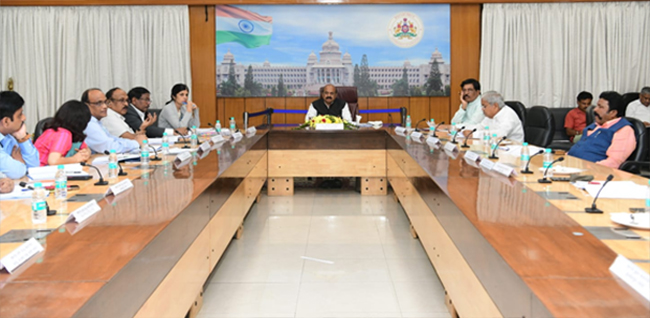
Bengaluru, Oct 22: The Karnataka government on Saturday approved 11 projects worth over Rs 1.74 lakh crore, mostly in the clean energy sector.
The 60th meeting of the State High-Level Clearance Committee (SHLCC), headed by Chief Minister Basavaraj Bommai, approved 11 projects with a total investment of Rs 1,74,381.44 crore.
The projects are expected to create employment for 41,448 people, an official release said.
Among the 11 projects that got approval, eight are new and three are additional projects, it said.
The investment projects are expected to further push industrial growth and generate direct and indirect employment opportunities in Karnataka.
"Green energy is the future. In this regard, the proposals for green hydrogen and ethanol production companies in the state have been approved in the meeting. Karnataka's contribution to the share of the green hydrogen export will be high in the country and it will start in 2026," Bommai said.
Stating that in order to encourage green hydrogen production, proposals from Acme CleanTech Solutions Pvt. Ltd, JSW Green Hydrogen Ltd. Avada Ventures Pvt. Ltd and Renew E-Fuels private, have been approved, he said: "We are happy that the state has received such a huge investment ahead of Global Investors Meet. This has indeed raised our expectations."
State Industries Minister Murugesh R Nirani said Karnataka is at the forefront in the renewable energy sector, and the state government is formulating a green hydrogen policy.
"Karnataka is the third largest sugarcane growing state in the country and also is the highest producer of ethanol. We are glad that the green energy sector investment proposals have been approved in today's meeting," he added.
The proposals cleared include: ACME Cleantech Solutions Private Limited, Haryana - Rs 51,865 crore; Avaada Ventures Pvt Ltd, Mumbai - Rs 45,000 crore; JSW GREEN HYDROGEN LIMITED, Ballari - Rs 40,148 crore; ReNew E-Fuels Private Limited, Gurgaon - Rs 20,000 crore; Atria Power Holdings Pvt. Ltd., Bengaluru - Rs 9,454 crore; Kirloskar Ferrous Industries Ltd, Koppal - Rs 3,025 crore; JSW NEO ENERGY LIMITED, Mumbai - Rs 2,579 crore; and Continental Automotive Components (India) Pvt. Ltd, Bengaluru- Rs 920 crore.
Project proposals with additional investments are: Toyota Kirloskar Motor Private Limited, Ramanagara - Rs 511 crore; G M Sugar and Energy Ltd., Bangalore - Rs 49.44 crore; and Resources Pellets Concentrates Pvt. Ltd., Bellary Rs 830 crore.
Senior Ministers and officials were present at the SHLCC meeting.
On Friday evening, the State-Level Single Window Clearance Committee (SLSWCC) headed by Industries Minister Murugesh Nirani had cleared 35 investment proposals that would generate 4,904 jobs with a total investment of Rs 1,747.37 crore.
ಜಾಗತಿಕ ಬಂಡವಾಳ ಹೂಡಿಕೆ ಸಮಾವೇಶಕ್ಕಿಂತ ಮುಂಚಿತವಾಗಿ ರಾಜ್ಯದಲ್ಲಿ ಈ ಪ್ರಮಾಣದಲ್ಲಿ ಬಂಡವಾಳ ಹೂಡಿಕೆಯಾಗುತ್ತಿರುವುದು ನಮ್ಮ ಉತ್ಸಾಹ ಮತ್ತು ನಿರೀಕ್ಷೆಯನ್ನು ಮತ್ತಷ್ಟು ಹೆಚ್ಚಿಸಿದೆ." ಮುಖ್ಯಮಂತ್ರಿ: @BSBommai
— CM of Karnataka (@CMofKarnataka) October 22, 2022
2/2
Let the Truth be known. If you read VB and like VB, please be a VB Supporter and Help us deliver the Truth to one and all.
Jawan found dead in CRPF camp in J-K's Shopian

Srinagar (PTI): A CRPF jawan died inside a camp in Shopian district of Jammu and Kashmir, officials said on Wednesday.
Head constable Surinder Singh, who hails form Hyderabad, fell unconscious late Tuesday night at the Zainapora Central Reserve Police Force (CRPF) camp in Shopian, the officials said.
Singh was shifted to Zainapora hospital where he was declared dead on arrival.
Police has taken cognizance of the incident and started proceeding to ascertain cause of Singh's death.